Therapy 01 / 04
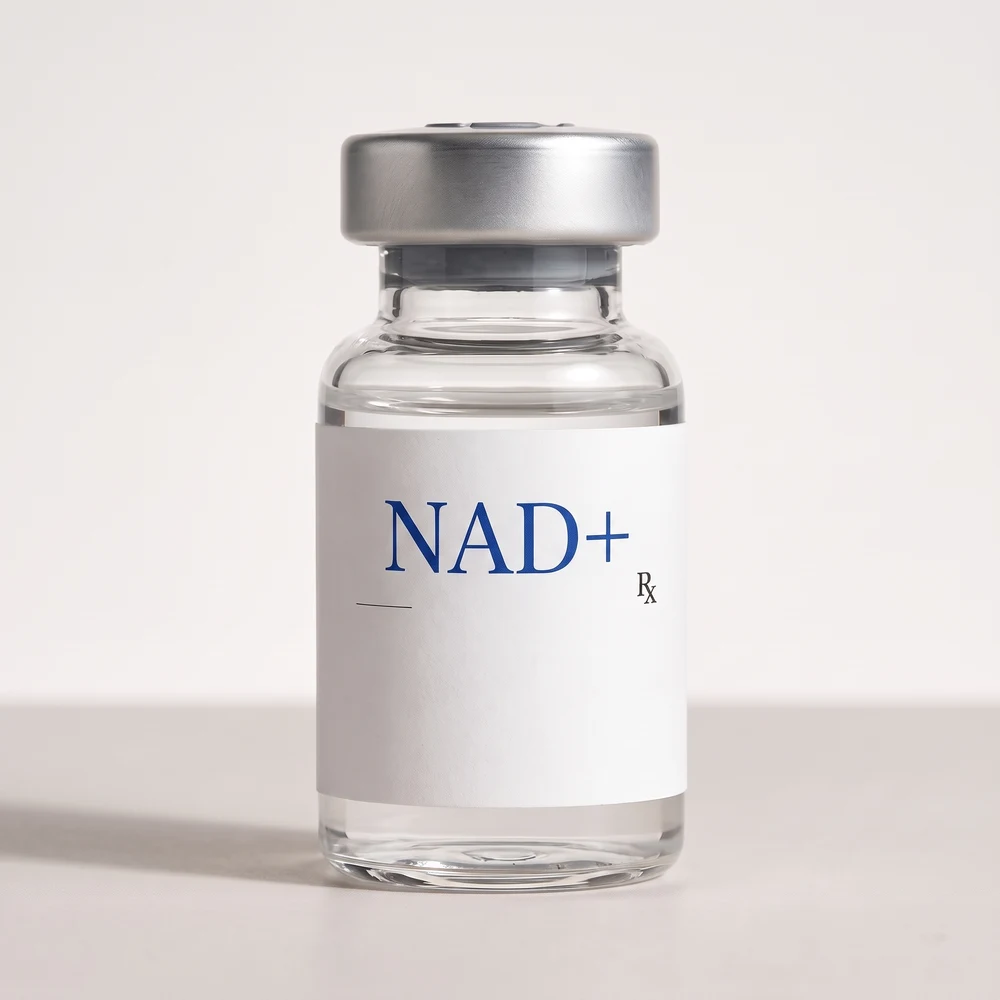
NAD+ 1000 mg Injection
NAD+ 1000 mg injection, with room for questions about the evidence.
- Injectable
- 1,000 mg
- Prescription required
Compound references (not image sources): NAD+ · PubChem CID 5893
01
What it is
NAD+ is a coenzyme involved in cellular energy metabolism and other cell processes. This page describes the NAD+ 1000 mg injectable option.
A molecule’s normal role in cells does not establish that a particular injection improves energy, focus, recovery or longevity.
Discuss your goals, health history and the specific formulation with an independent licensed clinician before considering treatment.
02
How it works
NAD+ participates in cell processes, but that biology is not a promise of benefit from supplementation. An injectable formulation is not interchangeable with oral supplements or an IV treatment.
03
Questions about benefits
Bring specific questions to your assessment:
- What evidence applies to this formulation?
- Could another cause explain fatigue?
- What are the potential risks?
- How would follow-up be assessed?
Research on NAD+ in people is still developing. There is no assured benefit or timeline.
04
Who it's for
The assessment is a place to discuss:
- Your reasons for considering NAD+
- Your current medicines and supplements
- Relevant medical conditions
- Questions about an injectable prescription
05
How you use it
If prescribed, use only the amount, route and schedule provided by your prescriber and dispensing pharmacy. Ask for clarification before using it if any directions are unclear.
06
What to expect
There is no guaranteed change in energy, focus or recovery. Agree on realistic expectations and follow-up with your clinician rather than relying on a product name or a promised timetable.
Plans
Pricing
NAD+ 1000mg
1 Month
$249/mo
$249 total
- Save $60
3 Months
$229/mo
$687 total for 3 months
- Best ValueSave $240
6 Months
$209/mo
$1,254 total for 6 months
Listed medication supply prices include the initial clinical review and standard shipping. A licensed provider must approve treatment before anything is prescribed. Eligibility and availability vary.
07
Safety
Side effects
Possible side effects may include:
- Redness, tightness, or soreness where you inject
- Flushing or warmth
- Nausea
- Mild cramping or a heavy feeling in the chest or stomach right after the dose
Discuss side effects and what to do if they occur with your provider or pharmacist. Do not change the administration instructions yourself.
Tell your provider if you're pregnant, breastfeeding, being treated for cancer, or have any ongoing health conditions.
Evidence
The Research
NAD+ is one of the most studied molecules in aging research. Studies in people confirm that NAD+ levels tend to drop with age. Research on giving NAD+ directly to people is still growing.
- A pilot study of the human NAD+ metabolome during a 6-hour IV infusion of NAD+(opens in a new tab)
Frontiers in Aging Neuroscience, 2019 · via NIH PubMed Central
One of the first studies to track what happens to NAD+ in healthy men after it's given directly into the bloodstream.
- Why NAD+ declines during aging: it's destroyed(opens in a new tab)
Cell Metabolism, 2016 · via NIH PubMed Central
Explains why NAD+ levels drop with age. By middle age, levels may fall to about half of what they were in youth.
- NAD+ to assess health in aging humans(opens in a new tab)
Aging, 2022 · via NIH PubMed Central
Found lower NAD+ in the muscles of older adults compared with younger adults, and higher levels in people who exercised more.
How it works in the body
NAD+ is a helper molecule your cells can't run without. It shuttles energy inside the mitochondria, the parts of the cell that make power. It's also the fuel for enzymes that repair damaged DNA and help control how cells respond to stress.
- NAD+ metabolism and its roles in cellular processes during ageing(opens in a new tab)
Nature Reviews Molecular Cell Biology, 2021 · via NIH PubMed Central
A major review of the many jobs NAD+ does in cells, including energy production, DNA repair, and cell signaling.
- ARTD1 (PARP1) activation and NAD+ in DNA repair and cell death(opens in a new tab)
via PubMed
Explains how one of the body's main DNA-repair enzymes uses NAD+ as its fuel.
Studies are shared for education. Many were done in labs, in animals, or with forms and doses different from our prescriptions. They are not a promise of results. Talk to your provider about what the research means for you.
08