Women's Health Telehealth: What It Covers, How It Works

Explore women's health telehealth, from hormone and contraception care to metabolic protocols, with clear notes on privacy, safety, and clinical quality.
60% of U.S. women ages 18 to 64 had a telemedicine or telehealth visit in the prior two years, placing virtual care within ordinary healthcare access. Women also used telemedicine more than men in 2021, with CDC data showing 42.0% use among women versus 31.7% among men (CDC telemedicine use data).
That reach matters because women's telehealth now extends beyond contraception and obstetrics. A sound program may address hormonal and metabolic care, while explaining the biology of female-pattern hair loss. It must also show its guardrails: which symptoms require examination, how privacy is protected, and whether pharmacy practices support safe treatment.
Table of Contents
- Why Women's Health Telehealth Is Now Mainstream
- What Women's Health Telehealth Covers
- How Telehealth Compares to In-Person Care
- Hormone, Contraception, and Metabolic Care Pathways
- Hair Retention Biology and the Telehealth Fit
- Privacy, Safety, and Equity Risks Worth Naming
- Pharmacy Quality and Regulatory Guardrails
- A Patient Checklist and the Road Ahead
Why Women's Health Telehealth Is Now Mainstream
60% of women ages 18 to 64 had a telemedicine or telehealth visit in the prior two years, and 69% rated that care as comparable to in-person care, according to a national KFF women's health survey. Those findings place virtual care within ordinary healthcare access, rather than at the edge of it.
Repeated care needs shape adoption
Women's care is often fitted around work, caregiving, transportation, and follow-up appointments. A short check-in, refill review, or symptom update can be easier to complete virtually than through another trip to a clinic. CDC data also show higher telemedicine use among women than men, a pattern consistent with the practical demands many women face while arranging care.
Practical rule: When care needs frequent touchpoints, access can be as important as the treatment itself.
Telehealth fits conditions that behave more like an ongoing conversation than a single event. Reproductive, hormonal, metabolic, and behavioral concerns may require symptom tracking, medication adjustments, and review of changing risks. A virtual visit can serve as one checkpoint in that process, while examination, testing, or urgent assessment still belongs in person when the situation calls for it.
Pandemic-era policy changes expanded the available supply, and patient expectations for app-based access continued afterward. The result is a broader field that reaches beyond contraception and obstetrics. It now includes hormone management, metabolic protocols, female-pattern hair loss biology, and the privacy and pharmacy-quality questions that determine whether a program is safe to use.
The useful question is which parts of women's health telehealth can handle well, and where its guardrails must remain firm. A virtual pathway works like a relay: digital intake and video visits can carry information forward, but laboratories, physical examinations, emergency services, and dispensing checks may need to take the next handoff.
| Metric | Finding | Source |
|---|---|---|
| Women ages 18 to 64 with a telemedicine or telehealth visit in the prior two years | 60% | KFF women's health survey |
| Telemedicine use among women in 2021 | 42.0% | CDC telemedicine use data |
| Telemedicine use among men in 2021 | 31.7% | Same CDC data |
| Women rating telemedicine care as comparable to in-person care | 69% | Same KFF survey |
What Women's Health Telehealth Covers
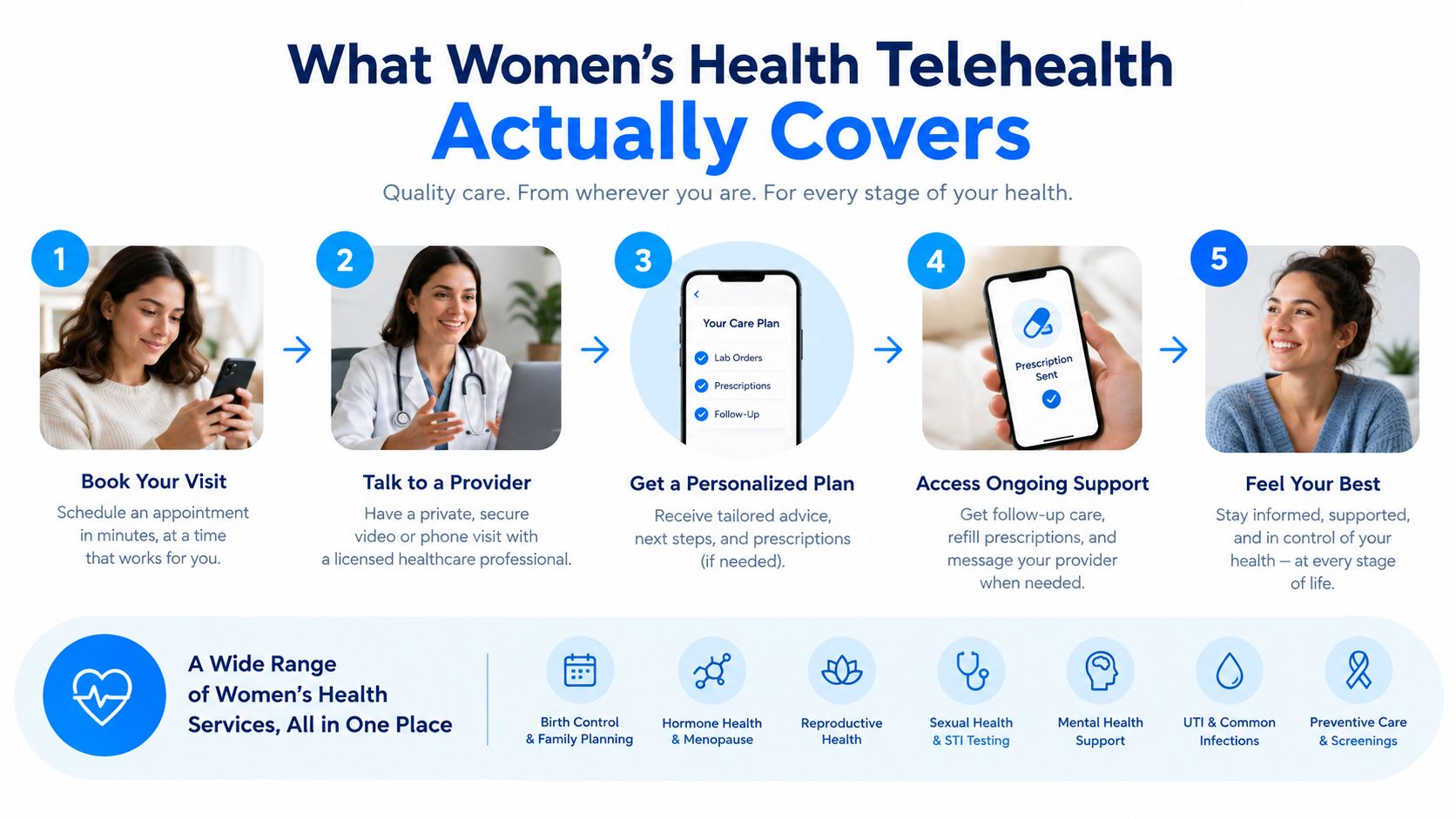
Women's health telehealth is a delivery model rather than a single service. It combines asynchronous intake, live video visits, remote monitoring, and direct pharmacy fulfillment. Together, these steps can move a patient from symptom history to treatment planning without requiring every interaction to begin at a clinic front desk.
The core clinical lanes
Contraception and family planning remain familiar uses. Perimenopause and menopause care can also fit a virtual pathway when the clinician has enough information to review symptoms, discuss options, and adjust medication. Metabolic care, including weight management protocols that may involve GLP-1 therapy, adds another lane.
The scope can extend to thyroid-related follow-up, sexual health, mental health screening, intimate partner violence screening, and female-pattern hair loss care. Hair loss often requires attention to history, photographs, possible laboratory screening, and the biology behind ongoing shedding, so the quality of the workflow matters as much as the video visit.
A typical pathway begins with a digital history and symptom intake. The clinician reviews the information, decides whether laboratory testing is needed, and sends orders to a laboratory or an at-home collection service when appropriate. If treatment fits the patient's situation, the prescription goes to a dispensing pharmacy, and follow-up is scheduled around medication response or titration checkpoints.
Telehealth programs may be asynchronous, hybrid, or live-only. Asynchronous care suits structured refills, symptom checks, and stable follow-up. Hybrid care adds a nurse practitioner or physician video visit when discussion, education, or clinical judgment needs more time. Annual examinations, imaging, and procedures that require hands-on care still need an in-person setting.
Telehealth handles history-taking, medication management, monitoring, and referral coordination. Physical examinations, laboratory collection, urgent assessment, and pharmacy-quality checks may require other parts of the care pathway. Treating the virtual visit as one link in that chain helps clarify both its reach and its limits.
A five-step process map shows how the pieces connect.
| Service area | Typical virtual workflow | Follow-up need |
|---|---|---|
| Contraception | Intake, eligibility review, prescription routing | Ongoing refill checks |
| Menopause care | Symptom review, medication selection, monitoring | Dose adjustment |
| Metabolic care | Risk review, labs, titration | Structured follow-up |
| Hair loss | Photos, history, lab screening | Serial reassessment |
| Safety screening | Private questions, warm referral | Escalation if needed |
How Telehealth Compares to In-Person Care
Virtual care's value is measured by whether it preserves clinical outcomes. For some services, it comes close to in-person care. For others, the limits of a screen remain clinically important.
Where parity is strongest
Structured telehealth interventions for contraception have shown similar short-term outcomes to in-person care for contraceptive use, STI rates, and pregnancy rates. These results depend on clear follow-up and escalation pathways (systematic review of women's preventive telehealth). Contraception often depends on timely access, accurate eligibility screening, and adherence, so a well-designed virtual pathway can address much of the work.
Telehealth approaches for interpersonal violence services have also produced similar outcomes for repeat IPV, depression, PTSD, fear of a partner, coercive control, self-efficacy, and safety behaviors when privacy and follow-up are built into the service. The lesson is practical: the technology supports care, while the intake questions, clinician judgment, and escalation plan determine whether that care is safe.
Where virtual care still has limits
Routine follow-up for a stable gynecologic issue may work well by video when the visit centers on symptom changes, medication tolerance, or a refill decision. A screen can capture the patient's account, review a treatment response, and identify warning signs. It cannot perform a pelvic examination, collect a tissue sample, or reproduce the privacy of a clinic room for someone who may be monitored by a partner or family member.
Telehealth fits best when information, monitoring, and follow-up carry most of the clinical workload. In-person care becomes more important when the question depends on touch, imaging, specimen collection, urgent assessment, or confidential disclosure.
That distinction also matters for metabolic and hormonal programs, hair-loss assessments, and safety screening. A virtual clinician may review symptoms, photographs, and home data, but the pathway must still specify when laboratory testing, examination, pharmacy review, or referral is required. Convenience can shorten the route to care, while incomplete information can lengthen the route to a correct diagnosis.
| Clinical Area | Telehealth Performance | In-Person Performance | Evidence Note |
|---|---|---|---|
| Contraception | Comparable short-term outcomes when workflows are structured | Comparable | Systematic review |
| IPV services | Comparable when screening is private and follow-up is built in | Comparable | Systematic review |
| Stable gynecologic follow-up | Often appropriate for medication review and symptom checks | Best when examination or testing is needed | Clinical workflow logic |
| Hidden-risk screening | Can miss details if privacy is weak | Better chance of private disclosure | Program design issue |
Hormone, Contraception, and Metabolic Care Pathways
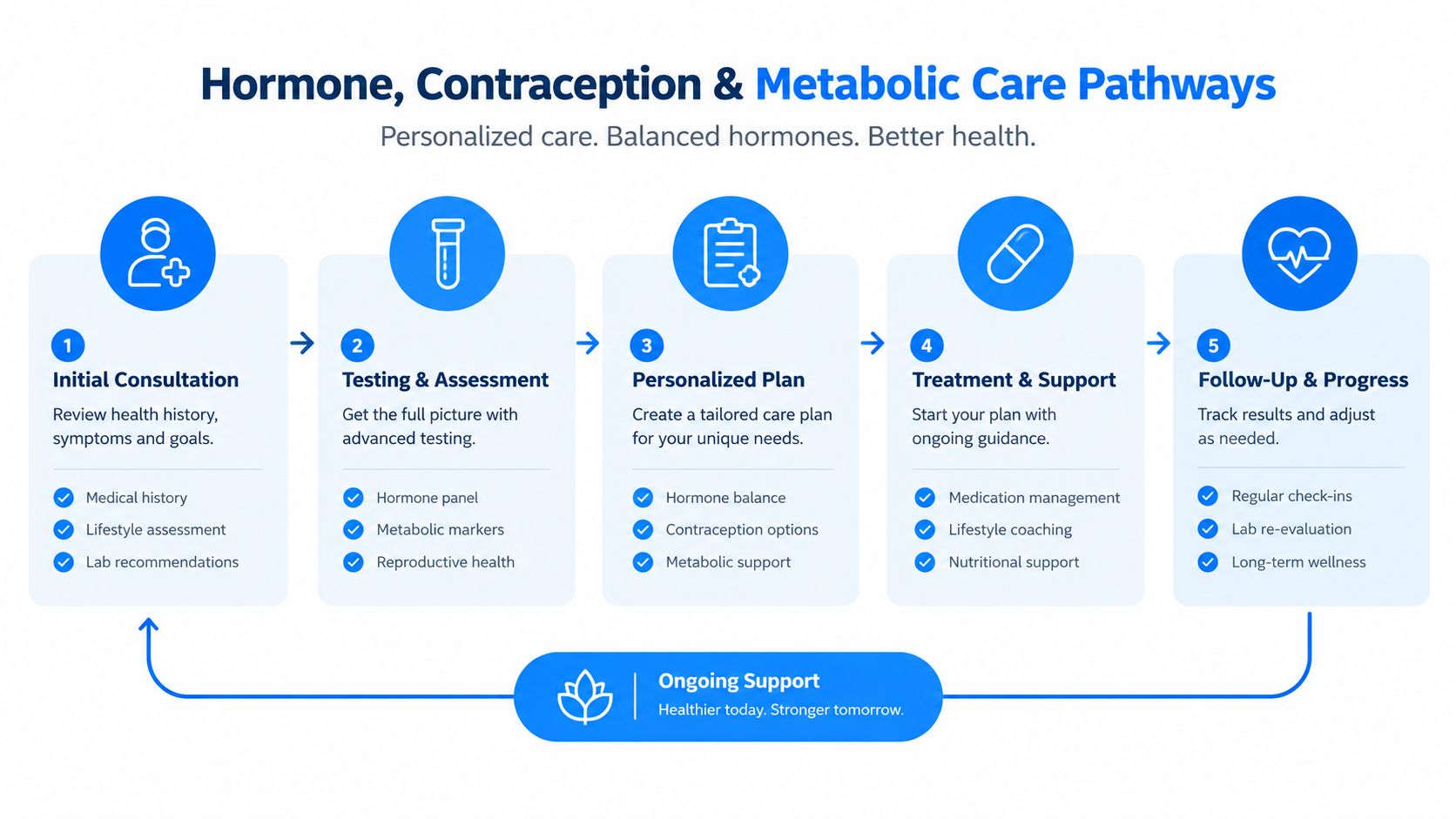
A safe women's telehealth program does not use one workflow for every concern. Contraception, hormone therapy, and metabolic treatment need separate clinical checklists, because each pathway has different risks, eligibility questions, and follow-up needs. The checklist functions like a set of gates: a patient moves ahead only after the relevant safety questions have been answered.
Contraception comes first in the workflow
A birth-control intake should review blood pressure, migraine history, smoking status, and weight history before a clinician recommends combined oral contraceptives, progestin-only pills, or the vaginal ring. The choice is a risk-matching decision, not just a matter of preference. A virtual visit can handle this well when the questions are specific, the answers are reviewed by a clinician, and follow-up is easy to access.
If the history is clear and contraindications have been screened, a pelvic examination is not always required before starting certain contraceptive methods. The safety review determines whether the method is appropriate. The location of the visit does not replace that review.
Menopause care needs a different kind of review
Perimenopause and menopause care often involve vasomotor symptoms, sleep disruption, mood changes, and effects on quality of life. For a patient with an intact uterus, a clinician may consider the lowest effective transdermal estradiol dose with micronized progesterone. That choice requires a documented symptom history, uterus-status check, appropriate screening, and a plan for reassessment. It should not function as a refill-by-form service.
Safety rule: If a hormone plan starts without a symptom history, a uterus-status check, and a follow-up plan, the process is too thin.
Metabolic care needs labs and titration
For GLP-1-based weight management, telehealth can support eligibility review, baseline laboratory testing, and dose-titration follow-up. Common intake elements include HbA1c, TSH, a lipid panel, and a pregnancy test where relevant. The clinician must then review dose changes, side effects, and stopping points over time.
Home delivery may shorten access to treatment, but it does not remove the need for periodic laboratory testing and blood pressure review. Patients also need clear instructions for nausea, dehydration, or other adverse effects, including guidance on when to contact the care team or seek in-person assessment. Convenience is useful only when monitoring remains part of the pathway.
Hair Retention Biology and the Telehealth Fit
Female pattern hair loss can often be assessed through telehealth, provided the clinician understands its biology and the limits of a remote examination. It is a nonscarring alopecia caused by progressive follicular miniaturization. The follicle acts like a shrinking production unit: over time, terminal hairs become thinner, shorter, and less visible (female pattern hair loss review).
Why the diagnosis is often virtual-friendly
Distribution provides an important clue. In classic female pattern hair loss, the frontal and mid-scalp are generally affected more than the occipital scalp. A careful history and standardized photographs can often document that pattern, although poor lighting, changing camera angles, or scalp-covering hairstyles can limit confidence.
The underlying biology is multifactorial. Many affected women have normal serum testosterone and no clear biochemical hyperandrogenism (androgen and female pattern hair loss review). Hair thinning therefore does not automatically indicate a major hormone disorder, and it should not be attributed to stress alone. The clinician must distinguish pattern loss from telogen effluvium, traction alopecia, and scarring disease because each diagnosis changes the treatment plan.
Retention, not restoration, is the realistic goal
Preservation is the most realistic treatment goal. Topical minoxidil, oral low-dose minoxidil, spironolactone for selected patients, and referral for procedural options may be initiated or monitored remotely when baseline assessment is appropriate. The aim is to slow miniaturization and retain existing density for as long as possible, not promise complete regrowth.
Remote care still needs guardrails. Oral minoxidil is used off-label, so blood pressure monitoring matters. Spironolactone may require potassium monitoring. Iron status, thyroid disease, and other hormonal contributors should be considered before a long-term retention plan begins.
Hair care fails when every shed hair receives the same explanation. Pattern, timing, and labs determine the diagnosis.
| Diagnostic clue | Why it matters |
|---|---|
| Gradual widening part | Suggests pattern loss |
| Diffuse shedding after stress or illness | Points more toward telogen effluvium |
| Broken hairs along tension lines | Raises traction concerns |
| Scalp symptoms or scale | May suggest inflammatory disease |

Privacy, Safety, and Equity Risks Worth Naming
Telehealth can improve access and also create risk if the environment is wrong. That's especially true for intimate partner violence screening, where a patient may be answering questions while someone else is in the room, nearby, or monitoring the device.
Privacy has to be designed, not assumed
The AHRQ telehealth-for-women protocol highlights unresolved questions around telehealth for interpersonal violence, barriers in low-resource settings, and possible harms when privacy is weak (AHRQ protocol). That framing is useful because it rejects the easy assumption that virtual care is always safer or more discreet.
A safe program should ask private screening questions, offer follow-up when the partner is not present, and give a warm referral to local resources when needed. If the platform cannot support that, it should use a phone or text pathway for sensitive visits rather than forcing a video call.
Equity gaps can widen inside a screen
The same AHRQ protocol points to barriers in low-resource populations, and Urban Institute analysis notes privacy risks, cultural and language inequities, and the possibility that telehealth can worsen disparities for Black and Indigenous women when programs are not designed carefully (AHRQ protocol). Device access, broadband reliability, and tech comfort all shape whether a patient can use the service.
That's why a serious platform needs more than a video link. It needs in-app privacy safeguards, a quick exit option, language support, and non-screen alternatives. The issue is not convenience. It's whether the patient can disclose candidly without increasing danger.
Pharmacy Quality and Regulatory Guardrails
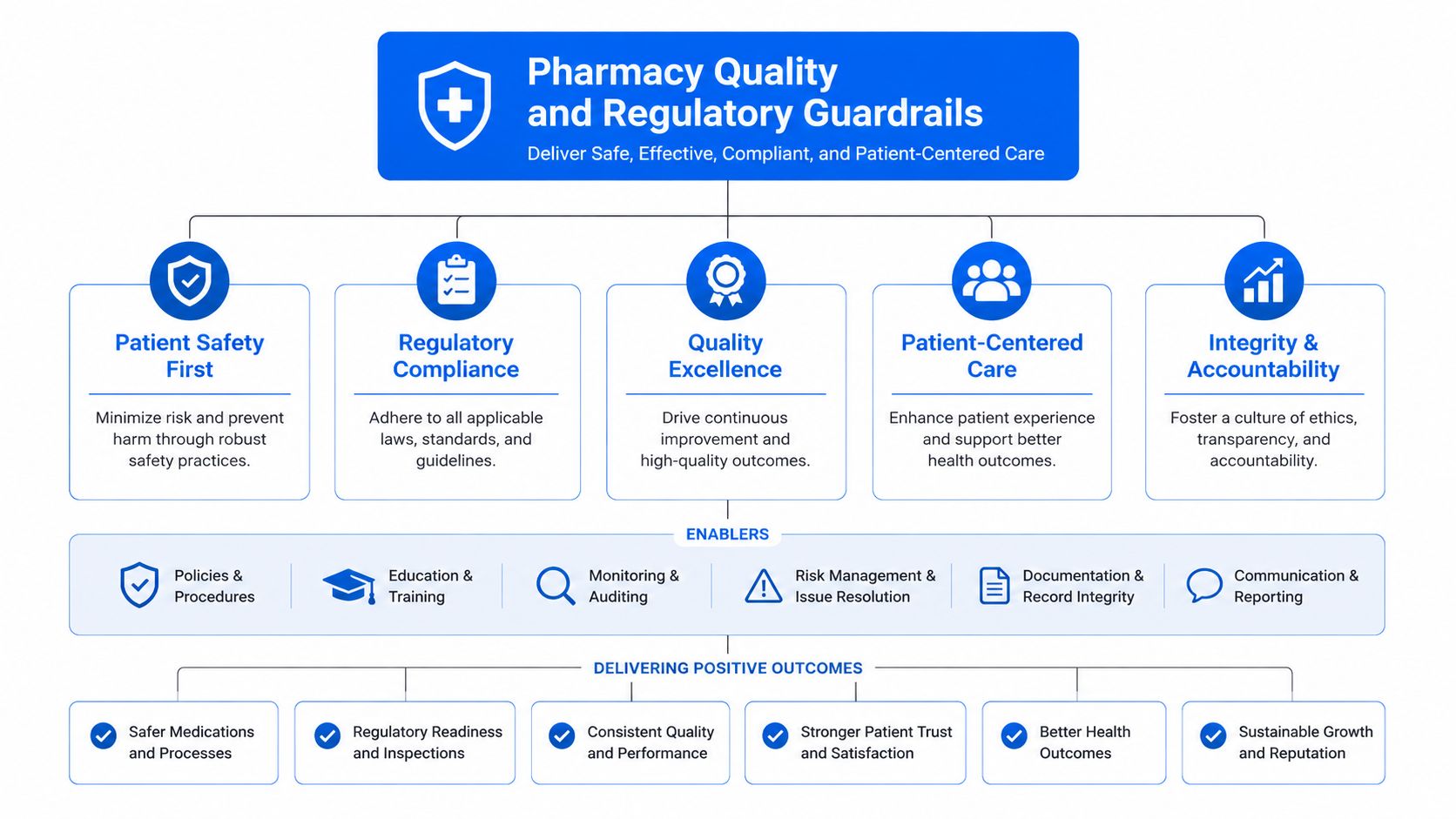
A clinically good telehealth visit can still fail if the dispensing side is weak. That's why pharmacy quality is part of women's health telehealth, not an afterthought.
The patient should know what kind of pharmacy is filling the prescription
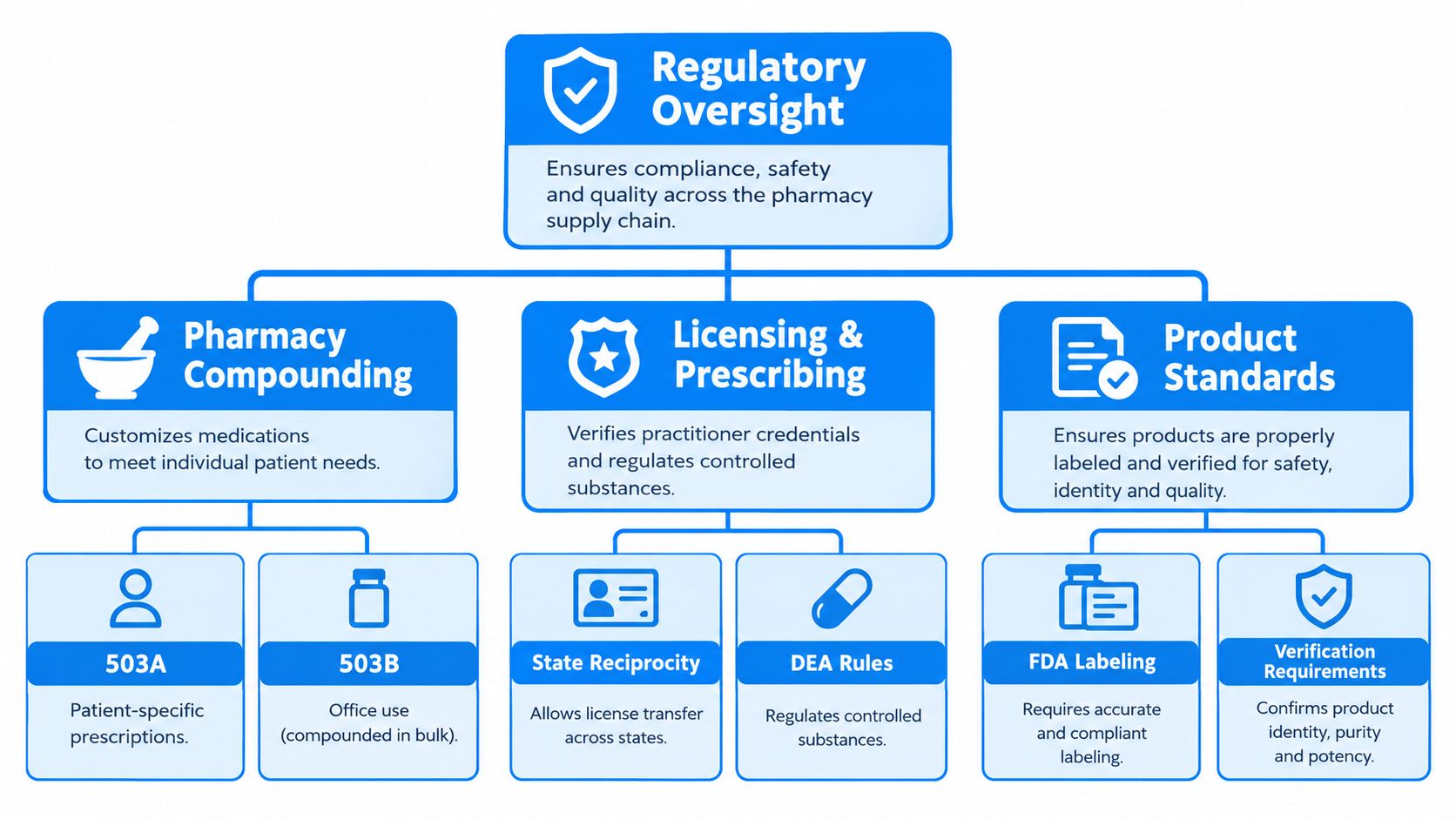
A 503A pharmacy compounds a medication for an identified patient based on a prescription. A 503B outsourcing facility makes larger batches, often for office use or broader distribution. Those are different models, and the label should tell the patient which one is being used. Controlled substances add another layer, because prescribing rules and state licensure still matter.
For compounded hormone or metabolic products, the patient should verify whether the pharmacy follows USP <795>, USP <797>, and USP <800> standards, whether batch testing is performed, and whether the pharmacy holds appropriate accreditation. A careful program does not hide this information.
Good programs make verification easy
A valid telehealth prescription should pass through a clinician who is licensed where the patient is located, then to a pharmacy that can legally dispense the product. Some programs route through partner pharmacies because the dispensing rules, cold-chain requirements, and compounding standards are easier to manage that way than through a retail chain.
The useful red flags are practical. A patient should pause if the program won't name the pharmacy, won't explain how the medication is tested, or won't say how controlled-substance rules are handled. The dispensing entity matters as much as the prescriber.
Bottom line: In telehealth, the prescription and the pharmacy are two halves of the same safety system.
A Patient Checklist and the Road Ahead
A patient can screen a telehealth program quickly by asking direct questions. Those questions should sound plain, because the answers should be plain too.
Questions worth asking before starting
- Licensure: Is the clinician licensed in the state where the patient is physically located during the visit?
- Labs: Which labs are required before prescribing, and how are abnormal results reviewed?
- Follow-up: How often is reassessment scheduled after the first prescription?
- Pharmacy: Which pharmacy fills the medication, and is it accredited?
- Compounding: Does the pharmacy follow recognized compounding standards and batch testing?
- Controlled substances: How are prescriptions handled if a medication falls under tighter prescribing rules?
- Privacy: How are messages, recordings, and intake data stored and shared?
- Safety: What happens if side effects, IPV concerns, or pregnancy risk come up after hours?
Those questions are simple, but they reveal a lot. A thoughtful program answers them without hedging. A shaky one gets vague.
The future of women's health telehealth will likely be shaped less by the video platform and more by how well the program connects labs, pharmacy verification, longitudinal follow-up, and privacy-by-default design. As interstate compacts expand, payer reimbursement changes, and clinical guidance around menopause and metabolic care keeps evolving, the strongest programs will be the ones that act like coordinated medical systems rather than digital storefronts.
Vials + Vitals offers physician-directed telehealth designed around protocol-driven metabolic and hair health care, with licensed U.S. providers, structured titration, and fulfillment through accredited pharmacies. If you want a model that treats safety, pharmacy quality, and follow-up as part of the service rather than extras, visit Vials + Vitals to see how that approach is built into care.
Ready to see if this protocol fits your biology?
A licensed provider reviews every request before anything is prescribed.
Calibrate your metabolic protocol →