Tirzepatide Weight Loss: Clinical Evidence Review

Clinical review of tirzepatide weight loss based on SURMOUNT trials, dosing, side effects, and patient selection by the Vials + Vitals Medical Board.
At 15 mg, tirzepatide produced an average 22.5% reduction in body weight after 72 weeks, compared with 2.4% with placebo. That result places tirzepatide among the most effective prescription options studied for chronic weight management, but the average does not predict every patient's outcome.
The clinically important question is not only how much weight tirzepatide can help someone lose. It's whether the treatment can be tolerated, titrated, monitored, and continued long enough to support durable metabolic health. Trial participants receive structured follow-up and consistent medication exposure, while real patients face plateaus, gastrointestinal symptoms, access interruptions, changing schedules, and competing health conditions. Tirzepatide weight loss is therefore best understood as long-term disease management, not a one-time endpoint.
Table of Contents
- Understanding Tirzepatide Efficacy and Clinical Results
- How the Dual Incretin Mechanism Drives Weight Loss
- The Importance of Dosing and Titration Schedules
- Long-Term Outcomes and Managing Plateaus
- Safety Profile and Adverse Event Considerations
- Patient Selection and Clinical Eligibility
- Integrating Tirzepatide into a Long-Term Care Plan
Understanding Tirzepatide Efficacy and Clinical Results
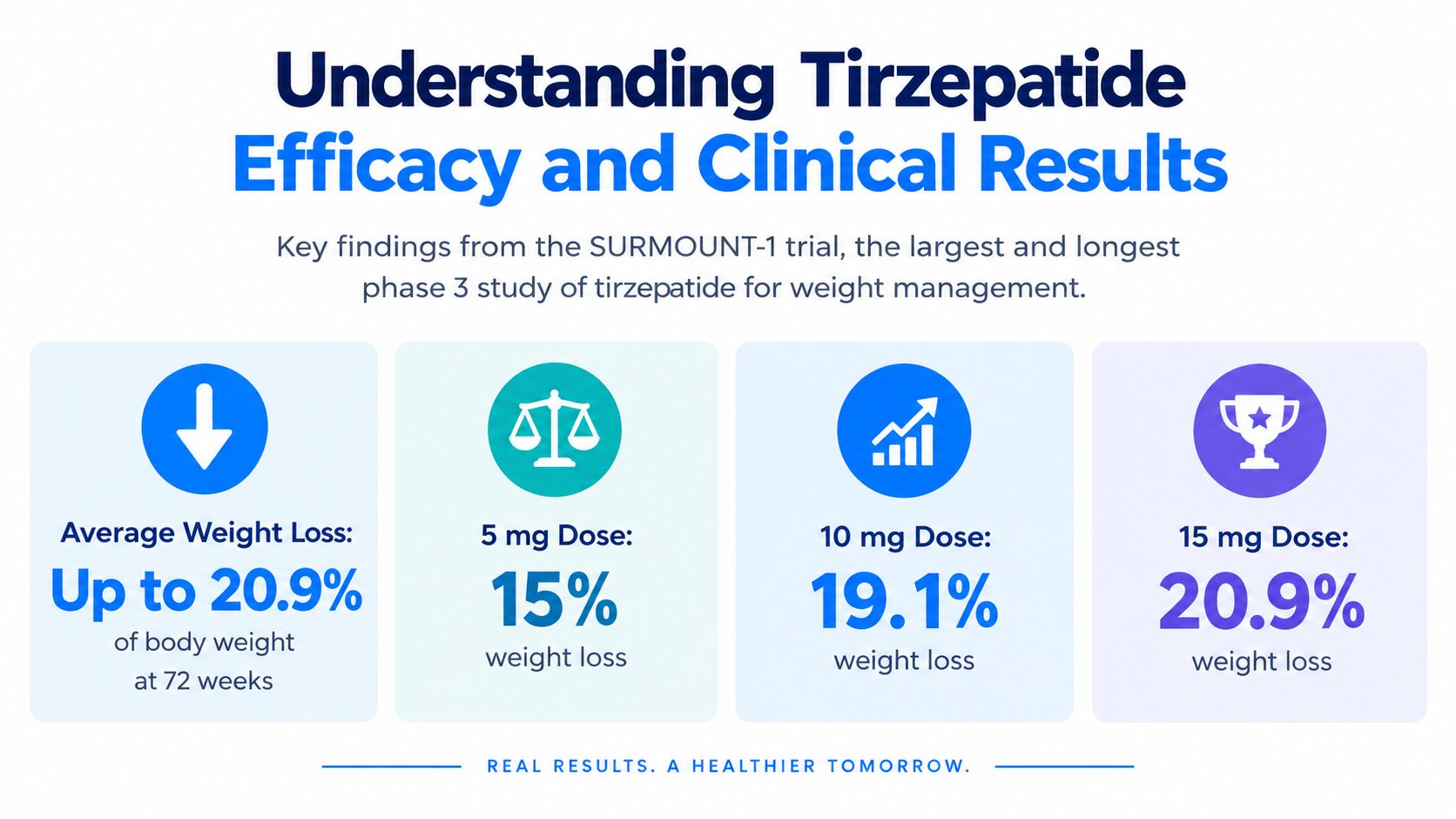
The SURMOUNT-1 trial established the scale of tirzepatide's effect in adults with obesity who did not have diabetes. After 72 weeks, average weight loss reached 16.0% with 5 mg, 21.4% with 10 mg, and 22.5% with 15 mg, compared with 2.4% with placebo. These results are reported in the published SURMOUNT-1 trial summary.
Those averages matter, but they shouldn't be mistaken for a guaranteed personal result. A patient's response depends on baseline weight, appetite biology, dose exposure, treatment persistence, gastrointestinal tolerance, physical activity, sleep, other medications, and underlying medical conditions. Trial averages describe a population. They don't define the experience of every individual.
Dose changes the expected response
SURMOUNT-1 demonstrated a clear dose-response pattern. In the peer-reviewed trial report, mean percentage change from baseline was approximately 15.0% with 5 mg, 19.5% with 10 mg, and 20.9% with 15 mg at 72 weeks, while placebo produced substantially less loss. The New England Journal of Medicine report provides the trial's detailed analysis.
The difference between a mean result and a response threshold is clinically useful. At least 5% weight loss was achieved by 89% of participants receiving 5 mg and 96% receiving 10 mg or 15 mg, compared with 28% receiving placebo. A meaningful average can coexist with substantial variation. Some patients lose considerably more, some lose less, and some stop before reaching a dose that meaningfully controls appetite.
A practical interpretation is that tirzepatide can create a strong biological advantage, but the advantage depends on continued exposure and an appropriate maintenance dose. Escalation shouldn't be treated as a race. The dose that produces the best balance between appetite control and tolerability is more relevant than the highest dose in isolation.
Results beyond obesity without diabetes
The evidence also extends to people with obesity or overweight and type 2 diabetes. In SURMOUNT-2, adults receiving 15 mg lost up to 15.7% of body weight, while those receiving 10 mg lost 13.4%, compared with 3.3% with placebo. The results are summarized in Lilly's report of SURMOUNT-2.
These findings reinforce an important point: tirzepatide's effects remain clinically meaningful across different metabolic populations, but outcomes aren't interchangeable between trials. Diabetes status, concurrent treatments, baseline weight, dose, and study design influence the result. Patients should use trial data to set a realistic range of expectations, not to promise a particular percentage.
How the Dual Incretin Mechanism Drives Weight Loss
Tirzepatide works through two incretin pathways. It activates both the GIP receptor and the GLP-1 receptor, with stronger relative activity at GIP receptors and a signaling profile that favors cyclic AMP over beta-arrestin recruitment at the GLP-1 receptor. The pharmacologic details are described in this peer-reviewed mechanistic review.
A useful clinical analogy is a two-dial system. One dial influences appetite and satiety through GLP-1 signaling. The second modifies incretin activity through GIP signaling. Turning both dials can produce a broader effect on hunger regulation than relying on one pathway alone, although the analogy shouldn't be taken to mean that every person responds identically.

Appetite control is the central experience
The main driver of tirzepatide weight loss is reduced food intake, not a purely thermogenic increase in calorie burning. Preclinical and early clinical evidence supports lower appetite, fewer food cravings, improved satiety, and reduced caloric intake. Secondary effects on lipid metabolism may contribute to metabolic improvement, but they don't replace the appetite pathway.
Patients often describe this change in practical terms. Meals may feel satisfying sooner. Between-meal cravings may become less intrusive. Highly rewarding foods may lose some of their urgency. These changes can make a calorie-controlled eating pattern more achievable, but the medication doesn't automatically create adequate protein intake, resistance training, hydration, or nutritional variety.
The distinction matters because unrealistic expectations can undermine adherence. Tirzepatide isn't designed to produce rapid fat loss by forcing the body into a constant high-energy state. It helps reduce the biological pressure to eat, which gives behavior and nutrition strategies a more workable foundation.
Clinical perspective: The medication can lower appetite, but patients still need a plan for what to eat when appetite is reduced.
A patient who routinely skips meals may experience fatigue or inadequate nutrition rather than better health. A clinician should assess food quality, protein intake, fluid intake, bowel patterns, and physical activity as appetite changes. The treatment works best when lower hunger supports consistent habits instead of replacing them.
The Importance of Dosing and Titration Schedules
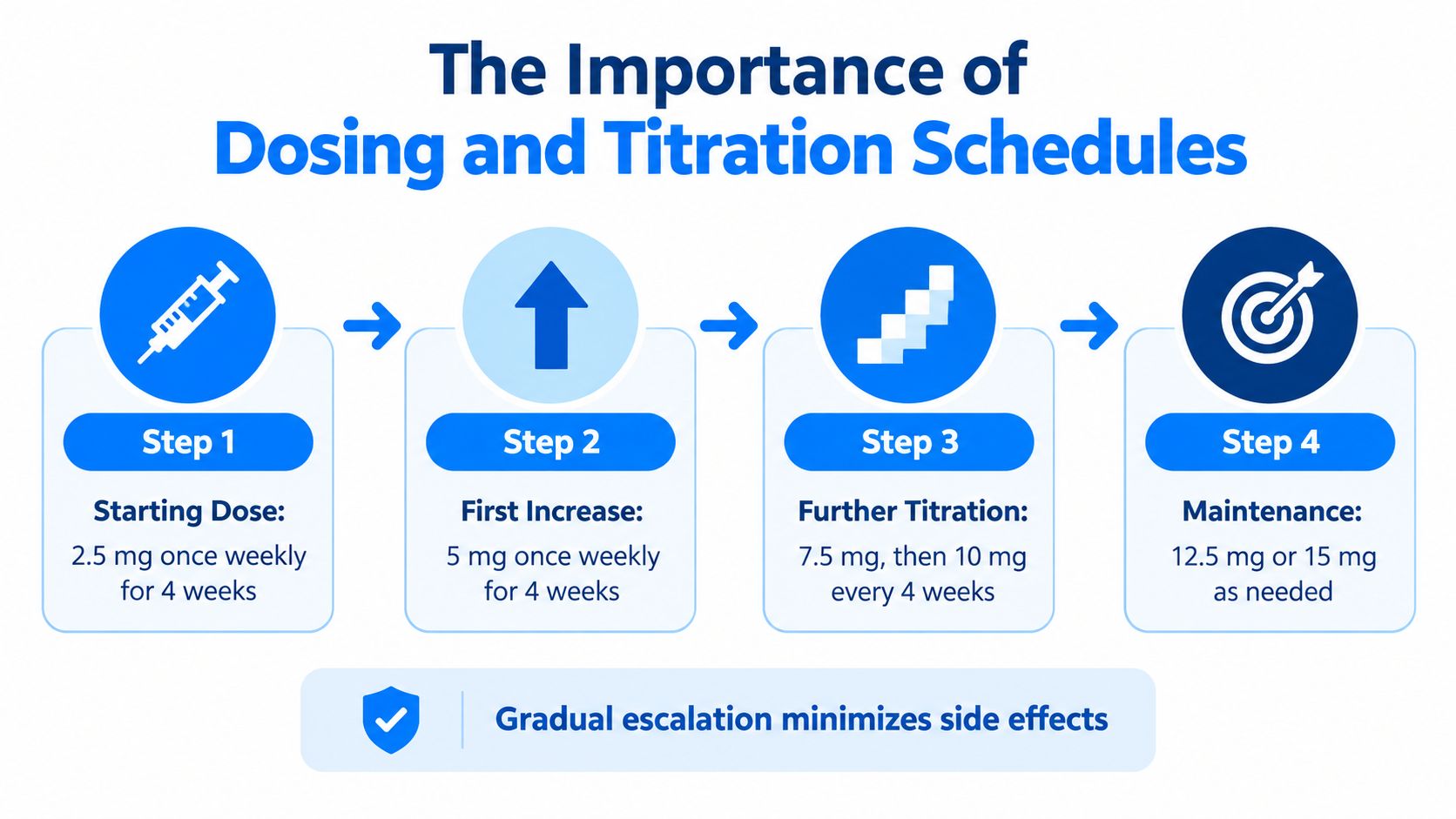
Tirzepatide is introduced gradually because the gastrointestinal system needs time to adapt. The commonly used escalation sequence begins with 2.5 mg once weekly for 4 weeks, followed by 5 mg once weekly for 4 weeks. Further increases may proceed through 7.5 mg and 10 mg, with each step held for 4 weeks, before considering 12.5 mg or 15 mg as a maintenance dose when clinically appropriate.
Why gradual escalation matters
Titration isn't administrative detail. It is a tolerability strategy. Nausea, early fullness, reflux, constipation, diarrhea, and vomiting can become more difficult when the dose rises faster than the patient can accommodate.
The starting dose is generally used to introduce the medication rather than to judge its full weight-loss potential. A patient who sees limited change early shouldn't assume the treatment has failed. Conversely, a patient who develops persistent vomiting, severe abdominal pain, dehydration, or an inability to maintain adequate intake needs medical review rather than an automatic dose increase.
A practical titration process includes:
Confirm the current dose and injection schedule. Missed doses, inconsistent timing, or confusion about concentration can make apparent treatment failure difficult to interpret.
Review symptoms before escalation. Mild, manageable gastrointestinal symptoms may improve with dietary adjustments and time. Persistent or severe symptoms should prompt reassessment.
Increase only when the current dose is tolerated. The next step should reflect appetite control, weight trajectory, hydration, nutrition, and adverse effects.
Use the highest tolerable effective dose, not the highest available dose. The dose-response data support higher average losses with higher maintenance doses, but tolerability determines whether a patient can remain on treatment.
The ideal schedule from a trial protocol may require modification in routine care. A clinician may hold a dose longer, delay escalation, or return to a previously tolerated level. Those changes don't necessarily indicate failure. They often represent individualized care.
Long-Term Outcomes and Managing Plateaus
A good early response can make weight loss look simple. Appetite falls, portions shrink, and the scale moves. Over time, progress often becomes less linear. A plateau may reflect lower energy needs after weight loss, inconsistent medication exposure, inadequate protein or fluid intake, declining activity, constipation, fluid shifts, or a dose that no longer controls appetite well enough.
A plateau should prompt review, not reflexive dose escalation or stopping treatment.
What longer studies show
Longer treatment can support continued loss or maintenance, but individual response still varies. In the SURMOUNT program, tirzepatide produced durable weight reduction over extended follow-up, as described in the SURMOUNT-3 and SURMOUNT-4 report.
The more practical long-term question is what happens if treatment stops. In a post hoc analysis of SURMOUNT-4, participants who discontinued tirzepatide after responding to treatment regained substantial weight within a year. Eighty-two percent regained more than 25% of the weight they had lost, and only 17% maintained at least 80% of their prior weight loss. Cardiometabolic improvements also partially reversed, as detailed in this American College of Cardiology journal scan.
When appetite control is removed, the underlying biology can reassert itself. Regain does not automatically mean the treatment failed.
Weight loss with tirzepatide is best viewed as chronic management. The goal is not a single finish line. It is maintaining a response that is medically useful and sustainable.
A structured plateau assessment
Before changing therapy, clinicians should review:
- Medication exposure: missed injections, delayed refills, administration problems, or interruptions.
- Appetite symptoms: return of persistent hunger, cravings, larger portions, or frequent snacking.
- Nutrition: adequate protein, fiber, fluids, and total energy intake without severe restriction.
- Activity: preservation of muscle through resistance exercise and maintenance of ordinary daily movement.
- Medical factors: sleep disruption, endocrine disease, mood symptoms, and medications that affect weight.
- Treatment goals: continued loss, maintenance, metabolic improvement, or prevention of regain.
The assessment determines whether the next step is dose adjustment, nutritional support, or a pause in escalation.
Safety Profile and Adverse Event Considerations
Tirzepatide's benefits must be weighed against tolerability. Gastrointestinal symptoms are the most practical concern during initiation and escalation. Nausea, diarrhea, constipation, vomiting, abdominal discomfort, and reflux can interfere with eating, hydration, work, and treatment continuation.
A patient shouldn't normalize symptoms that are severe, persistent, or escalating. Clinical review is appropriate when vomiting prevents fluid intake, constipation becomes significant, abdominal pain is severe or persistent, or symptoms are accompanied by weakness, dizziness, or signs of dehydration. The treatment plan may need slower escalation, a temporary hold, supportive care, or discontinuation.
Hair retention during weight loss
Hair thinning deserves a direct conversation rather than dismissal. In a systematic review of tirzepatide obesity trials, alopecia occurred in 5.4% of tirzepatide-treated participants, or 119 of 2,183, compared with 0.9% of placebo participants, or 22 of 2,221. The reported risk appeared similar across 5 mg, 10 mg, and 15 mg weekly doses. The findings are available in this systematic review of tirzepatide-associated alopecia.
Rapid weight loss can place hair follicles into a temporary shedding pattern called telogen effluvium. Reduced calorie intake, inadequate protein, iron deficiency, illness, thyroid dysfunction, stress, and genetic hair loss can overlap, so the medication may not be the only relevant factor.
A broader safety analysis found a weak but present hair-loss signal across GLP-1 therapies. For tirzepatide, reported odds ratios ranged from 0.83 to 1.73, while semaglutide ranged from 1.24 to 2.46, according to this review of pharmacovigilance data. These figures don't establish that tirzepatide directly damages follicles in every patient. They support careful counseling, nutritional assessment, and evaluation of persistent or patterned hair loss.
Patient Selection and Clinical Eligibility
Tirzepatide is appropriate only when a clinician determines that the expected benefits outweigh the risks. Typical eligibility includes adults with obesity, generally defined as a BMI of 30 or greater, or adults with overweight and a weight-related condition. BMI is a screening tool, not a complete description of health, body composition, or treatment need.
A physician-led assessment should review:
- Metabolic conditions: diabetes, dyslipidemia, hypertension, fatty liver disease, and related risk.
- Medication history: current prescriptions, prior weight-loss therapies, and drugs that may affect appetite or body weight.
- Gastrointestinal history: reflux, constipation, delayed gastric emptying symptoms, and previous medication intolerance.
- Reproductive status: tirzepatide isn't appropriate during pregnancy, and treatment planning requires specific discussion for people who may become pregnant.
- Nutrition and hair health: baseline intake, prior restrictive dieting, existing shedding, and factors that could increase follicular stress.
- Treatment capacity: ability to follow injection instructions, attend monitoring, obtain the medication, and respond to adverse effects.
Eligibility isn't the same as readiness. A patient may meet a weight-based criterion but need evaluation of another condition first. Another patient may benefit from treatment but require slower titration, closer follow-up, or an alternative strategy because of side effects or access limitations.
The strongest clinical argument for supervision is that tirzepatide changes appetite and intake enough to affect hydration, nutrition, glucose management, and medication needs. A prescriber can distinguish an expected adjustment from a warning sign and can make dose decisions based on the whole patient rather than the scale alone.
Integrating Tirzepatide into a Long-Term Care Plan
Tirzepatide works best within a broader metabolic-health plan. Nutrition should support adequate protein, fiber, fluids, and micronutrients. Physical activity should include resistance training when medically appropriate to help preserve muscle during weight reduction. Sleep, stress, glucose control, bowel function, and hair changes also warrant routine monitoring.
Long-term planning starts before the first injection. Patient and care team should define meaningful outcomes, how to assess plateaus, which symptoms require contact, and how to manage treatment interruptions. Scale change matters, but sustained appetite control, metabolic improvement, functional capacity, and quality of life provide a fuller assessment of progress.
A personalized plan also accounts for variable response. Results seen under trial conditions may not match an individual's experience because tolerability, adherence, access, comorbidities, and dose timing influence treatment over time. Weight management is chronic care, so a plateau calls for assessment rather than automatic escalation.
Clinical takeaway: Effective tirzepatide care is ongoing adjustment around efficacy, tolerability, nutrition, and durability, not dose escalation alone.
Adults seeking a structured approach can review physician-directed GLP-1 protocols from Vials + Vitals through an online clinical assessment and discuss whether medically supervised care is appropriate.
Ready to see if this protocol fits your biology?
A licensed provider reviews every request before anything is prescribed.
Calibrate your metabolic protocol →