Telehealth Weight Loss Program Clinical Guide

Explore the clinical framework of a telehealth weight loss program. Learn about GLP-1 protocols, titration safety, pharmacy verification, and long-term care.
The most popular advice about a telehealth weight loss program is often the least complete: start medication, lose weight, and finish treatment. That model treats obesity as a short episode rather than a chronic condition requiring maintenance, surveillance, and contingency planning. A clinically sound program must answer harder questions before treatment begins, including how dose escalation will be handled, what happens during a supply interruption, how adverse effects will be assessed, and how weight regain or hair shedding will be managed.
Modern metabolic care can be delivered remotely, but remote access doesn't reduce the need for medical judgment. It increases the importance of a structured protocol, reliable communication, medication verification, and clear thresholds for escalation or referral. The most useful measure of quality isn't how quickly a prescription is issued. It's whether the care pathway remains safe and clinically responsive after the initial weight-loss phase.
Table of Contents
- The Clinical Evolution of Remote Metabolic Care
- Pharmacological Mechanics of Incretin Therapies
- Titration Guardrails and Tolerability Management
- Navigating Discontinuation and Long-Term Maintenance
- Verifying Pharmacy Safety and Compounding Standards
- Systemic Monitoring and Hair Retention Biology
- Designing a Sustainable Care Pathway
The Clinical Evolution of Remote Metabolic Care
Telehealth weight management began with a relatively simple premise: behavioral support could reach patients who couldn't attend frequent clinic visits. That premise remains important, particularly for rural patients and adults facing transportation, scheduling, or geographic barriers. The clinical model has since expanded into something more demanding, combining medical assessment, prescription decisions, dose adjustment, symptom monitoring, and long-term follow-up.
A randomized clinical trial published in 2020 provides an important foundation for this evolution. Researchers followed 445 rural adults who had completed an initial lifestyle weight-loss program. At the start of extended follow-up, participants had an average body weight of 99.9 kilograms and had already lost an average of 8.3 kilograms. Participants receiving individual telephone counseling regained an estimated 2.3 kilograms, compared with 4.1 kilograms among those receiving education-only control materials. The counseling group also had stronger clinically meaningful outcomes, with 31.5% reaching at least 10% total weight loss, compared with 19.1% in the control group. The study reported a posterior probability above 0.99 that individual counseling performed better than education alone, as detailed in the randomized telehealth counseling trial.
Remote care requires continuous clinical work
The significance of these findings isn't that a telephone call replaces every in-person service. It is that structured contact can support maintenance, accountability, and prevention of rebound weight gain. A telehealth weight loss program should therefore be designed around repeated clinical decisions, not a one-time intake followed by automated refills.
A physician-directed pathway generally needs to account for:
- Eligibility: The clinician reviews medical history, current medications, relevant conditions, contraindications, and treatment goals before selecting a therapy.
- Treatment exposure: The care team tracks the prescribed formulation, dose, escalation history, missed doses, and interruptions.
- Response: Weight, appetite, metabolic symptoms, nutrition, activity, and treatment persistence are assessed together rather than in isolation.
- Safety: Gastrointestinal symptoms, hydration, oral intake, medication interactions, and warning symptoms receive explicit attention.
- Continuity: The patient receives a plan for plateaus, side effects, shortages, insurance changes, and discontinuation.
Asynchronous messaging can make symptom reporting more practical, while live video or telephone consultations allow a clinician to clarify the history and make medication decisions. Neither format is automatically sufficient in every jurisdiction or clinical situation. Patients with complex disease, concerning symptoms, or a need for hands-on examination may require local laboratory services, in-person evaluation, or a hybrid model.
Clinical rule: Convenience is valuable only when it supports more consistent clinical contact. A digital front door without meaningful follow-up is not a complete medical program.
Pharmacological Mechanics of Incretin Therapies
GLP-1 therapies influence several processes relevant to weight management, including appetite signaling, gastric emptying, and glycemic regulation. Tirzepatide acts through both GLP-1 and GIP pathways, while semaglutide acts through GLP-1. These biological differences matter, but the practical response still depends on dose, tolerability, nutrition, comorbidities, adherence, and treatment duration.
The strongest trial benchmarks come from extended treatment periods, not from the first few weeks. In the 68-week STEP 1 trial, 1,961 adults with overweight or obesity without diabetes received once-weekly semaglutide 2.4 mg or placebo alongside lifestyle intervention. Mean body-weight change was -14.9% with semaglutide versus -2.4% with placebo, an estimated treatment difference of -12.4 percentage points. At least 5% weight loss occurred in 86.4% of the semaglutide group and 31.5% of the placebo group. The STEP 1 clinical trial summary also reported gastrointestinal events in 74.2% of semaglutide-treated participants and 47.9% of placebo-treated participants. These events were generally mild to moderate, transient, and self-limited, although gastrointestinal events led to discontinuation in 4.5% of the semaglutide group and 0.8% of the placebo group.
Tirzepatide demonstrates a dose-response pattern, but higher doses don't eliminate tolerability trade-offs. In the 72-week SURMOUNT-1 trial, 2,539 adults with obesity without diabetes received tirzepatide 5 mg, 10 mg, or 15 mg, or placebo, with lifestyle intervention. Mean weight change was -15.0%, -19.5%, and -20.9% at those respective doses, compared with -3.1% with placebo. Adverse-event-related discontinuation occurred in 4.3%, 7.1%, and 6.2% of the tirzepatide groups, compared with 2.6% with placebo, according to the SURMOUNT-1 randomized trial.
Efficacy benchmarks are not prescribing rules
| Therapy | Mean Weight Reduction | GI Adverse Event Rate |
|---|---|---|
| Semaglutide 2.4 mg at 68 weeks | 14.9% with lifestyle intervention | 74.2% in STEP 1 |
| Tirzepatide 5 mg at 72 weeks | 15.0% with lifestyle intervention | Common, mainly during dose escalation |
| Tirzepatide 10 mg at 72 weeks | 19.5% with lifestyle intervention | Common, mainly during dose escalation |
| Tirzepatide 15 mg at 72 weeks | 20.9% with lifestyle intervention | Common, mainly during dose escalation |
A separate real-world cohort of 655 adults with overweight or obesity who had a week-68 follow-up weight found mean body-weight reduction of 16.6%, with a standard deviation of 7.5% and a 95% confidence interval of 16.0% to 17.1%. Nausea or vomiting occurred in 37.3%, constipation in 15.6%, and no new safety signals were identified in that cohort, as reported in the physician-supervised semaglutide cohort. The cohort also found sex-associated differences in categorical response. Compared with males, females had higher odds of achieving at least 5%, 10%, and 20% weight loss, with odds ratios of 4.26, 5.90, and 2.51, respectively. Those associations shouldn't become prescribing rules. They support individualized response monitoring instead.
Titration Guardrails and Tolerability Management
Dose escalation is where many otherwise reasonable protocols become unsafe. Incretin therapies can slow gastric emptying and reduce appetite, so an aggressive increase may produce nausea, vomiting, constipation, abdominal discomfort, reduced oral intake, and dehydration before the patient has adapted to the current dose.
A systematic review found that adverse events were primarily mild-to-moderate gastrointestinal effects, occurred more often during dose escalation, and tended to level off with continued treatment. Across the evaluated evidence, semaglutide and tirzepatide produced mean body-weight reductions of approximately 15.0% and mean waist-circumference reduction of 11.4 centimeters versus placebo. The review also found substantial weight regain after treatment discontinuation, approximately 67% after semaglutide and 53% after tirzepatide over 52 weeks. These findings, including the tolerability and discontinuation implications, are summarized in the systematic review of incretin therapies.
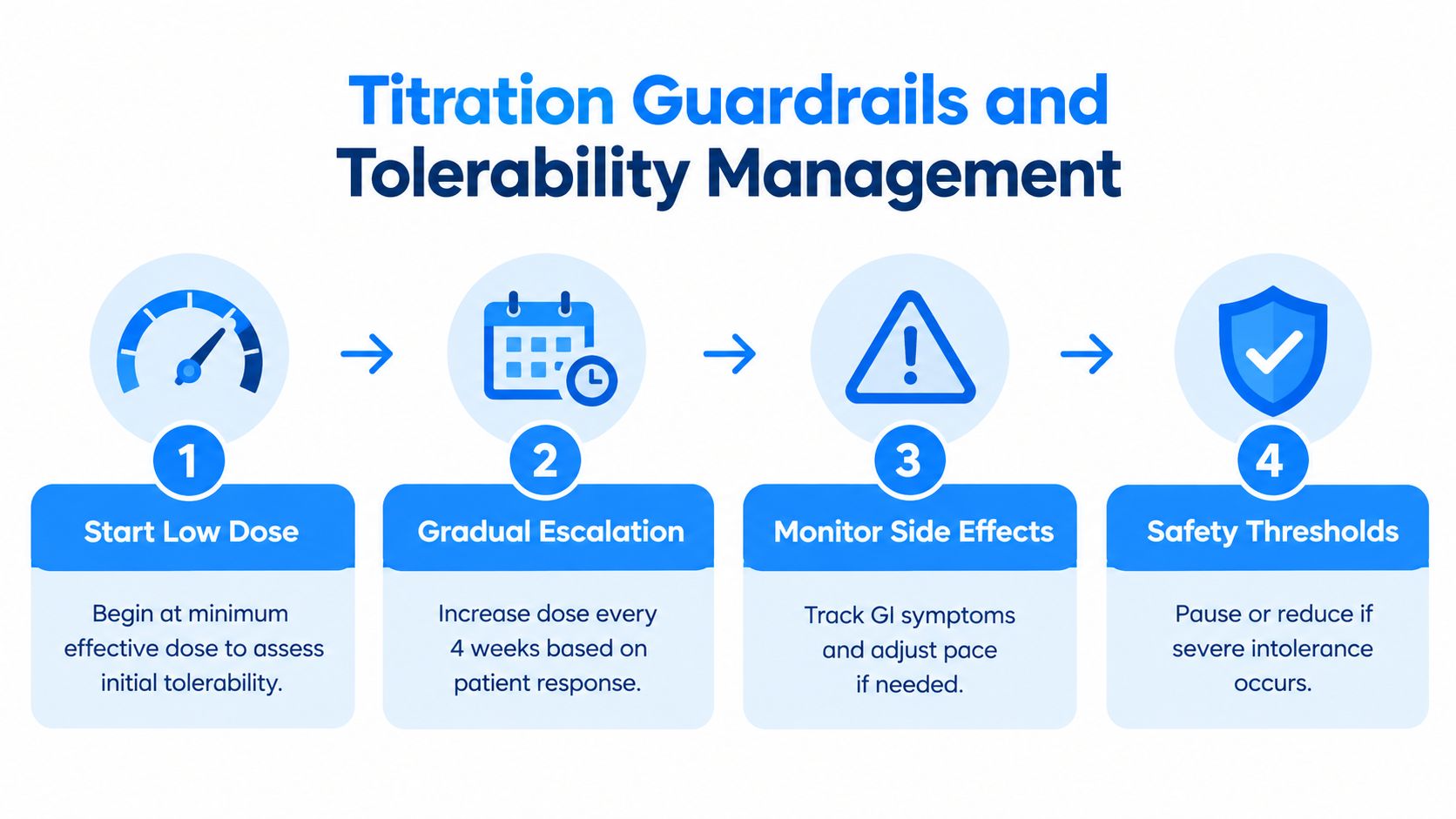
A safer escalation sequence
- Assess the current dose before increasing it. The patient should be able to maintain oral intake and hydration, and symptoms should be tolerable rather than steadily worsening.
- Review gastrointestinal symptoms directly. Nausea, vomiting, constipation, abdominal pain, early fullness, and reduced fluid intake should be documented rather than inferred from weight change.
- Pause escalation when function is compromised. A clinician should reassess the dose if symptoms interfere with hydration, nutrition, sleep, daily activity, or medication adherence.
- Escalate only after clinical review. The next dose isn't automatically appropriate just because a calendar milestone has arrived.
The goal isn't to reach the highest available dose as quickly as possible. It is to find an exposure that produces meaningful benefit while preserving nutrition, hydration, safety, and persistence. A lower tolerated dose can be clinically more useful than a higher dose that leads to repeated interruptions.
Formulation also affects the patient experience. Some patients experience injection fatigue or have strong needle aversion. Sublingual orally disintegrating tablets may be an option for selected therapies, but a different delivery method doesn't remove the need for prescription review, accurate dosing instructions, monitoring, and clinician oversight. Any formulation that worsens gastric symptoms, causes persistent vomiting, or prevents adequate intake requires prompt medical reassessment.
Navigating Discontinuation and Long-Term Maintenance
A 12-week treatment period can be a useful starting framework, but it isn't a reliable definition of treatment completion. Obesity biology doesn't stop influencing appetite when the initial prescription ends. If medication is interrupted because of cost, supply, insurance, adverse effects, or a clinical decision, appetite and weight regulation may change before the patient has a replacement plan.
Real-world persistence is substantially different from trial adherence. A 2025 joint advisory from major nutrition and obesity organizations reported adherence of approximately 33% to 50% at one year and only 15% at two years in real-world practice, compared with 83% to 88% in manufacturer-sponsored trials at roughly 66 to 68 weeks. Those figures are reported in the joint advisory on anti-obesity medication use and adherence. Trial outcomes can therefore overstate what routine care delivers when patients face interruptions, side effects, affordability barriers, or limited follow-up.
Continuation versus stopping
A responsible program should create a continuation versus stopping decision guide before the patient needs it. The guide should address:
- Maintenance dosing: Whether the current dose remains appropriate when weight and appetite are stable.
- Planned tapering: Whether dose reduction is clinically reasonable, and how symptoms and weight will be monitored during the change.
- Unplanned interruption: What to do after a missed dose, delayed shipment, loss of coverage, or temporary inability to tolerate treatment.
- Appetite rebound: How increased hunger will be distinguished from ordinary variation and from a sustained return of symptoms.
- Nutrition and resistance training: How protein adequacy, meal structure, and muscle-supportive activity will be maintained when medication exposure changes.
- Reassessment thresholds: When the patient should contact the care team rather than attempt to restart or alter therapy independently.
Stopping treatment doesn't always mean failure, and continuing treatment isn't automatically the right decision. The clinical question is whether the expected benefits continue to outweigh adverse effects, access problems, treatment burden, and the patient's long-term goals.
Practical rule: A medication plan is incomplete until it explains what happens when the medication is missed, stopped, reduced, unavailable, or no longer tolerated.
Weight fluctuation after a treatment change can occur without representing a dangerous event. Sustained regain, worsening appetite control, loss of nutritional stability, recurrent gastrointestinal symptoms, or deterioration in an underlying condition deserves clinical review. Patients shouldn't restart a previous dose after a prolonged interruption without guidance, because tolerance may have changed.
Verifying Pharmacy Safety and Compounding Standards
Remote prescribing creates a second clinical responsibility beyond choosing an appropriate therapy. Patients also need to understand what medication they're receiving, who dispenses it, how the dose is measured, and what happens if a shipment arrives warm, damaged, mislabeled, or different from the prescription.
The FDA states that compounded drugs aren't FDA-approved and aren't reviewed before marketing for safety, effectiveness, or quality. The agency has received adverse-event reports involving compounded semaglutide and tirzepatide, including reports associated with dosing errors. Patients are advised to obtain prescriptions from a clinician, use a state-licensed pharmacy, and review measurement and administration instructions with the prescriber or compounder through the FDA safety communication on unapproved GLP-1 drugs.
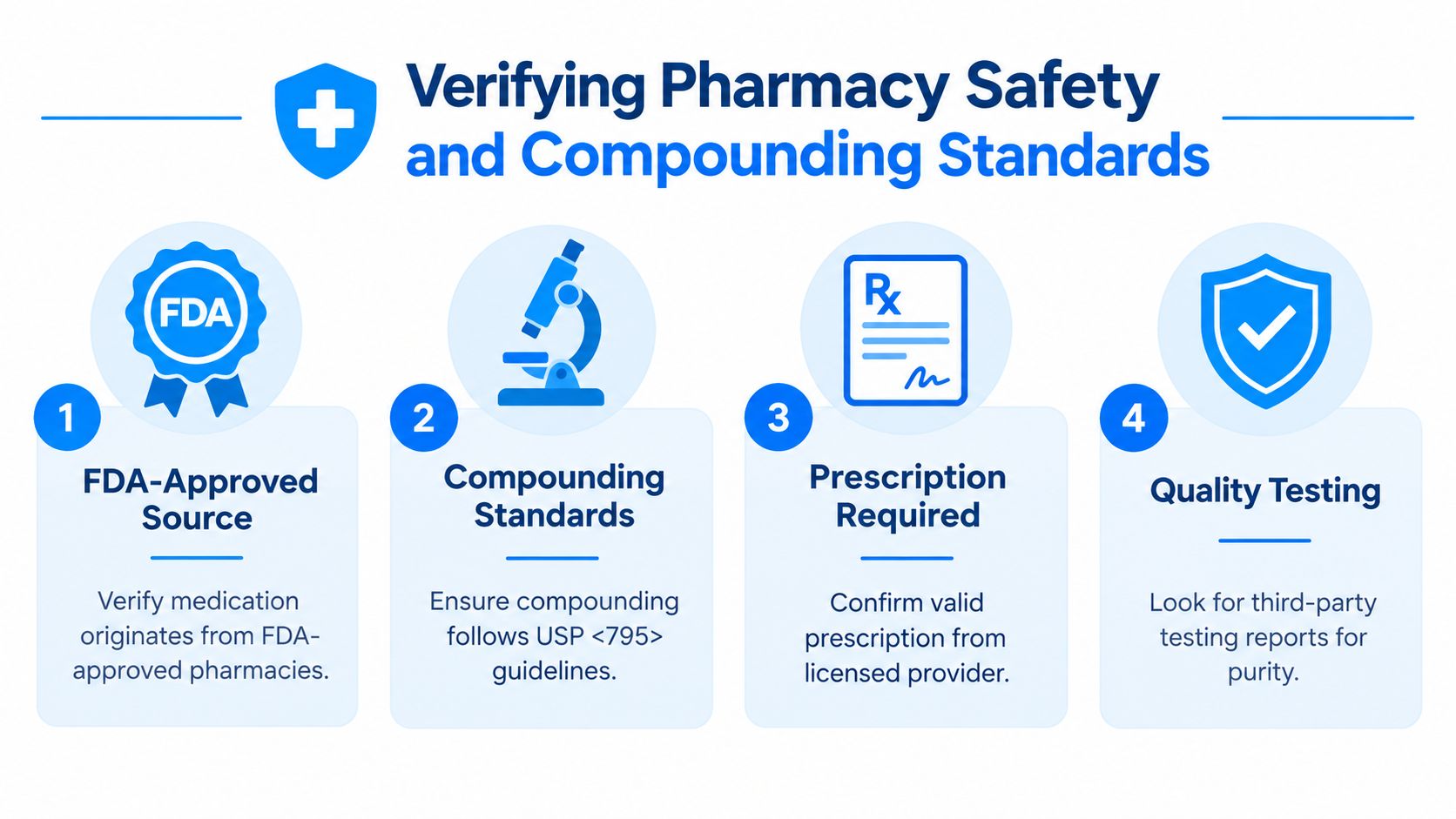
A patient verification checklist
Confirm the prescriber. The patient should know the clinician's name, professional license, and the state in which the clinician is authorized to provide care. The prescribing decision should follow a real clinical evaluation, not an automatic checkout process.
Verify the pharmacy. The dispensing pharmacy should be identifiable and state-licensed for the patient's location. Patients should be able to ask where the prescription is filled and how the pharmacy handles storage, shipping, and temperature-sensitive products.
Read the label carefully. The medication name, concentration, total volume, prescribed dose, route, and administration schedule should match the clinical instructions. A vial concentration can differ from another vial's concentration, so the same syringe marking doesn't necessarily represent the same amount of medication.
Clarify measurement units. The prescriber or pharmacist should explain whether the patient is measuring in milligrams, milliliters, syringe units, or another unit. Written instructions should correspond to the supplied syringe and should explain what to do if the markings are difficult to read.
Ask about quality controls. Accreditation, analytical testing, professional oversight, or a quality statement may provide useful information, but none of those features makes a compounded medicine FDA-approved. Patients should ask what testing is performed and how potency, sterility, storage, and shipping are addressed.
Establish an escalation route. The program should provide a clear contact method for persistent vomiting, suspected dosing errors, allergic symptoms, severe abdominal pain, or a medication that arrives with questionable integrity. Patients shouldn't wait for a routine check-in when a safety concern is developing.
A transparent service won't promise that every patient qualifies or imply that a prescription is guaranteed. It will explain eligibility, alternatives, medication access, and follow-up before payment or treatment begins.
Systemic Monitoring and Hair Retention Biology
Weight-loss care shouldn't measure only the scale. Hair shedding can reveal that the body is experiencing nutritional, hormonal, or physiologic stress, although it doesn't prove that a medication has directly damaged the hair follicle.
The relevant process is often telogen effluvium. Hair normally cycles through active growth and resting phases. A substantial physiologic stressor can shift more follicles from the anagen phase into the telogen phase, leading to diffuse shedding after the triggering event. Rapid weight reduction, inadequate calorie or protein intake, illness, micronutrient deficiency, and pharmacologic treatment can overlap, making a simplistic medication-only explanation unreliable.
Current literature describes a biologically plausible association between GLP-1 receptor agonists and telogen effluvium or androgenic alopecia, while emphasizing that the evidence remains conflicting and doesn't establish a simple direct toxic effect on follicles. Reported risk may be greater with larger or faster weight loss, higher doses, and longer treatment exposure, with semaglutide and tirzepatide identified in the available literature, as discussed in the scholarly review of hair loss and GLP-1 therapy.

What diffuse shedding should trigger
A clinician should review the rate of weight loss, calorie and protein intake, recent illness, medication history, menstrual or endocrine changes when relevant, and the timing of the shedding. Laboratory evaluation may include thyroid status and iron-related indices when clinically indicated, with additional testing guided by the history and examination.
Management typically focuses on correcting the trigger rather than abruptly stopping effective therapy. The patient may need nutritional adjustment, a slower medication escalation, treatment of constipation or nausea that is limiting intake, or dermatologic evaluation if the loss is persistent, focal, patterned, or associated with scalp disease.
Hair monitoring is therefore part of metabolic monitoring. It adds a patient-centered outcome that can identify excessive physiologic strain before the patient becomes severely malnourished or abandons treatment without guidance.
Designing a Sustainable Care Pathway
A clinically credible telehealth weight loss program should be judged by what happens after onboarding. A polished intake form and rapid prescription workflow don't demonstrate long-term quality. The meaningful questions concern physician review, dose guardrails, adverse-event response, pharmacy verification, maintenance planning, and access to a clinician when the expected course changes.
The essential operating standard
The care pathway should begin with a complete medical history and a decision about whether remote treatment is appropriate. It should then connect the prescribed therapy to an individualized titration schedule, measurable follow-up, and explicit safety thresholds. Weight is important, but it should be reviewed alongside appetite, gastrointestinal tolerance, hydration, nutrition, activity, medication exposure, and treatment persistence.
The patient should receive clear instructions for:
- Dose changes: No unsupervised escalation, substitution, or restart after a significant interruption.
- Side effects: Prompt reporting of persistent vomiting, inability to maintain fluids, severe abdominal symptoms, or other concerning changes.
- Maintenance: A clinical discussion before treatment is reduced or stopped.
- Pharmacy questions: Verification of the prescriber, pharmacy, concentration, measurement method, storage, and shipping.
- Hair changes: Review of shedding, nutrition, thyroid status, iron-related indices, and dermatologic symptoms when appropriate.
A sustainable model also recognizes when telehealth isn't enough. Concerning findings may require local examination, laboratory testing, emergency evaluation, or referral to another clinician. Remote care works best when it coordinates with the broader health system rather than pretending to replace it.
Vials + Vitals offers physician-directed telehealth care for selected patients, including clinician-reviewed semaglutide and tirzepatide protocols, individualized titration, ongoing monitoring, and fulfillment through U.S. pharmacy partners. Patients seeking a structured approach to long-term metabolic therapy can review the clinical assessment and care options at Vials + Vitals before deciding whether the service fits their medical needs.
Ready to see if this protocol fits your biology?
A licensed provider reviews every request before anything is prescribed.
Calibrate your metabolic protocol →