Semaglutide Weight Loss Guide for Safe Results

Semaglutide weight loss explained by clinicians — dosing, efficacy, side effects, telehealth and compounding safety. Evidence-based guide from Vials + Vitals.
An adult who has tried calorie cutting, step counts, and “starting over Monday” often reaches the same question: what changes the biology of hunger? Semaglutide became a landmark answer in obesity medicine after the June 4, 2021 FDA approval of Wegovy for chronic weight management, a decision grounded in the STEP clinical program and its large, once-weekly treatment effect in adults with obesity or overweight plus a weight-related condition (Novo Nordisk FDA approval release).
For patients and clinicians, the question is no longer whether semaglutide weight loss can work. The harder question is who should use it, how it should be titrated, what to expect at the plateau, and when a different incretin strategy may make more sense. This guide takes that sequence seriously, starting with mechanism and moving through dosing, efficacy, safety, rebound, and telehealth guardrails.
Table of Contents
- Introduction to Semaglutide for Medical Weight Management
- How Semaglutide Works to Reduce Appetite and Support Weight Loss
- Clinical Efficacy and What the STEP Trials Show
- Dosing Titration and Protocol Guardrails Over 12 Weeks
- Common Adverse Effects and How to Manage Them Safely
- Plateaus Rebound and When to Consider Alternatives
- Telehealth Prescribing Compounding and Choosing a Safe Provider
Introduction to Semaglutide for Medical Weight Management
Adults often arrive after doing the basics well, meal changes, fewer takeout meals, more activity, and the scale still stalls while hunger keeps pressing back. That pattern usually signals a chronic metabolic problem, not a lack of effort. In that setting, medically supervised treatment becomes a reasonable next step.
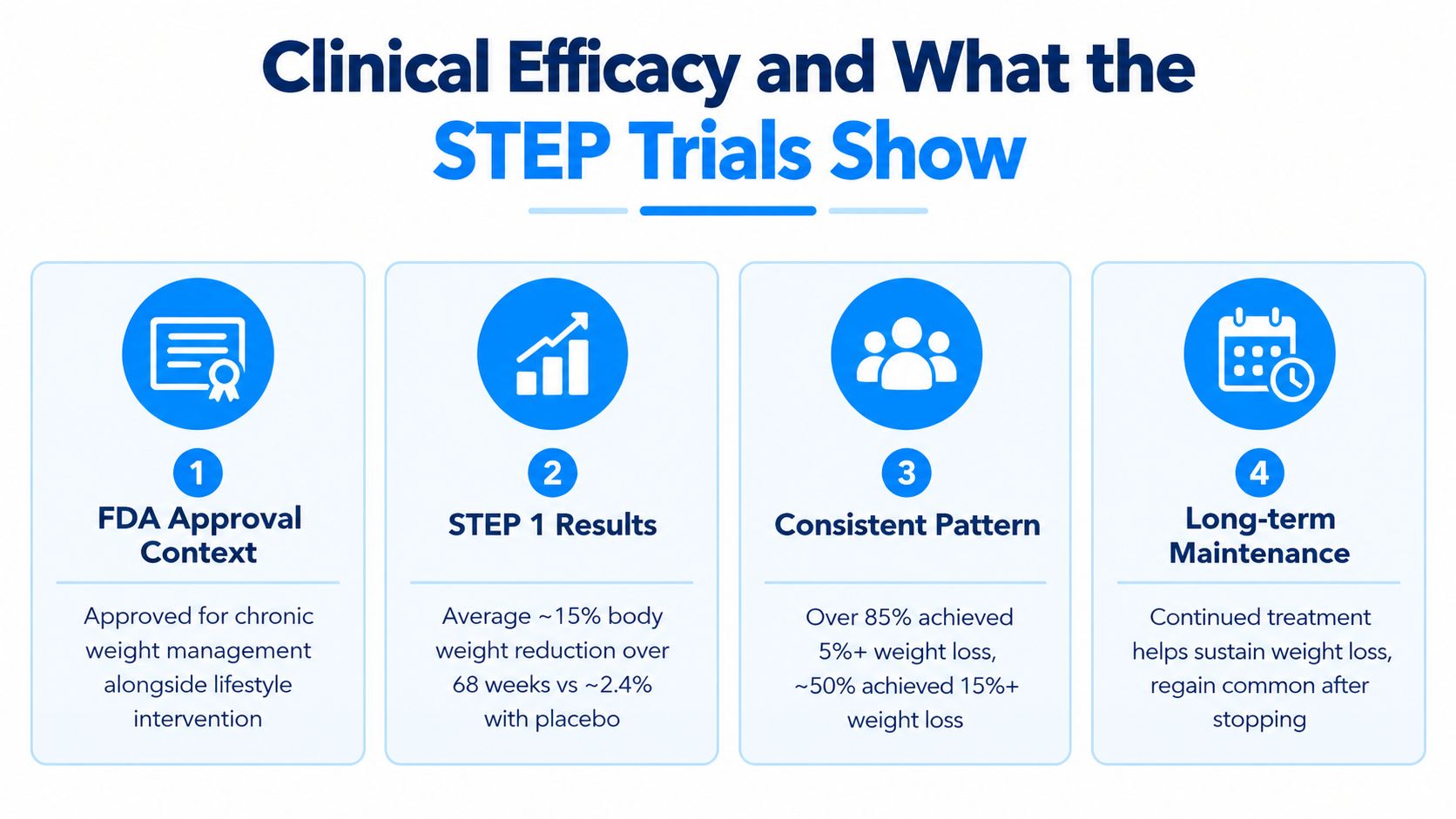
Semaglutide changed obesity care because it produced weight loss at a level many older treatments did not reach. In the STEP 1 trial, 1,961 adults were randomized, and the semaglutide arm produced an average 14.9% reduction in body weight at 68 weeks versus 2.4% with placebo (STEP 1 and FDA approval data). That approval rested on the broader STEP program, which included about 4,500 patients across four phase 3a trials and established semaglutide as the first once-weekly prescription medication in this category.
The Vials + Vitals Medical Board perspective is straightforward. Semaglutide can work well, but it is not a casual self-experiment. Eligibility, medication choice, dose escalation, and follow-up all shape the result, because benefit depends on sustained treatment, tolerability, and behavior change. The practical question is simple, is it the right treatment for this person now?
Clinical rule: semaglutide works best as part of a plan, not as a standalone shortcut.
Safety guardrails matter before the first dose. A clinician should review prior diagnoses, pregnancy status, medication list, gastrointestinal history, and the patient's ability to follow ongoing monitoring. If those steps are rushed, treatment quality drops quickly.
How Semaglutide Works to Reduce Appetite and Support Weight Loss
Semaglutide is a GLP-1 receptor agonist, which means it mimics a gut hormone involved in appetite signaling and satiety. The simplest way to think about it is as a thermostat for hunger, the brain gets a stronger message that enough has been eaten, so cravings and persistent food-seeking quiet down. That appetite shift is the reason patients often describe smaller portions feeling more satisfying.
Why the dose matters
The weight-loss effect is dose-dependent, and expert review data show that semaglutide 2.4 mg consistently outperforms placebo, with mean losses around 10% to 17% across randomized studies (dose-response review). That matters because stopping the titration early, or backing off before the therapeutic dose is maintained, can blunt the result. Behavioral support still matters too, because lifestyle co-intervention improves the chance of reaching clinically meaningful weight-loss thresholds.
The mechanism is not just “eat less.” GLP-1 signaling helps reduce appetite, supports satiety after meals, and can improve glycemic regulation, which helps some patients feel less driven by blood sugar swings. In practical terms, that can make a structured eating plan more doable, especially when prior diets failed because hunger came back too aggressively.
Patient-friendly summary: semaglutide doesn't force weight loss, it reduces the biological pressure to overeat so healthy choices become easier to sustain.
A key guardrail follows from that biology. If dose escalation is too slow, inconsistent, or discontinued before the target dose is reached and maintained, the medicine's benefit can fall short of what the STEP program showed. The medication is doing part of the work, but it still needs enough exposure and enough time to do it.
Clinical Efficacy and What the STEP Trials Show
The STEP program matters because it turns weight loss medication into measurable clinical response. As noted earlier, semaglutide 2.4 mg gained FDA approval for chronic weight management in adults with obesity or overweight plus at least one weight-related condition, based on trial results that were difficult to overlook. The first STEP trial showed strong average weight loss, but the more useful question for patients is what that response means in practice: who reaches clinically meaningful thresholds, and how durable is the result?
That is where the fuller STEP pattern helps. A 2022 review of STEP 1, 3, 4, and 8 found that many participants reached at least 10% weight loss, and a substantial share reached 15% or more (STEP review). Those thresholds matter because they often reflect changes people can feel in day-to-day life, such as easier movement, less strain on joints, and better adherence to food plans that once felt unrealistic. The same review also showed higher success rates than placebo at those levels, which helps clinicians set expectations early.
Durability is the other half of the story. In STEP 5, semaglutide continued to produce meaningful weight loss at 104 weeks, with cardiometabolic improvements maintained over time (STEP 5 data). That finding is important for a chronic condition. Some patients do well initially, then stall, and others worry that stopping will lead to rebound. The longer follow-up supports the idea that semaglutide works best as an ongoing therapy, not a short trial run.
For clinicians and patients, the practical takeaway is straightforward. Early response, plateau, and long-term maintenance all belong in the same conversation. If weight loss slows after the first phase, that does not automatically mean the medicine has failed. It may mean the dose, adherence, tolerability, or broader treatment plan needs review. If results remain limited despite appropriate dosing and follow-up, it is reasonable to discuss whether another therapy may fit better, including alternatives such as tirzepatide, while also checking whether lifestyle support and dosing consistency are where the plan is breaking down.
A quick visual summary helps keep the sequence clear.
Dosing Titration and Protocol Guardrails Over 12 Weeks
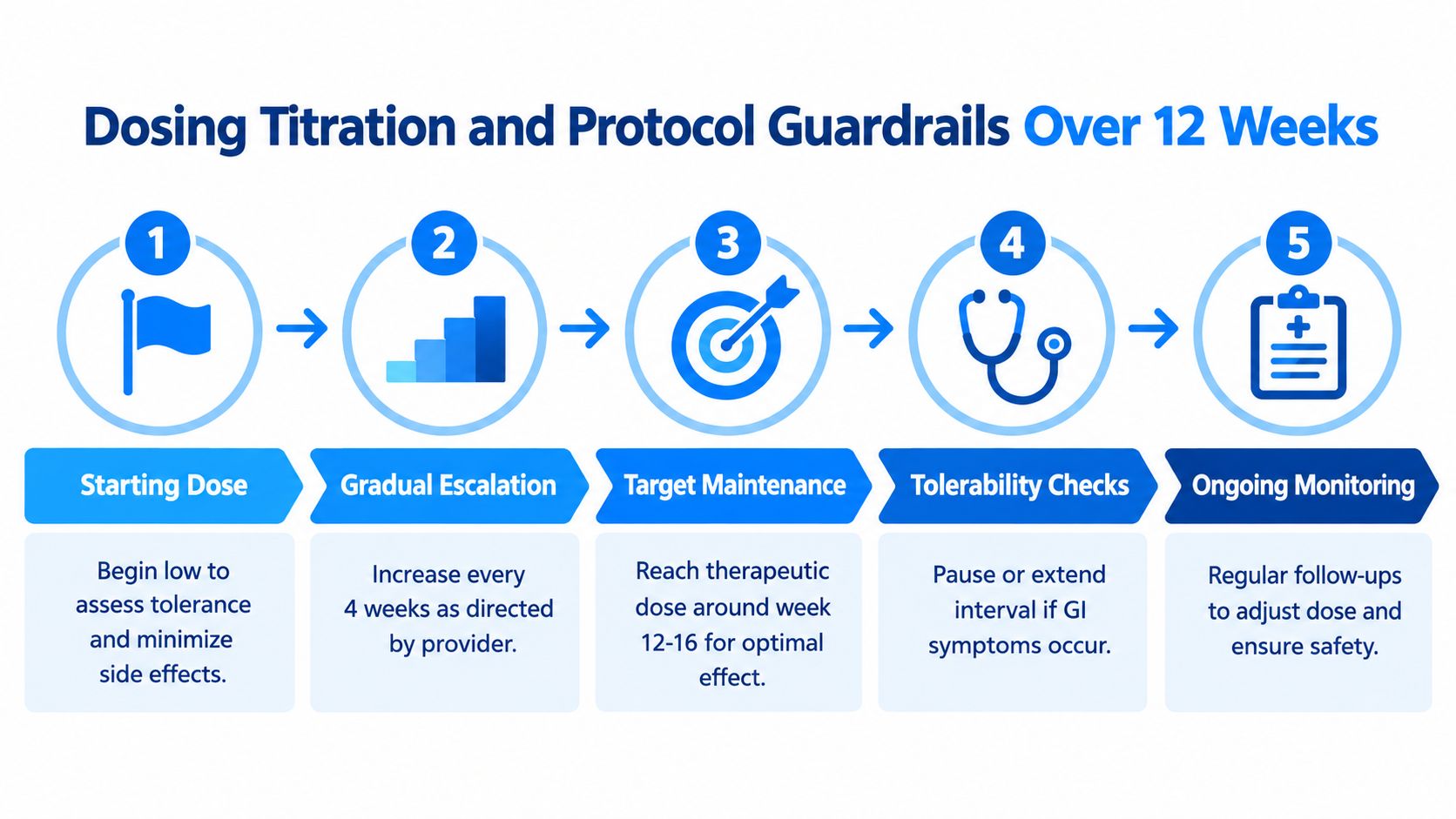
Semaglutide works best when the dose is increased gradually. That slow rise gives the body time to adapt, reduces the chance of early drop-off, and keeps the treatment plan realistic for patients who need to stay on therapy long enough to see benefit.
A provider-directed titration plan usually begins with a low dose and advances in steps. At each checkpoint, the clinician should review nausea, fullness, hydration, bowel changes, and day-to-day function. The goal is to reach the 2.4 mg weekly obesity dose only if the patient can tolerate it. If symptoms flare, the safer choice is to hold the dose longer or slow the pace instead of forcing the next increase.
Dose changes should follow the patient, not the calendar.
A GLP-1 Titration Calculator can help map the dose sequence, but it cannot replace medical judgment. That matters most for patients with diabetes, gastrointestinal disease, pregnancy risk, or medication interactions. Vials + Vitals uses telehealth intake with physician-directed titration and fulfillment through licensed U.S. pharmacy partners, which gives patients a structured path while keeping prescribing decisions in clinician hands.
A simple checkpoint list helps keep the process grounded:
- Start low: the first dose is for tolerance, not immediate weight loss.
- Increase in steps: spacing dose changes over weeks helps the gut adjust.
- Review symptoms every time: nausea, bowel changes, and hydration status should guide the next move.
- Slow down if needed: a longer hold at one dose is reasonable when side effects threaten adherence.
- Reassess often: ongoing review helps keep treatment safe and useful.
Practical rule: if side effects are strong enough to disrupt food intake, hydration, or adherence, the schedule should be reviewed before the next dose increase.
The main guardrail is individualization. A fixed calendar can push patients too fast, while a flexible plan makes it more likely they will continue therapy and get a response that lasts. That matters when patients are deciding whether to stay the course, pause escalation during a plateau, or consider another option if the current dose is not delivering enough benefit.
Common Adverse Effects and How to Manage Them Safely
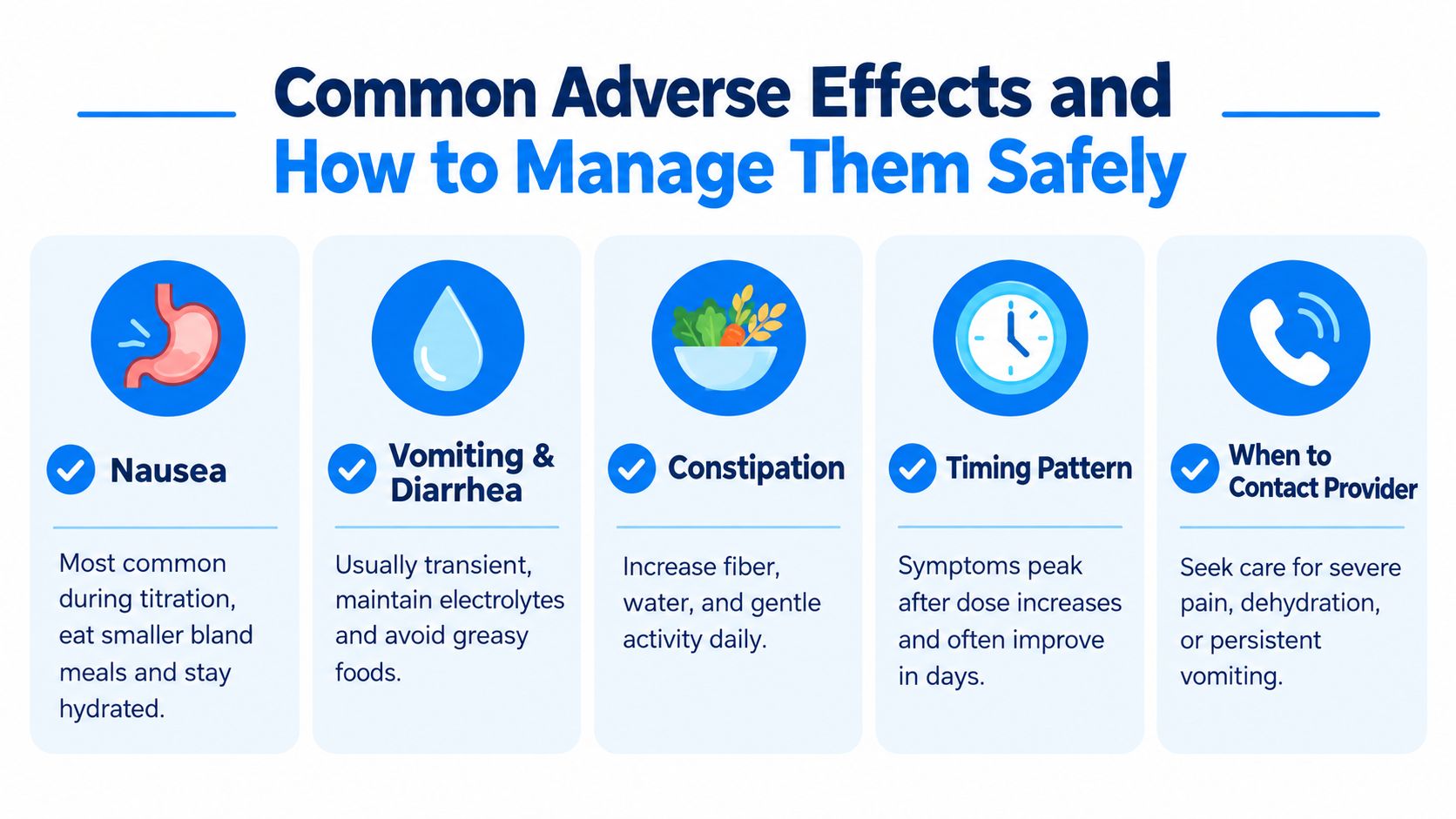
The most common semaglutide side effects are gastrointestinal, and they often show up during dose increases rather than at a stable dose. Patients usually do better when they understand that this timing pattern is expected, not a sign that the medication is failing. Good counseling keeps people from stopping too early.
What tends to happen first
Nausea is often the leading complaint, and it usually improves with slower eating, smaller meals, and adequate hydration. Vomiting and diarrhea can happen too, especially if the patient pushes portions too aggressively or eats greasy foods during titration. Constipation is common enough that many patients need to build water, fiber, and light activity into the routine from the start.
The clinical response should match the symptom pattern. If symptoms appear after an increase, a provider may hold the dose longer before moving up again. If symptoms are persistent, severe, or limit hydration, the patient needs reassessment rather than reassurance alone.
Red flags that need prompt contact
Contact the prescriber quickly if severe abdominal pain, dehydration, or persistent vomiting shows up, because those signs can mean the treatment plan needs to change.
Hair shedding is another concern that gets overlooked. A review of telogen effluvium explains that diffuse shedding can occur about 2 to 3 months after a metabolic stressor such as illness, crash dieting, or significant weight loss, because follicles shift into the telogen phase rather than being permanently destroyed (telogen effluvium review). That timing confuses many patients, because the shedding appears later than the weight loss itself. The key point is that the process is usually a cycling issue, not permanent follicle loss.
Clinical judgment should separate expected nuisance effects from signals that need a pause, dose change, or workup. A patient who can still hydrate, eat reasonably, and function may continue with guardrails. A patient who cannot keep fluids down, or who has escalating pain, should not “push through.”
Plateaus Rebound and When to Consider Alternatives
A plateau does not always mean the medication stopped working. Often it means the body has adjusted to the current dose, the early rapid phase has ended, and the next decision is about maintenance rather than escalation. The hardest part for many readers is accepting that a plateau is not automatically a failure.
What happens after stopping
The rebound question is where many public explanations fall short. Evidence from STEP-based analyses and later syntheses shows that discontinuation is commonly followed by substantial regain, with one review finding participants regained about 60% of lost weight by 1 year after stopping GLP-1 therapy and STEP-based analyses showing two-thirds of prior weight loss returned within a year after semaglutide withdrawal (withdrawal review). That is why semaglutide is effective but not curative.
When another incretin may fit better
Comparative effectiveness matters when loss plateaus, access is disrupted, or a patient wants a different risk-benefit balance. Independent coverage of the SURMOUNT-5 head-to-head trial reported about 20.2% average weight loss at 72 weeks with tirzepatide versus 13.7% with semaglutide, which highlights that semaglutide is no longer the highest-efficacy option for every patient. In type 2 diabetes, SURPASS-2 also found tirzepatide superior to semaglutide, with between-group weight-loss advantages of -1.9 kg, -3.6 kg, and -5.5 kg across the compared doses (SURPASS-2).
| Therapy | Mean Weight Loss | Key Context |
|---|---|---|
| Semaglutide | 13.7% in head-to-head obesity coverage at 72 weeks | Highly effective, but not always the top responder |
| Tirzepatide | 20.2% in head-to-head obesity coverage at 72 weeks | Greater average loss in that comparison |
The decision matrix is clinical, not emotional. If the patient is still progressing, maintaining semaglutide may make sense. If the patient has plateaued despite good adherence, is struggling with supply, or needs greater average weight reduction, a provider may discuss switching strategies or a different incretin approach.
Telehealth Prescribing Compounding and Choosing a Safe Provider
Telehealth can improve access, but only if the clinical process is strict enough to protect patients. Safe prescribing starts with an intake that screens eligibility, reviews medical history, and assigns the right titration plan instead of handing out a one-size-fits-all order. That is especially important with GLP-1 therapy, where dose timing and follow-up directly affect tolerability.
What safe access should look like
A trustworthy workflow includes licensed clinician review, clear eligibility criteria, and pharmacy fulfillment through regulated U.S. partners with documented quality processes. Compounded formulations should be discussed carefully, because the FDA has warned that counterfeit or poorly made semaglutide products can contain the wrong ingredients, too much, too little, or no active ingredient at all. Patients should also know that compounded medications are not FDA-approved and require a higher level of scrutiny around source and handling.
A safe provider should be able to explain the route of delivery, whether that is injectable vials with cold-chain shipping or a needle-free oral format when appropriate. HIPAA-compliant communication, state-appropriate licensure, and ongoing titration oversight are not extras, they are the baseline for responsible care.
Safety checklist: ask who reviews the intake, who prescribes, where the medication is dispensed, and how dose changes are supervised after the first shipment.
The practical takeaway is simple. Patients do best when they choose a provider that treats semaglutide as a monitored medical therapy, not a shipping product. That means clear eligibility review, cautious titration, quality-controlled fulfillment, and follow-up that continues after the first dose.
If semaglutide weight loss feels relevant to a current goal, the next step should be a medical review, not a guess. Vials + Vitals offers physician-directed telehealth assessment, protocol-driven GLP-1 care, and individualized titration support for patients who need a structured path forward. Visit Vials + Vitals to request a clinical evaluation and see whether semaglutide or another metabolic option fits the safety profile and treatment goals.
Ready to see if this protocol fits your biology?
A licensed provider reviews every request before anything is prescribed.
Calibrate your metabolic protocol →