Semaglutide Oral Tablet: Clinical Mechanism and Dosing
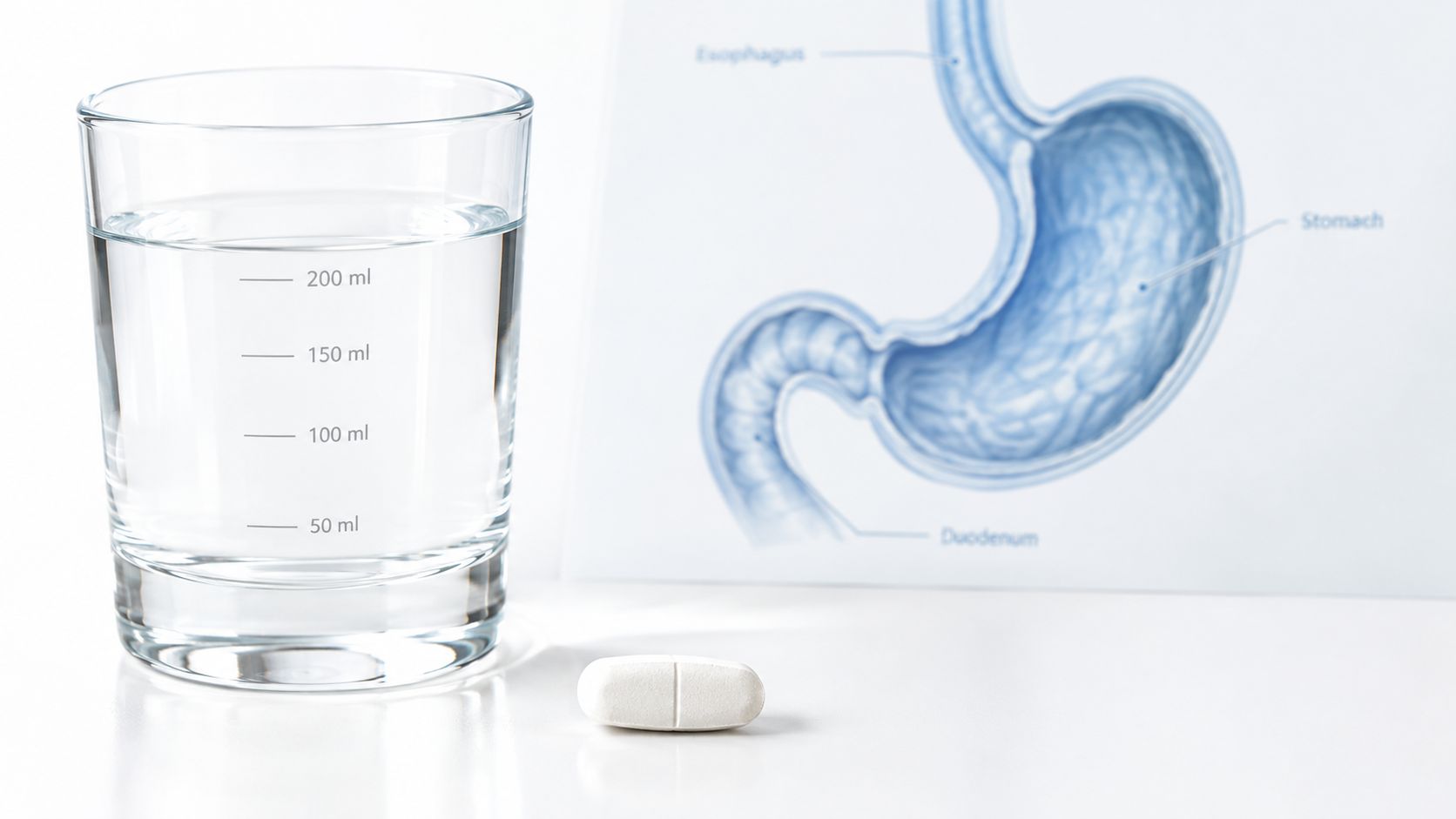
Learn how the semaglutide oral tablet works. Explore GLP-1 dosing, bioavailability, administration rules, and clinical outcomes from Vials + Vitals.
The most popular advice about a semaglutide oral tablet is also the least complete: “It's easier because there's no injection.” The tablet removes needle anxiety, but it replaces a weekly injection routine with a daily absorption protocol that depends on an empty stomach, a small amount of water, and a waiting period before anything else enters the stomach. For some patients, that routine is more demanding than an injection.
A patient who wakes up, swallows the tablet with coffee, takes a thyroid medicine, and eats breakfast has taken the product, but may not have followed the conditions needed for predictable exposure. Oral semaglutide is a peptide medicine with unusually restricted gastrointestinal absorption. Its clinical value depends not only on the prescribed dose, but also on whether the patient can make the administration sequence work every morning.
Table of Contents
- What Oral Semaglutide Therapy Actually Requires
- Pharmacology and Absorption Mechanics
- Clinical Dosing and Administration Protocol
- Efficacy and Clinical Benchmark Data
- Comparing Oral, Sublingual, and Injectable Options
- Long-Term Management and Safety Considerations
- Next Steps for Metabolic Health
What Oral Semaglutide Therapy Actually Requires
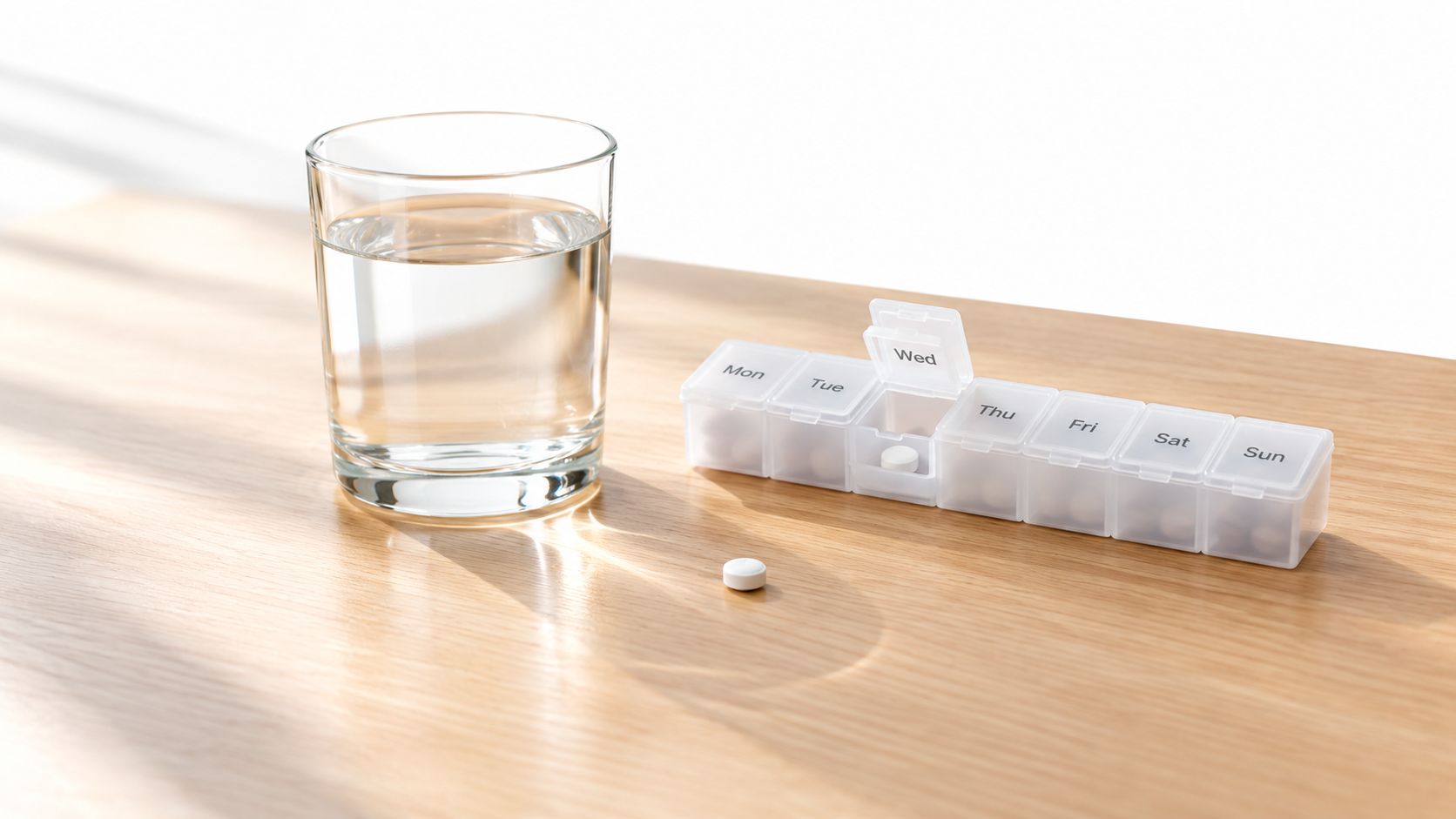
An oral tablet can be more demanding than an injection. The patient avoids a needle, but must manage a precise morning sequence that depends on fasting, limited water, and delayed intake of everything else. For someone with type 2 diabetes who already takes morning medicines, drinks coffee on waking, or works changing shifts, “daily” may not mean simple.
The tablet must be taken on an empty stomach with no more than 4 ounces of water, followed by at least 30 minutes before food, beverages, or other oral medicines, according to clinical administration guidance for oral semaglutide. These conditions matter because oral absorption is restricted and variable. An injection has a needle-related burden. The tablet has a fasting-and-separation burden that can interfere with established routines.
Why the tablet became clinically important
Oral semaglutide marked an important development as the first orally administered glucagon-like peptide-1 receptor agonist marketed for type 2 diabetes under the brand name Rybelsus. The European Medicines Agency granted marketing authorization throughout the European Union on April 3, 2020, following an assessment of seven main clinical studies involving more than 5,500 people with type 2 diabetes, as documented in the European Medicines Agency assessment of Rybelsus.
That authorization applies to a specific formulation. A product described as oral, sublingual, compounded, or orally disintegrating is not automatically interchangeable with the approved tablet. Differences may affect absorption, potency, dose equivalence, manufacturing controls, and regulatory status.
Practical rule: Treat the tablet as a pharmacologically specific product, not injectable semaglutide placed into a pill.
The appropriate choice depends on the patient's morning schedule, concurrent medicines, gastrointestinal tolerance, treatment indication, and ability to maintain follow-up. Convenience is only one part of the decision.
Pharmacology and Absorption Mechanics
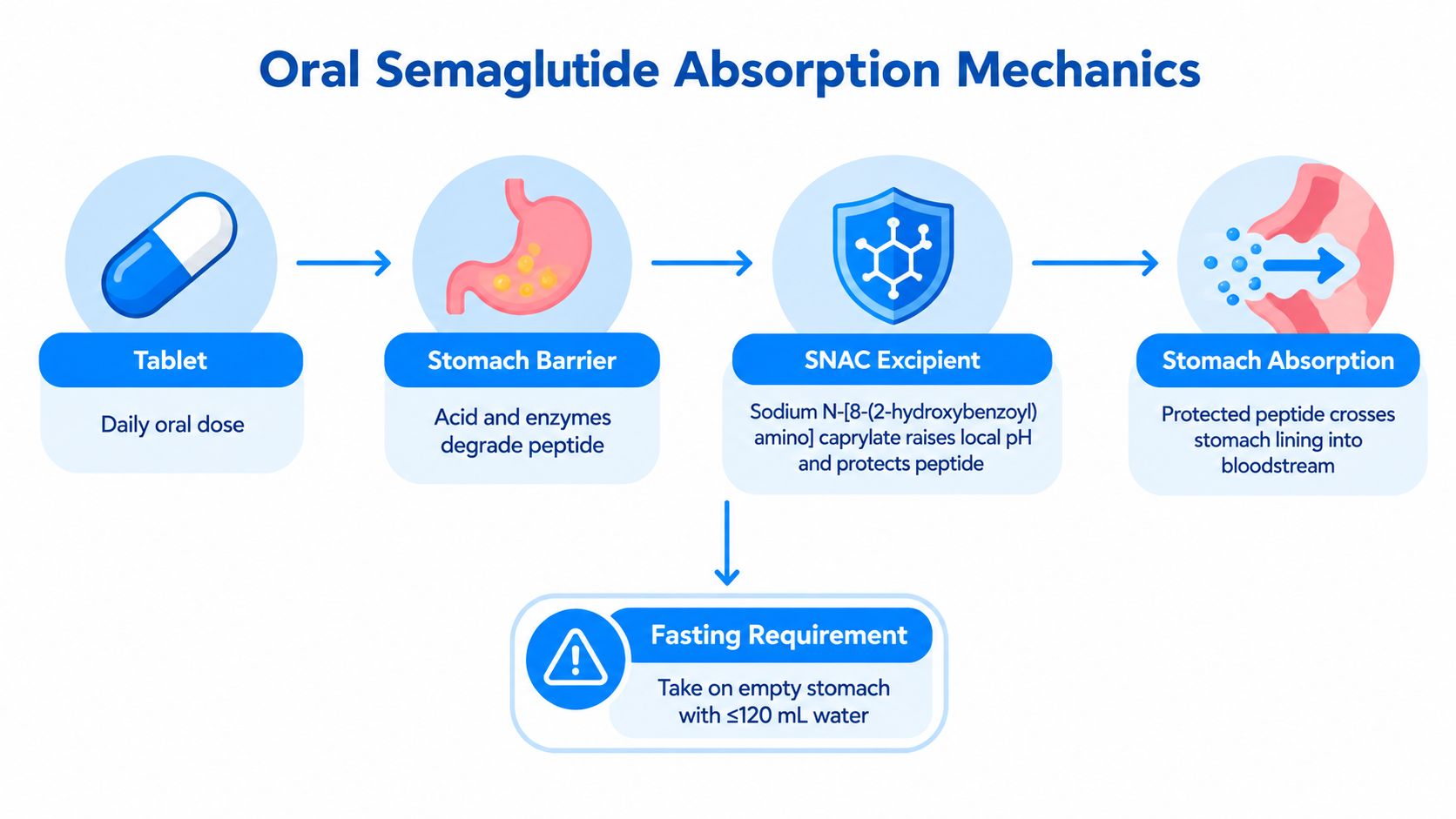
An oral semaglutide tablet can be more demanding than an injection. Semaglutide is a peptide, so digestive enzymes can degrade it, while the gastrointestinal lining allows only limited passage into the bloodstream. An ordinary tablet would therefore provide unreliable systemic exposure.
The authorized formulation addresses these barriers with the absorption enhancer sodium N-(8-[2-hydroxybenzoyl]amino)caprylate, known as SNAC. SNAC creates a local stomach environment that supports peptide protection and absorption. It does not make semaglutide chemically equivalent to a conventional small-molecule tablet.
Why stomach conditions matter
FDA pharmacokinetic data indicate that absorption occurs predominantly in the stomach, with maximum plasma concentration reached approximately 1 hour after dosing. Absolute bioavailability is only about 0.4% to 1% for the 3 mg, 7 mg, and 14 mg formulations because semaglutide remains vulnerable to gastric degradation and has limited mucosal transport, according to the FDA prescribing information and pharmacokinetic data.
Low bioavailability does not mean the medicine lacks clinical effect. It reflects the difficult route by which a small fraction of the administered dose reaches circulation. SNAC enables active exposure, but it does not remove the need to control conditions around dosing.
Food, other beverages, and oral medicines can change the local environment or disrupt the intended absorption sequence. Effectiveness therefore depends partly on execution. A patient who treats the tablet like a vitamin may experience less predictable exposure than someone who follows the product instructions consistently.
What the pharmacokinetics mean in practice
With once-daily administration, concentrations generally stabilize after 4 to 5 weeks. Semaglutide is more than 99% albumin-bound, has an approximately one-week elimination half-life, and can remain in circulation for roughly five weeks after the final dose, per the FDA label cited above.
These kinetics explain the need for gradual titration and why adverse effects may persist after treatment stops. They also make missed or poorly timed doses relevant during clinical review. Patients should not compensate for a dosing error by taking extra medication unless a prescriber gives product-specific instructions.
Clinical Dosing and Administration Protocol
Oral semaglutide can demand more morning discipline than an injection. Its absorption depends on a narrow sequence, so build dosing into a routine that can be followed consistently:
- Take the tablet first. Use it after an overnight fast, before food, beverages, or other oral medicines.
- Use plain water only. Keep the volume at or below 4 ounces, as covered in the administration guidance linked earlier.
- Wait at least 30 minutes. Delay breakfast, coffee, supplements, and other oral medicines until this interval has passed.
- Swallow the tablet as directed. It is not interchangeable with a sublingual or orally disintegrating formulation.
- Review medication conflicts in advance. Morning thyroid treatment, supplements, and other medicines with fasting requirements may need a clinician-directed schedule.
The waiting period controls the absorption conditions rather than adding a cosmetic instruction to the label. Food, coffee, and concurrent medicines can interfere with the intended sequence. If a patient cannot reliably separate the tablet from breakfast or other treatments, the prescriber may need to adjust the medication schedule, select another dosing time, or consider a different treatment option.
Dose escalation has a purpose
The 3 mg dose is primarily an initiation dose, not the usual full maintenance dose. Gradual escalation gives gastrointestinal tolerability time to develop before exposure increases. The prescriber should determine whether and when to advance according to glycemic response, adverse effects, concurrent medicines, and the treatment indication.
| Phase | Dosage | Duration | Purpose |
|---|---|---|---|
| Initiation | 3 mg once daily | Clinician-directed initiation period | Establish the administration routine and assess tolerability |
| Escalation | 7 mg once daily | After appropriate clinical review | Increase exposure when response and tolerability support it |
| Further escalation | 14 mg once daily | After additional clinical review | Consider a higher approved diabetes dose when clinically indicated |
Patients should not speed up the schedule because a lower dose feels easy. Persistent vomiting, severe abdominal symptoms, dehydration, or other concerning effects warrant contact with the prescribing clinician before further escalation. Clinical success depends on both dose selection and dose delivery, and the latter is unusually sensitive to routine.
Efficacy and Clinical Benchmark Data
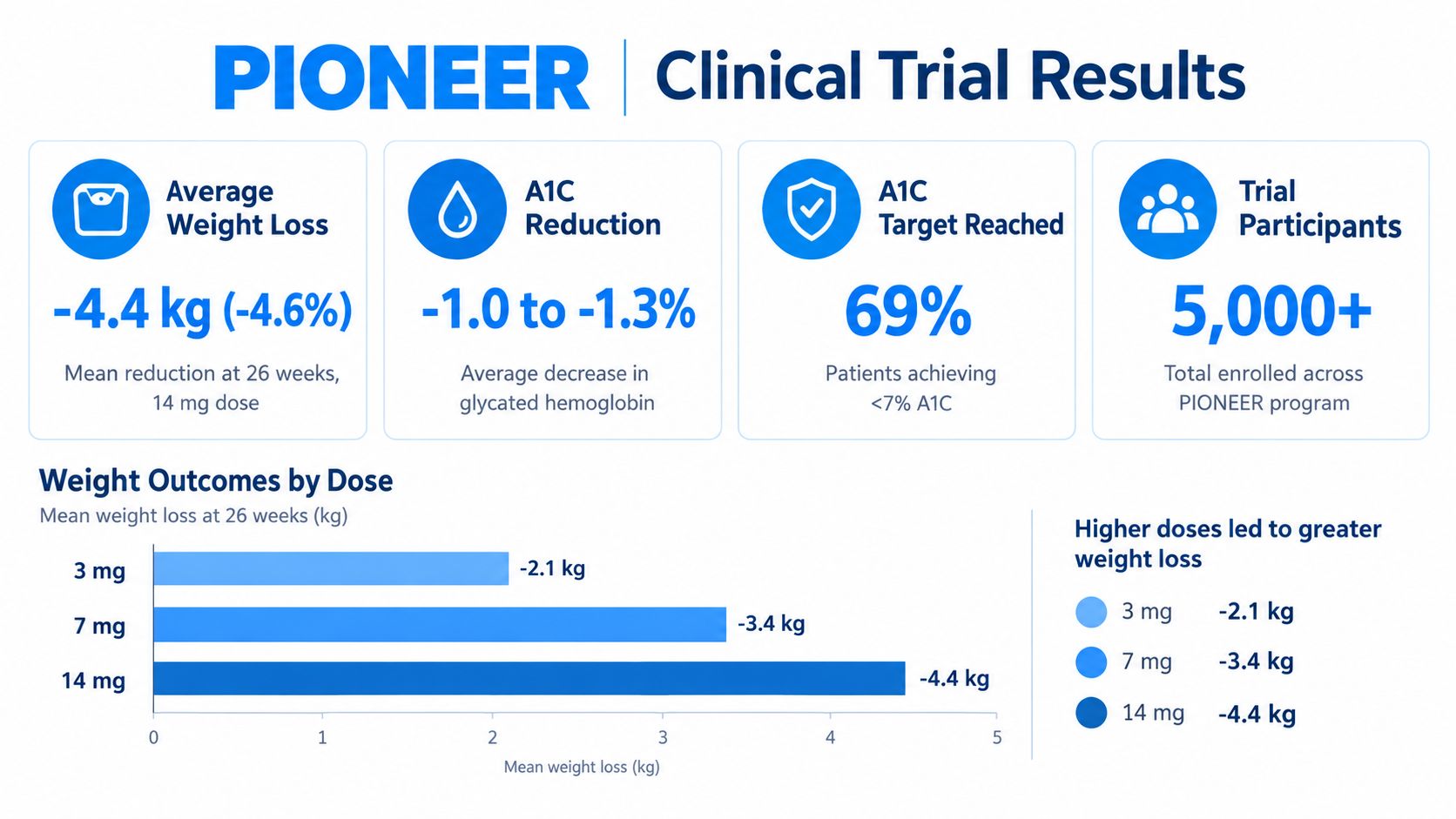
The oral tablet's clinical effect depends on reaching and maintaining an effective dose. In the 26-week PIONEER 3 randomized trial, 7 mg and 14 mg produced HbA1c reductions that exceeded sitagliptin by 0.3 and 0.5 percentage points, respectively. Body weight reductions were greater by 1.6 kg and 2.5 kg. These findings are reported in the PIONEER 3 randomized trial publication.
The 3 mg dose did not demonstrate HbA1c noninferiority in that trial. Its clinical role is therefore initiation and tolerability assessment, not the expected maintenance endpoint.
What the benchmark results do and don't show
In PIONEER 1, 14 mg daily reduced HbA1c by an average of 1.5 percentage points from an 8.0% baseline and reduced body weight by 4.1 kg, according to the PIONEER 1 trial report. These results support a meaningful glycemic role for the authorized oral tablet in adults with type 2 diabetes.
They do not predict an identical response for every patient. Trial participants received a defined product, structured follow-up, and protocol-based escalation. Taking the tablet with coffee, shortening the fasting interval, or stopping during early nausea can change exposure substantially compared with the study regimen.
Tolerability also affects whether a patient reaches the doses used in efficacy trials. Across the PIONEER program, nausea, vomiting, and diarrhea were common and dose-dependent. At 14 mg, nausea occurred in approximately 15% to 23% of patients across PIONEER studies, while roughly 7% to 15% discontinued treatment, according to the PIONEER program review.
The clinically useful dose is the highest tolerated dose that serves the patient's treatment goal, not automatically the highest available dose.
These findings primarily concern glycemic management in type 2 diabetes. They should not be transferred automatically to compounded products, sublingual formulations, or obesity regimens using different doses and study populations.
Comparing Oral, Sublingual, and Injectable Options
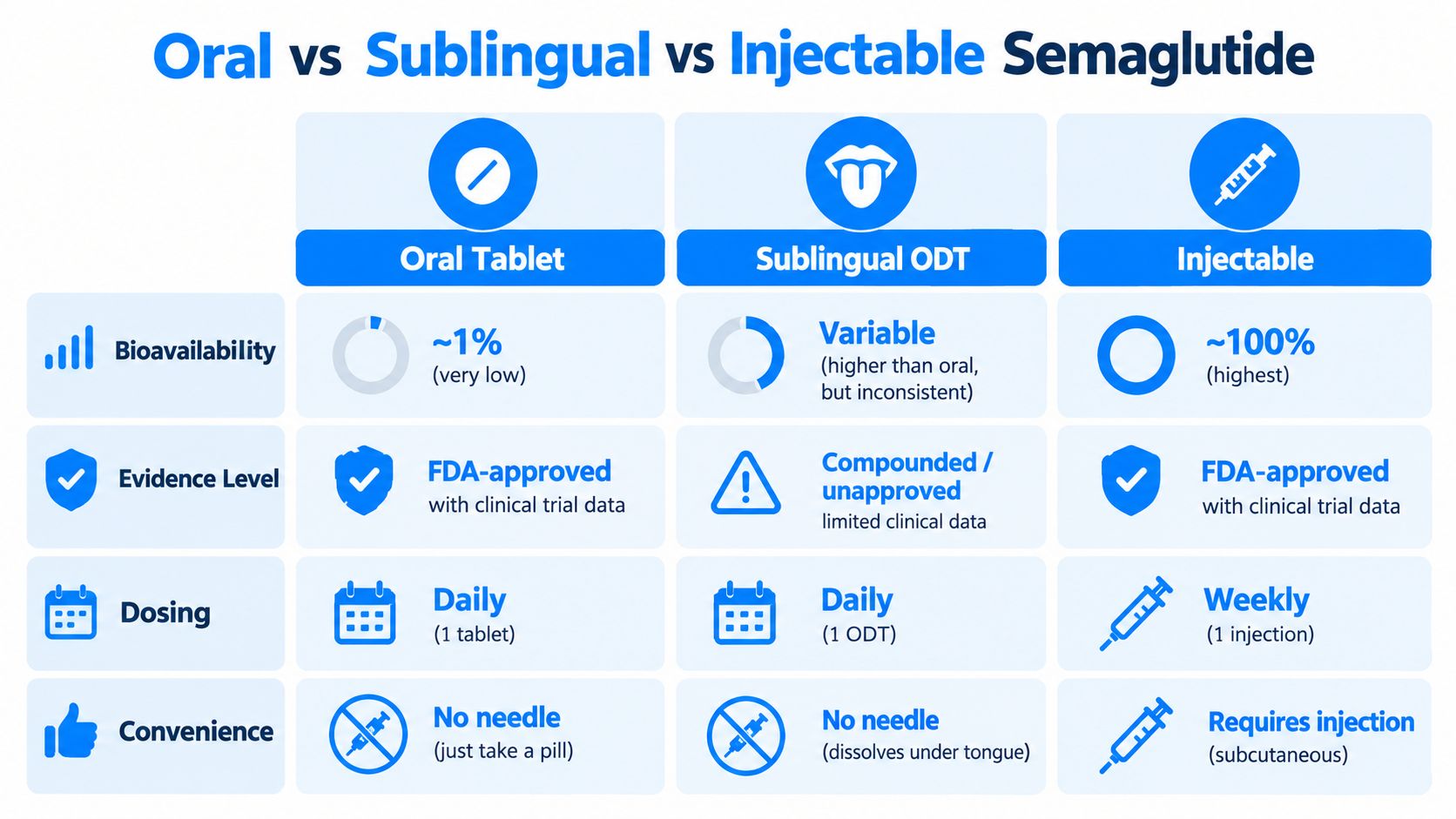
The delivery route changes more than convenience. It changes the absorption problem, the evidence base, the daily workload, and the degree to which a prescribed dose can be compared with trial data.
The authorized oral tablet uses SNAC and relies mainly on gastric absorption. An injectable product bypasses gastrointestinal degradation and mucosal transport. A compounded sublingual or orally disintegrating tablet may be designed for a different route, but its absorption, potency, dose equivalence, and clinical outcomes cannot be assumed from studies of the authorized swallowed tablet.
The meaningful differences
| Route | Absorption and evidence | Routine | Main trade-off |
|---|---|---|---|
| Authorized oral tablet | Low, formulation-dependent bioavailability with evidence from approved clinical trials | Daily, fasting and water restrictions | No needle, but high timing sensitivity |
| Compounded sublingual or orally disintegrating formulation | Variable absorption and a different evidence and regulatory context | Usually daily, according to the prescribed formulation | May avoid needles, but dose equivalence and outcomes require careful verification |
| Injectable formulation | Bypasses the gastrointestinal absorption barrier and has route-specific trial evidence | Injection schedule determined by the product and prescription | More direct delivery, but needle exposure and injection technique are required |
Recent obesity data illustrate why product and population must stay connected. In OASIS 4, once-daily oral semaglutide 25 mg produced an estimated mean weight loss of 14% versus 2% with placebo at week 64 in adults with overweight or obesity without diabetes, as reported in the American College of Cardiology summary of OASIS 4. The study included 307 participants, with 79% women and 92% White participants, so the findings shouldn't be generalized to every population or treated as proof of interchangeability with an approved injectable regimen.
Patients considering a compounded formulation should ask which product was studied, how the dose was established, what quality testing applies, and whether the intended outcome is supported by evidence for that exact route. A sublingual product isn't validated merely because semaglutide has been studied in another oral formulation.
Long-Term Management and Safety Considerations
Weight management needs a plan for continuation, not only initiation. In the STEP 1 extension, adults treated with semaglutide 2.4 mg for 68 weeks were observed for another 52 weeks without active treatment. By week 120, those who stopped semaglutide had regained a mean 11.6 percentage points of body weight, according to the STEP 1 extension report.
The findings come from an injectable obesity regimen, so they should not be transferred directly to every oral formulation. They do support a practical conclusion: after treatment stops, appetite and energy-balance pressures may return. Discontinuation therefore calls for planned monitoring, nutrition support, and a maintenance strategy agreed with a clinician.
Hair retention during metabolic change
Hair shedding during rapid weight reduction may reflect telogen effluvium, inadequate nutrition, androgen-related changes, or another medical condition rather than direct follicle toxicity. Proposed mechanisms include rapid weight loss, insufficient protein or micronutrients, androgen fluctuations, and altered scalp perfusion, as described in the review of GLP-1-associated hair shedding.
Persistent shedding warrants assessment of patterned miniaturization, scalp symptoms, protein intake, thyroid disease, iron deficiency, acute illness, and other medicines. Controlled weight reduction, adequate nutrition, and early clinical evaluation are safer responses than automatically attributing hair loss to semaglutide.
Next Steps for Metabolic Health
A clinically sound decision starts with the treatment goal. Glycemic management in type 2 diabetes, obesity treatment, cardiovascular risk, needle aversion, medication timing, gastrointestinal tolerance, and long-term maintenance can point toward different formulations.
Before starting or switching, a clinician should review morning routines, oral medicines, contraindications, prior gastrointestinal symptoms, nutritional intake, and the patient's ability to maintain follow-up. Baseline and follow-up measures should extend beyond scale weight when appropriate. Glycemia, waist-related measures, symptoms, nutrition, treatment adherence, and body composition can provide a more useful picture of metabolic response.
Patients who want a broader baseline can compare biomarker blood panels with a clinician to identify which measures may help guide monitoring. The result shouldn't be used to self-prescribe or to select a dose without medical review.
The semaglutide oral tablet can be a valuable option when its administration requirements fit the patient's life. It isn't a casual substitute for an injection, and a compounded sublingual formulation isn't automatically equivalent to the authorized tablet. The right choice is the one supported by the patient's indication, evidence for the exact product, tolerability, safety profile, and ability to follow the regimen consistently.
Vials + Vitals provides physician-directed telehealth evaluation, individualized GLP-1 treatment planning, and clinician-supervised titration for eligible patients considering oral or injectable metabolic therapies. Visit Vials + Vitals to complete a confidential assessment and discuss whether a medically supervised option fits the patient's goals and routine.
Ready to see if this protocol fits your biology?
A licensed provider reviews every request before anything is prescribed.
Calibrate your metabolic protocol →