Prescription Hair Loss Treatments: Complete Medical Guide

Prescription Hair Loss. Explore prescription options for hair loss with evidence-based guidance on finasteride, minoxidil, and monitoring. Learn what works
Finasteride 1 mg daily is a first-line prescription option for male pattern hair loss, suppressing DHT by approximately 60% to 70%. Clinical benefit typically appears after about 6 months of continuous use, so early objective monitoring matters more than judging treatment by a few weeks of shedding or photographs.
Hair loss treatment works best when the diagnosis, medication choice, tolerability, and response markers are evaluated together. A prescription can slow follicular miniaturization, stimulate anagen activity, or address a metabolic trigger, but no medication should be selected without considering the pattern of loss, medical history, reproductive factors, and willingness to continue treatment.
Table of Contents
- Understanding Prescription Options for Hair Thinning
- First-Line Prescription Therapies and Clinical Evidence
- Evaluating Alternative Approaches and Combination Strategies
- Monitoring Treatment Response and Early Indicators
- GLP-1 Therapies and Their Relationship to Hair Loss
- Telehealth Access and Clinical Evaluation Pathways
- Addressing Common Misconceptions About Prescription Treatments
Understanding Prescription Options for Hair Thinning
Finasteride is a type II 5-alpha-reductase inhibitor used as a prescription first-line therapy for male androgenetic alopecia at 1 mg daily. By suppressing the conversion of testosterone to DHT, it lowers serum, scalp, and prostate DHT by approximately 60% to 70%, and clinical benefit is typically seen after about 6 months of continuous use, according to a peer-reviewed review of finasteride biology and clinical use.
That timeline reflects the biology of hair, not a failure of the medication. DHT drives follicular miniaturization in genetically susceptible scalp follicles. Lowering DHT can slow progression and preserve vulnerable follicles, rather than forcing a rapid burst of new growth.
Diagnosis determines the treatment path
Androgenetic alopecia usually develops through gradual thinning and miniaturization. Telogen effluvium follows a different pattern, with increased shedding that may occur after physiological stress, illness, major dietary change, or another trigger. Inflammatory, autoimmune, hormonal, and scarring conditions require still different evaluations.
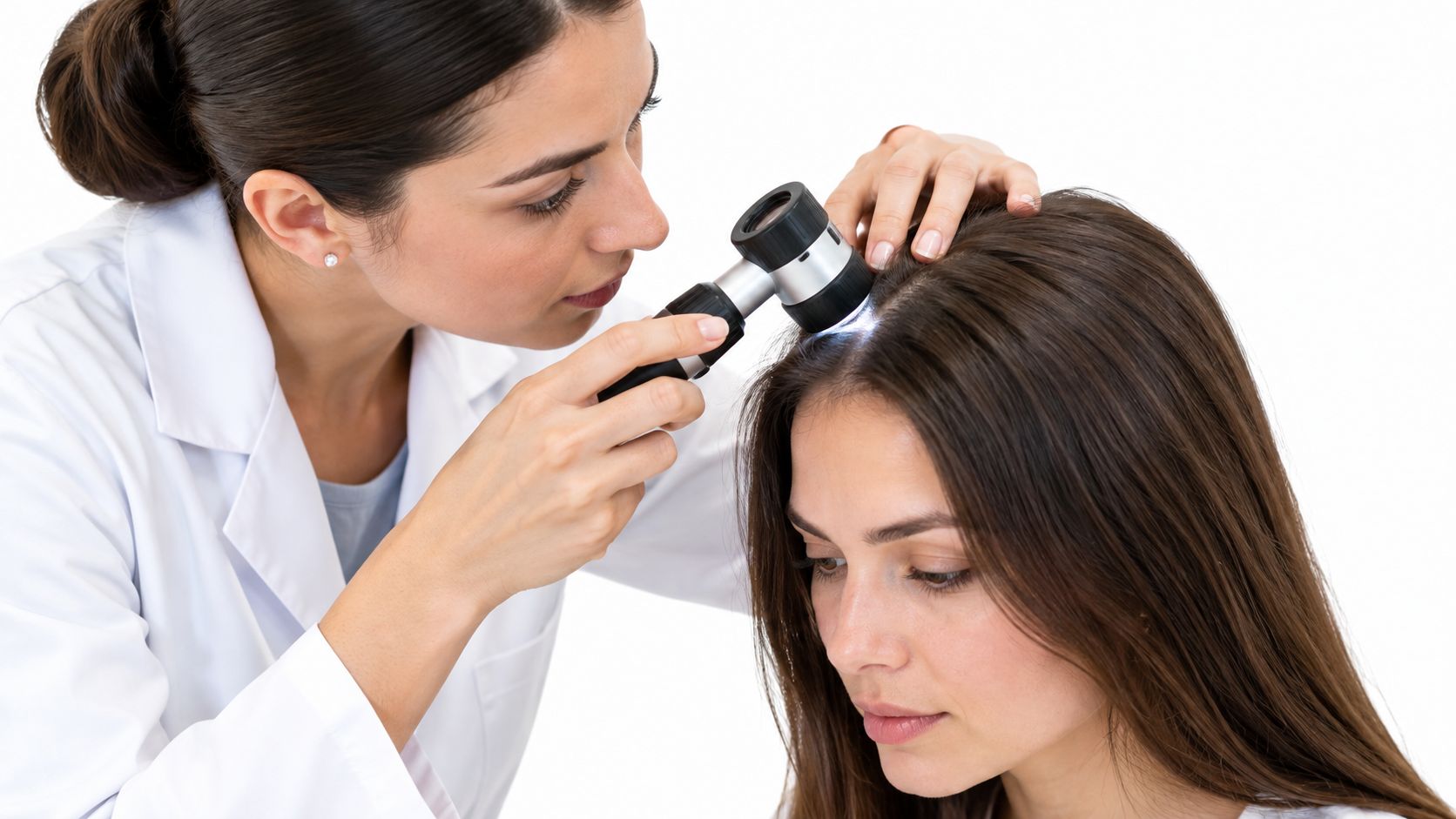
A prescription hair loss plan should therefore begin with a scalp examination and a careful history. The clinician should ask when shedding began, whether the hairline or part is changing, whether loss is diffuse or patchy, what medications are being used, and whether symptoms such as scalp pain, scaling, or redness are present.
Sex, reproductive status, and risk change the decision
Guideline-supported finasteride use is most clearly established for adult men with mild to moderate male androgenetic alopecia. Women may require different options and precautions, particularly when pregnancy is possible or when signs of androgen excess are present. A clinician may also need to investigate whether a medication, endocrine condition, nutritional problem, or recent weight change is contributing to shedding.
Stopping a DHT-suppressing medication removes its biological effect, so adherence is central. Oral or compounded finasteride exposure also warrants counseling about reported sexual adverse effects and mood-related symptoms. The appropriate question is not whether a drug can work. It's whether the diagnosis, expected benefit, safety profile, and monitoring plan fit the individual patient.
First-Line Prescription Therapies and Clinical Evidence
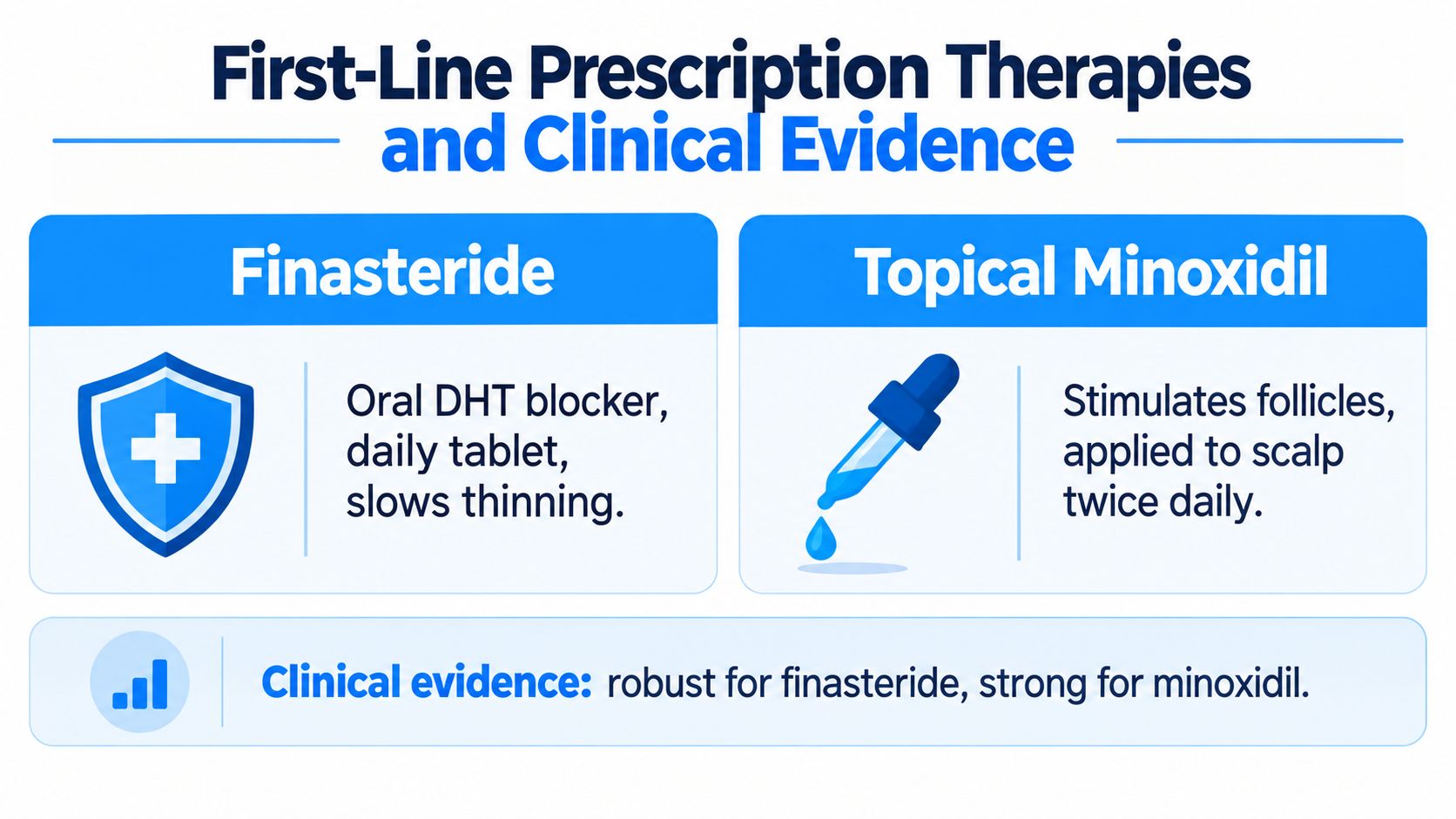
The two foundational treatments approach pattern hair loss from different directions. Finasteride reduces DHT signaling, while topical minoxidil supports follicular activity. That distinction helps explain why one may be selected alone, while another patient may be offered a combination plan.
Finasteride addresses the androgen pathway that contributes to miniaturization in susceptible follicles. Its practical value often lies in stabilization and preservation, although regrowth can occur. The treatment only continues to provide its intended DHT suppression while it is taken consistently.
Topical minoxidil promotes anagen entry and follicular enlargement, likely through vasodilation and potassium-channel effects. Its exact molecular mechanism remains incompletely defined, but evidence syntheses and clinical guidance support 2% to 5% topical minoxidil, commonly 1 mL twice daily, as a first-line option in pattern hair loss. These mechanisms and dosing conventions are summarized in a clinical evidence review of topical and oral minoxidil.
What patients should expect from each option
Minoxidil doesn't target DHT directly. It supports the growth phase and may enlarge weakened follicles, making it useful across several pattern hair loss presentations. Higher topical concentrations can improve efficacy in some studies, but they can also increase local problems such as dermatitis, dryness, itching, and pruritus. A treatment that irritates the scalp so severely that the patient stops using it isn't clinically successful.
Finasteride and minoxidil also differ in administration. Finasteride is an oral daily tablet, while topical minoxidil requires consistent scalp application. The better choice may depend on whether the patient prioritizes hormonal pathway control, avoidance of an oral medication, ease of application, or a combined strategy.
Practical rule: A prescription should be judged by sustained stabilization, tolerability, and objective follicular change, not by a dramatic short-term photograph.
Neither medication should be framed as a guaranteed permanent cure. Pattern hair loss is a chronic biological process. The realistic aim is to retain existing density, improve the caliber of miniaturized hairs when possible, and reassess the plan when the response or tolerability falls short.
Evaluating Alternative Approaches and Combination Strategies
When first-line therapy is ineffective, inconvenient, or poorly tolerated, clinicians may consider a different route or a combination. The decision isn't just oral versus topical. It involves the desired balance between convenience, local irritation, systemic exposure, monitoring, and the patient's willingness to continue treatment.
Oral minoxidil is used off-label in some markets. It can be easier for some patients to follow than daily scalp application, but the convenience comes with a different safety profile. Hypertrichosis is substantially more common, and edema can become a practical monitoring concern. Blood pressure, cardiovascular history, concurrent medications, and symptoms such as swelling or lightheadedness should be reviewed before and during treatment.
Topical minoxidil keeps exposure focused on the scalp but can cause dermatitis, dryness, itching, or pruritus. Those effects may be manageable with a formulation change or revised application technique, but persistent irritation deserves clinical review rather than forced adherence.
Comparing routes and combinations
A combination of an anti-androgen pathway treatment with a follicle-supporting agent can make biological sense because the medications address different mechanisms. It can also increase the complexity of monitoring and make it harder to identify which medication caused an adverse effect.
Recent evidence reflects this trade-off. A 2026 randomized trial reported that low-dose oral minoxidil produced outcomes comparable to topical minoxidil over 24 weeks, while a 2026 prospective study evaluated oral dutasteride combined with low-, medium-, or high-dose oral minoxidil as a dose-based strategy. These findings come from a recent review of efficacy and tolerability considerations in oral hair-loss regimens.
The data don't mean that oral therapy is automatically superior. They support a more individualized conversation:
- Convenience: Oral treatment may suit patients who consistently avoid scalp application.
- Local tolerance: A patient with persistent dermatitis may need an alternative route.
- Systemic monitoring: Oral minoxidil requires attention to edema and other systemic effects.
- Sexual and mood counseling: Finasteride requires a direct discussion of reported sexual adverse effects and mood-related symptoms.
- Combination burden: Multiple medications may improve coverage of the underlying biology, but they also increase the need for structured follow-up.
A clinician should define what success means before adding a second agent. Without a baseline and a planned reassessment, combination therapy can create more uncertainty rather than better care.
Monitoring Treatment Response and Early Indicators
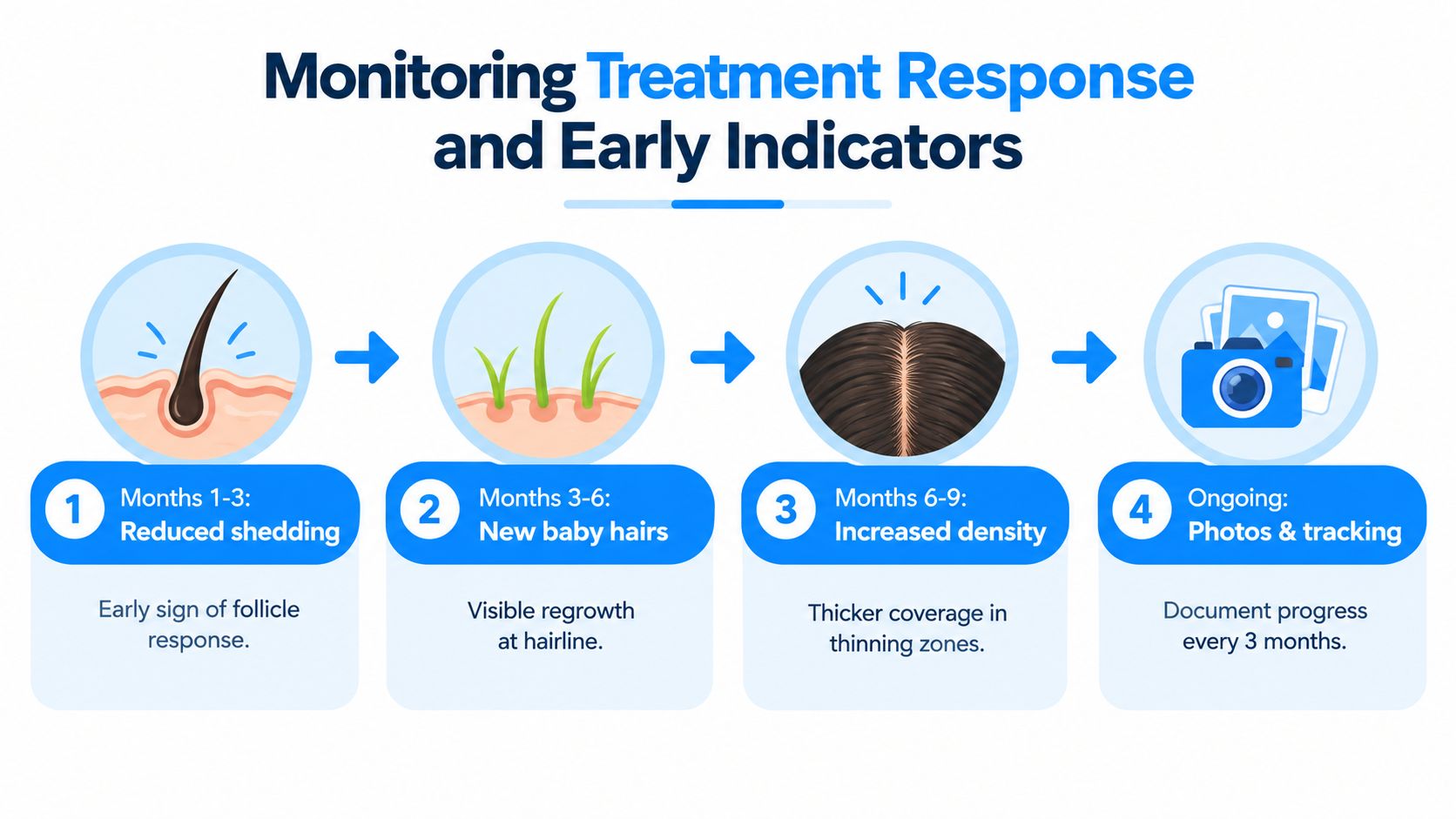
Most patients can't reliably tell whether a treatment is working from daily shedding alone. Hair naturally cycles through growth and resting phases, and bathroom or brush counts vary with washing frequency, styling, and attention. A more useful approach combines standardized photographs, examination, symptoms, and trichoscopy, a magnified scalp assessment that can reveal changes before visible density improves.
A 2026 prospective cohort study found that early changes in hair shaft thickness and a reduced vellus-hair ratio predicted a favorable response to topical minoxidil. The findings, discussed in a registry-based review and prospective analysis of early response markers, support monitoring follicle quality rather than relying only on before-and-after images.
A practical monitoring framework
Start with a baseline. Clinical photographs should use the same lighting, camera position, hair condition, and part placement. The scalp examination should document the hairline, crown, mid-scalp, and any areas of inflammation or scaling.
Track quality, not just quantity. A clinician can assess shaft thickness, the proportion of fine vellus hairs, follicular openings, and signs of scalp irritation. A patient may not see greater density immediately, yet thicker shafts and fewer fine hairs can indicate that follicles are responding.
Separate shedding from progression. Early shedding can occur with follicle-cycle changes, but persistent acceleration, new patchy loss, scalp symptoms, or loss outside the expected pattern should trigger reassessment. Those findings may indicate a different diagnosis or an additional cause.
Set a decision point. Finasteride commonly requires about 6 months of continuous use before clinical benefit is expected, as described in the earlier evidence review. A clinician should determine whether to continue, modify, or investigate further based on adherence, side effects, examination findings, and objective change.
Before changing a regimen, confirm that the patient is using the medication as prescribed and that the original diagnosis still fits.
Photos remain useful, but they're only one part of the record. Trichoscopy can show biological movement sooner, while symptom review identifies irritation or systemic effects that photographs cannot capture.
GLP-1 Therapies and Their Relationship to Hair Loss
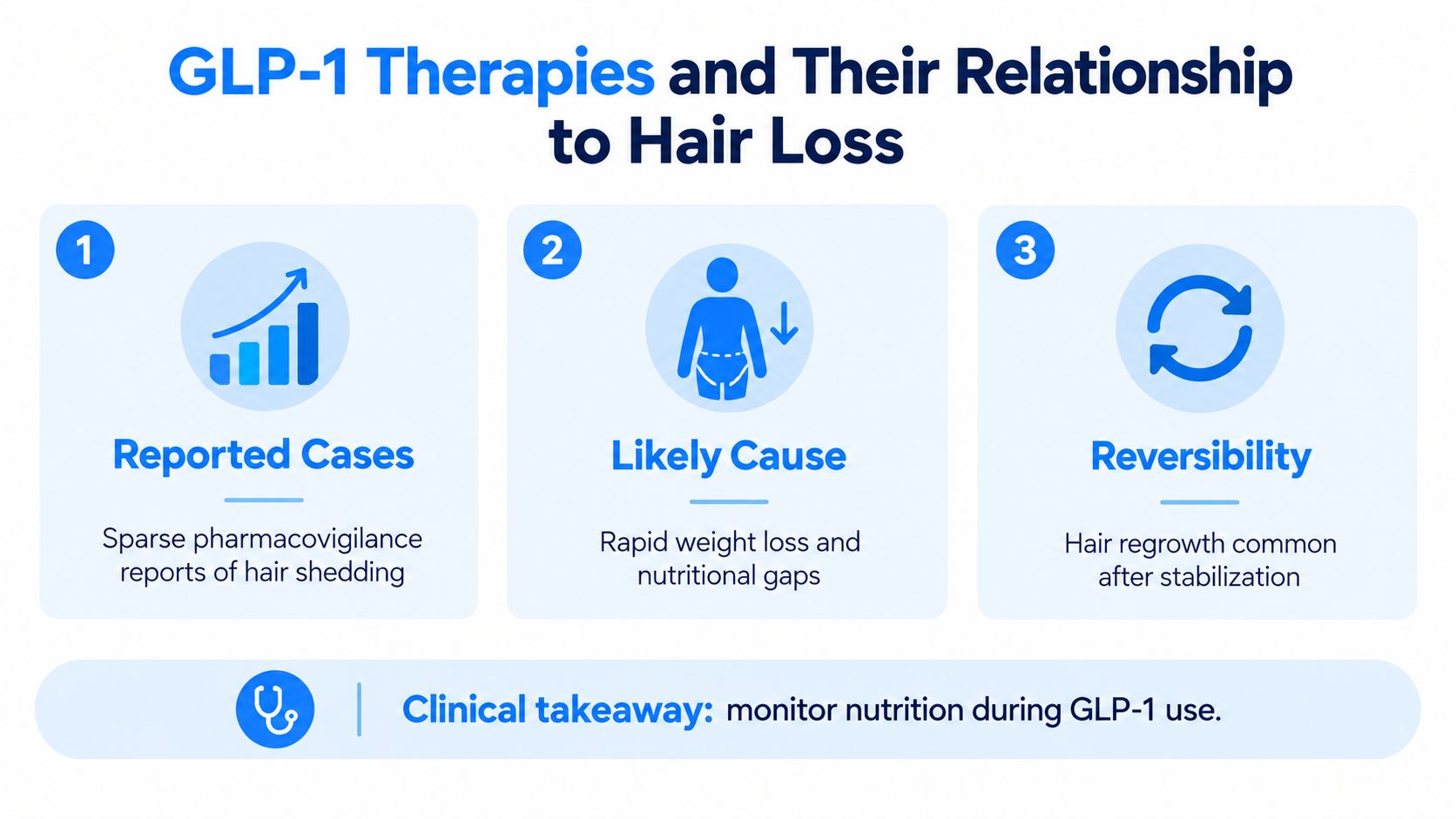
Patients using semaglutide or tirzepatide may notice increased shedding during treatment, particularly when weight changes, dietary intake, or metabolic stress alter the hair cycle. This doesn't automatically mean that a GLP-1 therapy is directly damaging follicles. Reports have classified associated hair loss most often as telogen effluvium or androgenetic alopecia, and the distinction affects management.
A 2026 systematic review found the strongest hair-loss incidence signals among GLP-1 receptor agonists for semaglutide and tirzepatide. The review also reported that semaglutide-associated hair loss appeared dose-dependent, with doses below 2 mg weekly rarely implicated and higher obesity-treatment doses more commonly associated with reports. These findings are detailed in the systematic review of GLP-1 receptor agonists and hair outcomes.
What the risk data can and cannot show
A PubMed-indexed meta-analysis of nine interventional studies reported a pooled hair-loss risk ratio of 3.252, with a 95% confidence interval of 1.437 to 7.358, among GLP-1 receptor agonist users compared with placebo. In randomized trials involving patients with overweight or obesity, the risk ratio was 3.587, with a 95% confidence interval of 2.100 to 6.124, and the single-arm event rate after GLP-1 therapy was 3.9%. The meta-analysis of interventional GLP-1 studies provides the statistical context.
A separate review summarized 626,894 patients, including 9,933 who experienced hair loss and 52 who reported hair regrowth. The strongest pharmacovigilance signals involved semaglutide, followed by tirzepatide and liraglutide, according to the review of reported GLP-1 hair outcomes.
These findings support proactive counseling, not automatic discontinuation. Clinicians should review the pace of weight change, dietary adequacy, protein intake, concurrent illness, and whether the pattern resembles diffuse shedding or progressive miniaturization. Persistent pattern changes, scalp inflammation, or continued loss after metabolic stabilization warrant dermatologic evaluation.
Telehealth Access and Clinical Evaluation Pathways
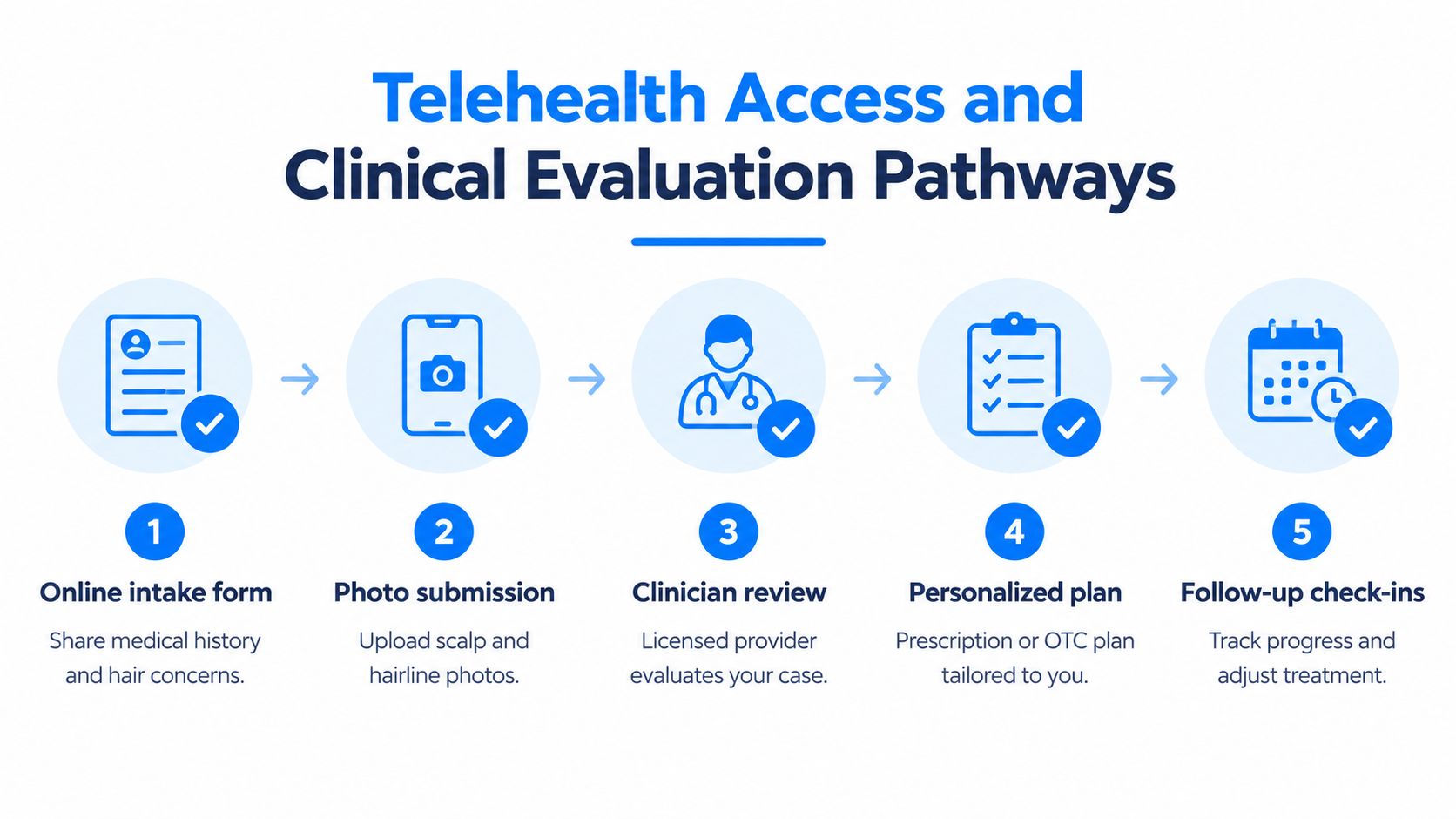
Telehealth can support prescription hair loss care when the process begins with diagnosis rather than product selection. A structured intake should capture the onset and distribution of thinning, previous treatments, allergies, medical conditions, current medications, reproductive considerations, and symptoms that could suggest another scalp disorder.
Photographs help clinicians assess the hairline, part, crown, and density from consistent angles. They can't replace every in-person examination, but they can support an initial review when image quality is adequate and the case is appropriate for remote care. A licensed clinician should determine whether the presentation is suitable for telehealth or requires an in-person dermatologic assessment.
What a responsible pathway includes
A practical remote evaluation generally follows this sequence:
- Confidential intake: The patient describes the pattern, timing, medical history, and treatment goals.
- Photo review: Standardized scalp and hairline images support the clinical assessment.
- Provider decision: A U.S.-licensed clinician determines whether prescription therapy is clinically appropriate.
- Formulation selection: The plan accounts for route, tolerability, contraindications, adherence, and monitoring needs.
- Follow-up oversight: The clinician reviews response markers and adjusts treatment when appropriate.
An evidence-based S3 guideline recommends oral finasteride 1 mg/day to improve or prevent progression of male androgenetic alopecia in adults older than 18 years with mild to moderate disease classified as Hamilton-Norwood IIv-V. Expert consensus also notes that finasteride 1 mg shows better results than minoxidil for hair regrowth, as reported in the S3 guideline for androgenetic alopecia.
Vials + Vitals offers physician-directed telehealth evaluation for hair health and metabolic therapies, with individualized prescription decisions, titration oversight, and fulfillment through accredited U.S. pharmacy partners. Patients should still expect eligibility screening and follow-up rather than an automatic prescription.
Addressing Common Misconceptions About Prescription Treatments
The first misconception is that the fastest visible change represents the best treatment. Hair biology rarely rewards impatience. A medication may be working by slowing miniaturization or improving shaft caliber before the patient sees obvious density, while a rapid change in shedding may reflect a temporary cycle shift rather than durable regrowth.
Another misconception is that every type of hair loss should receive the same prescription. Gradual pattern thinning, diffuse telogen effluvium, patchy autoimmune loss, and inflammatory or scarring disorders don't share one treatment pathway. A patient with sudden, painful, scaly, or sharply demarcated loss needs diagnostic evaluation before assuming androgenetic alopecia.
What treatment can realistically accomplish
Prescription therapy can help preserve vulnerable follicles, improve the caliber of miniaturized hairs, and support regrowth in appropriate cases. It can't reliably restore every follicle that has been lost or guarantee permanent results after treatment stops.
Patients should also be cautious with compounded or off-label options presented without clear dosing, contraindication screening, or follow-up. More medication isn't automatically better, and combination therapy isn't automatically necessary. The sound approach is to define the diagnosis, choose a reasonable first-line option, document a baseline, monitor objective markers, and change course when the evidence or safety profile calls for it.
Sustainable hair retention depends on diagnosis and follow-through, not on chasing the newest prescription.
Patients experiencing thinning should begin with a clinician-led assessment, especially when shedding is sudden, patchy, symptomatic, or associated with a major metabolic change. A measured plan gives the patient a safer way to determine whether treatment is working and when another explanation deserves attention.
Vials + Vitals provides physician-directed telehealth evaluation for prescription hair-loss and metabolic care, including individualized treatment decisions and ongoing monitoring. Visit Vials + Vitals to complete a confidential assessment and discuss whether a medically supervised plan fits the patient's goals and health history.
Ready to see if this protocol fits your biology?
A licensed provider reviews every request before anything is prescribed.
Explore hair protocols →