Peptide Therapy for Weight Loss: Clinical Guide

Explore the clinical evidence, mechanisms, and safety parameters of peptide therapy for weight loss. A medical guide to GLP-1 and dual incretin protocols.
Peptide therapy for weight loss isn't an effortless path to continuous weight reduction. The most clinically useful question isn't which medication suppresses appetite fastest, but whether a patient can follow a safe titration plan, manage predictable physiological adaptation, and maintain metabolic progress after the initial response slows. These treatments can produce substantial results, but they remain prescription interventions that require medical assessment and ongoing supervision.
The modern category centers on GLP-1 receptor agonists, including semaglutide, and dual GIP/GLP-1 therapies, including tirzepatide. Their effects extend beyond short-term appetite reduction. They influence satiety, gastric emptying, insulin signaling, food intake, and, over time, the behaviors and metabolic patterns that determine whether weight loss is sustained. The Vials + Vitals Medical Board approaches treatment as a structured metabolic protocol, not a standalone injection.
Table of Contents
- Redefining Peptide Therapy for Weight Loss
- Mechanisms of Incretin Pathways and Satiety
- Clinical Evidence for Semaglutide and Tirzepatide
- The Necessity of Structured Dose Titration
- Navigating Plateaus and Long-Term Maintenance
- Regulatory Realities of Compounded Formulations
- Clinical Candidate Selection and Telehealth Standards
Redefining Peptide Therapy for Weight Loss
Marketing often presents peptide therapy as a smooth downward line on a scale. Clinical care is less predictable. Early appetite suppression may be pronounced, but the body adapts, gastrointestinal symptoms can limit dose escalation, and weight loss commonly slows before a patient reaches a desired maintenance phase.
From appetite control to metabolic management
Semaglutide and tirzepatide act on hormonal pathways that help regulate appetite and glucose metabolism. Their effectiveness has changed expectations in obesity medicine, particularly because randomized trials demonstrated substantial average weight reduction rather than only brief changes in hunger. In the STEP evidence base, once-weekly semaglutide produced double-digit mean weight loss over the trial period, with many participants reaching clinically meaningful milestones in the peer-reviewed review of STEP trial results.
That result doesn't mean every patient will follow the trial average. A clinical response depends on baseline health, medication tolerance, dose exposure, eating patterns, activity, sleep, concurrent medications, and the ability to continue treatment. A patient who cannot tolerate escalation may need a slower pathway, a lower maintenance dose, or a reassessment of whether the current medication remains appropriate.
Clinical principle: A peptide prescription is the beginning of a monitoring relationship, not the completion of a transaction.
What treatment can and cannot do
Peptide therapy can reduce appetite, improve control over portions, and support weight reduction when the medication is tolerated and clinically appropriate. It can't replace evaluation for endocrine disease, medication-related weight gain, disordered eating, inadequate nutrition, or other conditions that may alter the treatment plan.
The most reliable protocols define safety parameters before the first dose. They establish how symptoms will be reported, when escalation will pause, what laboratory or clinical monitoring is appropriate, and how maintenance will be addressed after the initial response. That discipline matters because weight management is usually a long-term medical issue, even when the first prescription is viewed as a short-term intervention.
Patients should also understand that scale weight isn't the only relevant outcome. Appetite control, waist change, glycemic stability, physical function, nutrition quality, and preservation of lean tissue can all influence whether treatment is producing a useful metabolic result. A smaller number on the scale isn't automatically a complete clinical success if the patient is persistently nauseated, undernourished, weak, or unable to sustain the regimen.
Mechanisms of Incretin Pathways and Satiety
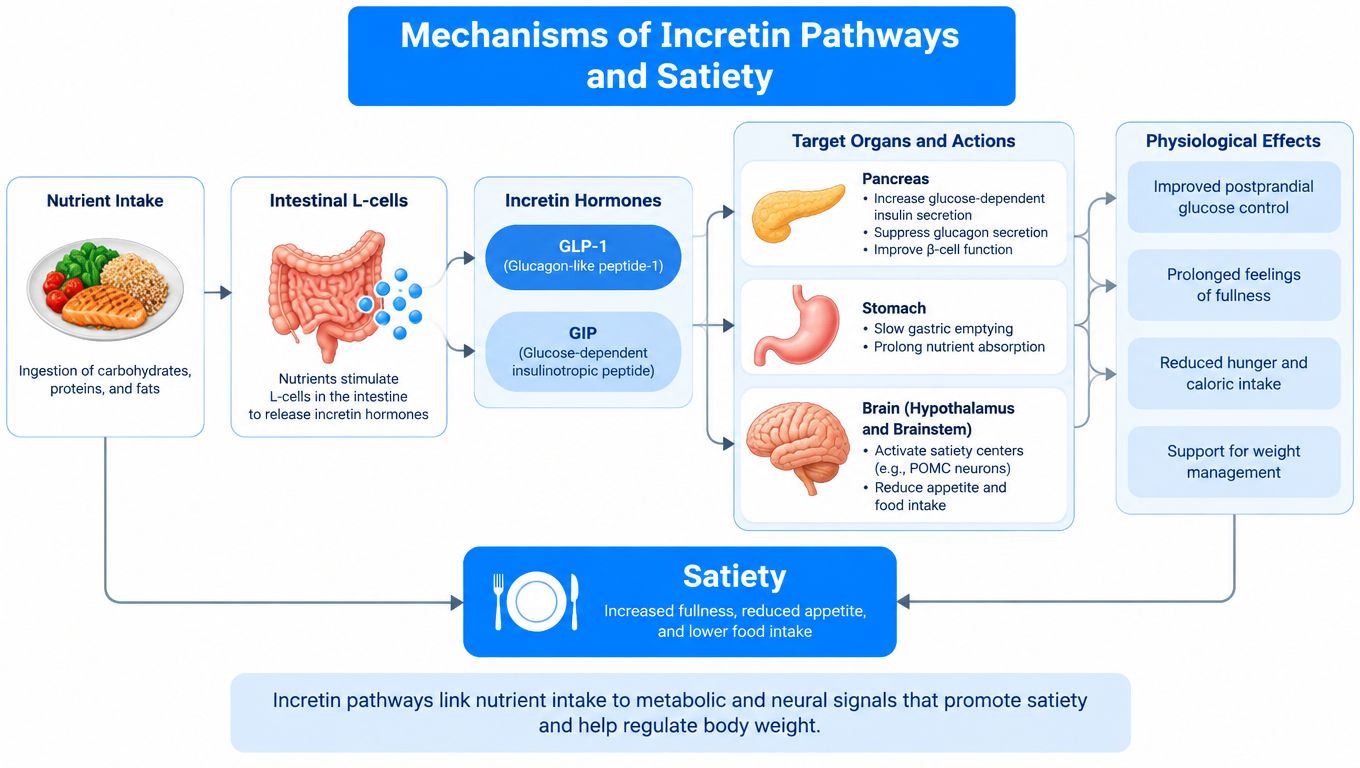
GLP-1 and GIP are incretin hormones, signaling molecules released in response to food intake. Therapeutic versions extend or strengthen these signals so that the body receives a more sustained message about satiety, glucose handling, and digestive pace.
GLP-1 as a coordinated signal
GLP-1 can be understood as a traffic-control signal for nutrient intake. After eating, GLP-1 receptor activation helps the pancreas release insulin in a glucose-dependent manner, meaning the response is tied to blood glucose rather than occurring indiscriminately. It also reduces glucagon signaling when appropriate, slows the movement of food from the stomach, and communicates with appetite-regulating regions of the brain.
The gastric effect helps explain why patients may feel full sooner and remain satisfied longer. It also explains why larger meals, rapid eating, or sudden dose increases can produce nausea, reflux, vomiting, or uncomfortable fullness. The medication isn't merely turning hunger off. It's changing the timing and intensity of several digestive and neuroendocrine signals at once.
GIP adds a second pathway
Tirzepatide activates both GIP and GLP-1 receptors. GIP contributes to glucose-dependent insulin signaling and may influence energy intake and nutrient handling through a complementary pathway. The precise clinical contribution of each receptor signal continues to be studied, but the therapeutic distinction is clear: semaglutide primarily targets the GLP-1 pathway, while tirzepatide targets GIP and GLP-1 together.
That difference matters clinically because a dual-pathway medication may produce greater average weight reduction for patients who tolerate dose escalation. It doesn't guarantee a superior individual response. Some patients may experience limiting gastrointestinal symptoms, inadequate response, or other reasons to remain on a single-pathway treatment.
Why the mechanism guides prescribing
The pathway explains both the benefit and the guardrails:
- Satiety signaling: Patients may experience earlier fullness and reduced food noise, but adequate protein and micronutrient intake still require planning.
- Delayed gastric emptying: Smaller meals and slower eating may improve comfort, while heavy or rapidly consumed meals can worsen symptoms.
- Glucose regulation: Patients using other glucose-lowering medicines may require coordinated monitoring to reduce treatment-related risks.
- Central appetite effects: Reduced hunger can support adherence, but it doesn't independently address emotional eating, sleep disruption, or an unsafe relationship with food.
Mechanism-based prescribing therefore asks more than whether a patient wants weight loss. It asks which pathway is suitable, which dose can be tolerated, what other treatments are present, and whether the patient can maintain adequate nutrition while appetite changes.
Clinical Evidence for Semaglutide and Tirzepatide
The evidence for these medications is strongest when the discussion stays precise. Trial averages describe what happened in defined populations under structured conditions. They don't function as a promise for an individual patient.
In a randomized trial of adults with overweight or obesity and a weight-related comorbidity, semaglutide 2.4 mg once weekly produced a mean body-weight change of -14.9%, compared with -2.4% with placebo after 68 weeks. In that study, 86.4% of participants achieved at least 5% weight loss, 69.1% achieved at least 10%, and 50.5% achieved at least 15%. The full trial population and outcomes are reported in the New England Journal of Medicine semaglutide trial.
Tirzepatide demonstrated a larger efficacy gradient in a comparable obesity trial. Average weight reductions were 16.0% with 5 mg, 21.4% with 10 mg, and 22.5% with 15 mg, compared with 2.4% with placebo over 72 weeks. The protocol included a 20-week dose-escalation period, showing that the highest studied dose wasn't introduced immediately. The published results appear in the New England Journal of Medicine tirzepatide trial.
Clinical efficacy of leading peptide therapies
| Therapy | Mechanism | Mean Weight Loss | Trial Duration |
|---|---|---|---|
| Semaglutide 2.4 mg | GLP-1 receptor agonist | -14.9% versus -2.4% with placebo | 68 weeks |
| Tirzepatide 5 mg | GIP/GLP-1 agonist | -16.0% versus -2.4% with placebo | 72 weeks |
| Tirzepatide 10 mg | GIP/GLP-1 agonist | -21.4% versus -2.4% with placebo | 72 weeks |
| Tirzepatide 15 mg | GIP/GLP-1 agonist | -22.5% versus -2.4% with placebo | 72 weeks |
The practical interpretation is a dose-response pattern, not a mandate to pursue the highest dose. A comparative review reported mean weight change of -20.2% with tirzepatide versus -13.7% with semaglutide at 72 weeks in adults without diabetes, using maximum tolerated weekly subcutaneous doses in the comparative review of incretin therapies. The word “tolerated” is clinically important. Efficacy only matters if the patient can remain on treatment safely.
Semaglutide remains a powerful option, particularly when a single-pathway GLP-1 approach fits the patient's medical profile. Tirzepatide may be considered when greater weight reduction is clinically appropriate and escalation remains tolerable. Neither result removes the need to assess nutrition, lean mass, symptoms, comorbidities, and long-term maintenance.
The Necessity of Structured Dose Titration
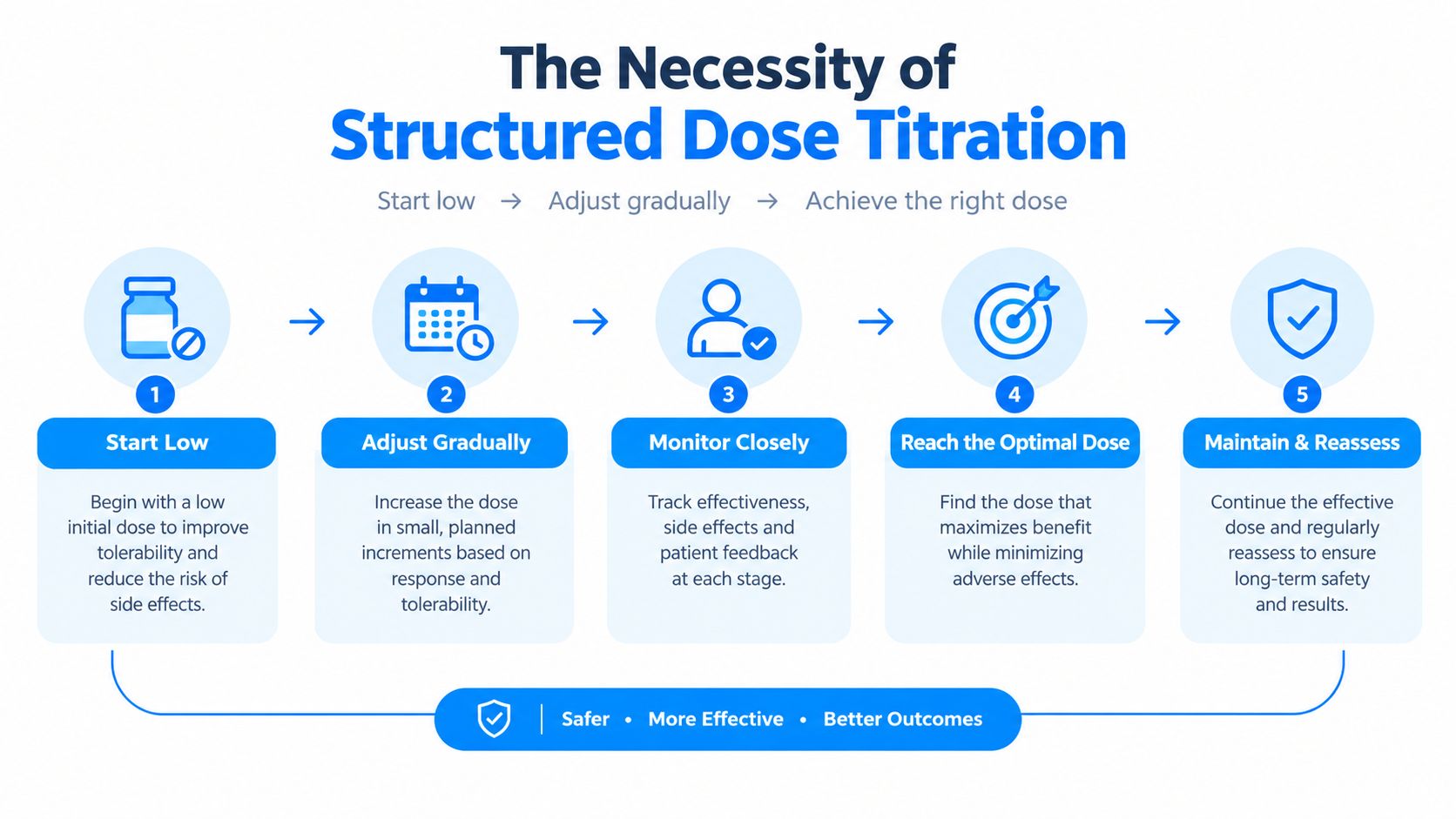
Starting at a high therapeutic dose is not a shortcut. It increases the likelihood that the medication's gastrointestinal effects will exceed the patient's ability to adapt. Gradual titration is a safety mechanism, allowing the digestive system and central appetite pathways to adjust before the next dose step.
Why escalation causes symptoms
GLP-1 receptor agonists commonly cause nausea, vomiting, diarrhea, constipation, abdominal discomfort, and early satiety. These effects often become more noticeable when the dose rises, when meals are large or high in fat, or when a patient eats quickly despite reduced gastric emptying.
A titration schedule gives clinicians time to identify whether symptoms are temporary, dose-related, caused by another condition, or severe enough to require intervention. It also helps distinguish a tolerable treatment effect from a warning sign such as persistent vomiting, dehydration, severe abdominal pain, or inability to maintain food and fluid intake.
The clinical response to intolerance
When symptoms emerge, the next dose step shouldn't be automatic. Independent clinical guidance supports pausing or reducing escalation until symptoms resolve, followed by a cautious retry at a lower step when clinically appropriate. The guidance and evidence synthesis also emphasize that long-term safety data remain limited, even though the observed weight-loss effects are substantial in the clinical review of GLP-1 therapies and titration.
A safe protocol typically includes:
- Baseline screening: The clinician reviews medical history, current medicines, gastrointestinal conditions, glucose status, hydration risk, and relevant contraindications.
- Low starting exposure: Treatment begins below the dose associated with the full appetite and gastrointestinal effect.
- Symptom-based progression: Escalation depends on tolerance, not on the calendar.
- Pause or reduction: The clinician holds the current dose or returns to a lower step when symptoms interfere with hydration, nutrition, or daily function.
- Reassessment: Persistent or severe symptoms prompt clinical evaluation rather than repeated self-adjustment.
Safety boundary: A patient shouldn't increase a dose to overcome a plateau while significant gastrointestinal symptoms remain active.
The same principle applies to compounded formulations and alternative delivery formats. A different container or route doesn't eliminate the need for individualized escalation, accurate measurement, clear administration instructions, and follow-up with a licensed clinician.
Navigating Plateaus and Long-Term Maintenance
The first appetite drop is often the easiest part of peptide therapy. The harder clinical work begins when weight loss slows, adverse effects limit dose escalation, and the patient must decide how to maintain results over time. Initial slowing often appears around months 4 to 6, with a full plateau commonly developing by 12 to 18 months in its review of GLP-1 treatment and long-term use.
A plateau isn't automatically treatment failure
A plateau may reflect lower energy needs after weight loss, physiological adaptation, incomplete titration, medication intolerance, or a genuine ceiling in response. It may also show that early appetite suppression reduced intake without enough attention to food quality, protein, muscle preservation, sleep, or movement.
The appropriate response is measurement before escalation. A clinician should review:
- Weight and waist trend: A stable scale can coexist with a smaller waist, improved strength, or better physical function.
- Appetite pattern: Hunger may be returning, or the patient may be eating more deliberately.
- Treatment exposure: Missed doses, incorrect administration, or an interrupted titration schedule can reduce the observed response.
- Nutrition and activity: Low protein intake and insufficient resistance exercise can worsen body composition even when weight remains stable.
- Adverse effects: Ongoing gastrointestinal symptoms may prevent the patient from sustaining a dose that would otherwise be effective.
A plateau should prompt reassessment of the whole treatment plan, not an automatic increase in dose. Escalation while nausea, vomiting, poor intake, or dehydration remains active can trade a modest weight response for preventable harm.
Maintenance requires a separate plan
Stopping therapy can produce appetite rebound and weight regain. A 2026 analysis of more than 9,000 patients found that people who stopped semaglutide or tirzepatide regained an average of nearly 2 pounds per month. The practical implication is clear: discontinuation should be treated as a medical decision, with monitoring for renewed hunger, rising weight, metabolic deterioration, and difficulty maintaining nutrition and activity changes.
Maintenance may involve continued treatment, a carefully selected lower exposure, a switch within the incretin class, or supervised discontinuation. The choice depends on metabolic risk, response, adverse effects, affordability, patient preference, and the ability to sustain behavioral changes. A plateau can therefore mark a transition from active loss to dose optimization and long-term risk management.
Hair retention also warrants discussion. A 2026 systematic review found weak pharmacovigilance associations between GLP-1 receptor agonist use and alopecia, with reported odds ratios of approximately 1.24 to 2.46 for semaglutide and 0.83 to 1.73 for tirzepatide. One randomized oral semaglutide obesity trial reported alopecia in 7% of semaglutide users versus 3% with placebo in the systematic review of GLP-1 therapies and hair loss. Hair shedding can also follow rapid weight change, inadequate nutrition, illness, or another medical condition, so evaluation should not assume the medication is the sole cause.
Regulatory Realities of Compounded Formulations
Compounded GLP-1 formulations deserve more than a price or convenience comparison. Their legal and clinical status can depend on shortage conditions, the pharmacy's operating category, prescription requirements, state law, and the exact formulation dispensed. Those factors can change while a clinic's marketing remains unchanged.
Shortage status changes the legal context
Tirzepatide and semaglutide shortages ended in late 2024 and early 2025. The FDA proposed excluding semaglutide, tirzepatide, and liraglutide from the 503B bulks list in April 2026, and the Fifth Circuit upheld the FDA's shortage determinations in September 2026 in the legal analysis of the shortage decisions. A formulation once offered under a shortage-related rationale may therefore face a different regulatory position as supply conditions change.
A clinic's continued offer does not establish that a compounded product is authorized, equivalent to an approved medication, or suitable for a particular patient. The prescriber and dispensing pharmacy should explain the active ingredient, formulation, legal basis for compounding, storage conditions, labeling, and adverse-event reporting process.
Patients should also ask whether the prescribed concentration matches the dosing instructions. Concentration errors can create avoidable titration problems, particularly when a patient changes pharmacies or receives a different vial size.
Added ingredients do not establish added value
A 2026 JAMA Health Forum-linked secret-shopper study found that clinics and medical spas continued to sell compounded GLP-1 formulations, including products with added B vitamins and oral versions. These offerings can make a treatment appear more personalized without demonstrating better weight loss, tolerability, or hair retention.
A B vitamin may have a legitimate role when testing identifies a deficiency. Its presence in a compounded injection does not show that it improves the effect of the GLP-1 medication. Oral compounded forms also require verification of the active ingredient, absorption assumptions, stability, dosing instructions, and regulatory status. A different route of administration should be treated as a pharmacologic question, not a marketing upgrade.
A practical pharmacy review
Before accepting a compounded formulation, request clear answers about:
- Pharmacy identity: Confirm the dispensing entity's license, operating category, and jurisdictional authority.
- Quality controls: Ask about potency testing, sterility procedures when applicable, beyond-use dating, and storage requirements.
- Label clarity: The label should state the active ingredient, concentration, dose, route, instructions, and prescriber.
- Clinical ownership: A licensed clinician should assess eligibility, prescribe, and manage titration. Sales staff should not direct dose changes.
- Adverse-event access: Patients should know whom to contact for symptoms and how urgent concerns will be handled.
Opaque sourcing, unclear concentrations, or vague answers about testing are clinical warning signs. Polished packaging and wellness branding cannot substitute for documented pharmacy standards.
Clinical Candidate Selection and Telehealth Standards
Appropriate candidate selection begins with the patient's medical context, not a request for a particular medication. Clinicians typically assess body weight, BMI, weight-related comorbidities, prior treatment attempts, glucose status, eating behavior, medication history, and the patient's capacity to follow a monitoring plan. BMI is a screening tool, not a complete measure of body composition, so waist pattern, muscle status, metabolic risk, and functional health also matter.
Safety screening before prescribing
A proper evaluation reviews conditions that may make treatment unsuitable or require specialist input. The clinician should screen for significant gastrointestinal disease, dehydration risk, active eating disorders, pregnancy-related considerations, relevant pancreatic or gallbladder history, and medication interactions. Personal or family history of medullary thyroid carcinoma is an important safety exclusion to discuss before treatment, as is a history of multiple endocrine neoplasia type 2.
The assessment should also clarify the patient's actual objective. Someone seeking modest appetite support may need a different plan from a patient with severe obesity, insulin resistance, or repeated weight regain. A patient with hair shedding, fatigue, or reduced exercise tolerance may need nutritional and medical evaluation before escalating an appetite-suppressing medication.
What responsible telehealth includes
Telehealth can support physician-directed care when its clinical workflow matches the complexity of the treatment. A confidential online assessment should collect medical history, current medications, allergies, relevant symptoms, treatment goals, and prior adverse reactions. A U.S.-licensed provider should review the intake and determine whether prescribing is clinically indicated. Depending on state requirements and clinical circumstances, the process may include asynchronous review, a live consultation, or both.
A defensible telehealth protocol includes:
- Individualized titration: Dose progression follows tolerance and response rather than a fixed sales schedule.
- Documented follow-up: Patients receive clear instructions for symptom reporting, missed doses, and escalation questions.
- Medication verification: The dispensing pharmacy, formulation, concentration, and storage requirements are identified before treatment begins.
- Cold-chain handling: Temperature-sensitive injectable medications require appropriate insulated shipping, tracking, and storage guidance.
- Privacy safeguards: HIPAA-compliant processes protect clinical information throughout intake, consultation, prescribing, and fulfillment.
The service model offered by Vials + Vitals includes physician-directed evaluation for semaglutide and tirzepatide protocols, individualized titration oversight, and fulfillment through accredited U.S. pharmacy partners, with temperature-controlled delivery when required. Patients should compare any telehealth service by its clinical safeguards, not merely by delivery speed or formulation variety.
A credible plan makes room for changing the medication, holding escalation, investigating a plateau, addressing hair concerns, and reconsidering treatment altogether. Peptide therapy for weight loss works best when it is treated as a monitored metabolic intervention with a defined maintenance strategy.
Adults considering medically supervised peptide therapy for weight loss can begin with the confidential clinical assessment offered by Vials + Vitals. The service connects eligibility review, individualized titration, and pharmacy fulfillment so that semaglutide or tirzepatide treatment is evaluated within a structured safety protocol.
Ready to see if this protocol fits your biology?
A licensed provider reviews every request before anything is prescribed.
Calibrate your metabolic protocol →