Online Women's Health: A Telehealth Services Overview

Explore online women's health through telehealth, covering hormone care, weight management, sexual wellness, hair retention, and preventive care access
A 41-year-old postpartum professional is trying to solve several problems at once: a weight plateau that no longer responds to familiar routines, cycles that have become less predictable, and thinning along the edges of the hairline. The practical question isn't whether these symptoms matter. It's whether menopause evaluation, metabolic treatment, and hair-loss assessment can happen without repeatedly rearranging work, childcare, and daily responsibilities around a clinic appointment.
That question explains the appeal of online women's health. Telehealth can make intake, laboratory review, medication follow-up, and sensitive conversations more accessible. It can't replace every physical examination, imaging study, urgent evaluation, or preventive screening appointment. Responsible care depends on knowing which problems fit a remote pathway and which require a defined transition to in-person medicine.
Table of Contents
- Why More Women Are Choosing Online Care
- The Core Categories of Telehealth Women's Health
- Comparing Service Domains Side by Side
- Weight Management With GLP-1 and Dual Incretin Therapies
- Hormone Care, Sexual Wellness, and Hair Retention
- How Online Programs Handle Access and Logistics
- Common Misconceptions About Online Women's Health
- A Practical Decision Framework Before You Start
Why More Women Are Choosing Online Care
Women often seek online care because the traditional route imposes practical costs that have little to do with medical complexity. A patient managing postpartum recovery, paid work, caregiving, transportation, and household responsibilities may be able to complete a detailed intake at home but may struggle to attend several separate appointments. Menopause care can be especially difficult to arrange when specialized clinicians are limited and local practices have long scheduling delays.
The access problem is broader than convenience. The World Health Organization review of digital health and women's health reports that approximately 65% of women globally use the internet, creating a substantial audience for health education, telehealth consultations, self-monitoring, e-prescriptions, and remote care coordination. The same review identifies a serious access divide in low- and middle-income countries, where women are 8% less likely than men to own a mobile phone and 15% less likely to use mobile internet, representing approximately 265 million fewer women using mobile internet than men.
Convenience is not the same as universal access
The strongest online programs recognize both realities. A mobile-friendly portal, low-bandwidth messaging, clear privacy protections, and flexible asynchronous intake can help patients who cannot easily attend a clinic. Those features don't solve device ownership, connectivity, affordability, digital literacy, language access, or concerns about privacy within the home.
Telehealth also fits the way many women already use healthcare. A CDC National Center for Health Statistics analysis of 2021 data found that 42.0% of adult women in the United States used telemedicine, compared with 31.7% of adult men. Use extended across age groups, including older adults managing ongoing health needs, rather than remaining limited to younger digital consumers.
Clinical boundary: Online care is a front door to healthcare, not a guarantee that every evaluation or treatment can remain online.
For weight management, hormone symptoms, sexual wellness, and established hair-loss patterns, remote care can streamline structured follow-up. For postmenopausal bleeding, severe pelvic pain, suspicious lesions, acute psychiatric symptoms, or possible pregnancy complications, the correct online action may be referral rather than prescription. The quality of a platform is visible in how clearly it makes that distinction.
The Core Categories of Telehealth Women's Health
Most physician-directed programs organize online women's health around five overlapping domains. Hormone care may address perimenopause, menopause, selected PCOS concerns, or thyroid-related evaluation. Weight management may include GLP-1 or dual-incretin treatment, nutrition counseling, resistance-training guidance, and laboratory monitoring. Sexual wellness can involve libido concerns, dyspareunia, contraception counseling, and selected STI services. Hair retention focuses on androgenetic alopecia, telogen effluvium, and postpartum shedding. Preventive care coordinates laboratory testing, screening reminders, and cardiovascular risk review.
The clinical workflow resembles triage followed by chart rounds:
- Asynchronous intake collects symptoms, medical history, medications, allergies, reproductive goals, family history, and red flags. It should function like a detailed triage questionnaire, not a marketing quiz.
- Physician review evaluates eligibility, contraindications, missing information, and whether an examination or laboratory test is necessary.
- Laboratory orders may route through national laboratory networks such as Quest or LabCorp when testing is appropriate.
- Prescription transmission sends an approved prescription to a licensed dispensing pharmacy. Depending on the formulation and legal requirements, that may involve a 503A or 503B pharmacy.
- Follow-up occurs through secure messaging, scheduled video, or both. Dose changes should follow a defined protocol rather than an automated request.
The regulatory layer matters. Clinicians must hold a license valid for the patient's state, and controlled-substance prescribing may require DEA registration. The platform should use HIPAA-compliant processes, document the assessment, and provide a route to urgent or in-person care.
Online care works when each domain has a specific clinical endpoint. A hormone intake should identify bleeding patterns and surgical history. A weight protocol should include medication screening and titration rules. A hair program should distinguish pattern loss from diffuse shedding before treatment begins. The prescription is only one step in a supervised care pathway.
Comparing Service Domains Side by Side
Telehealth fit depends less on whether a condition sounds “online” and more on what information is needed to make a safe decision. Hormone care and weight management often rely on histories, laboratory results, symptom tracking, and medications that can be adjusted over time. Sexual wellness occupies the middle ground because counseling and some treatments can occur remotely, while pain, bleeding, lesions, and pelvic findings may require examination.
Hair retention also has a split pathway. Once a clinician has established a pattern consistent with androgenetic alopecia, remote monitoring and prescription follow-up can be practical. The initial differential diagnosis becomes more difficult when loss is sudden, patchy, scarring, inflammatory, or accompanied by systemic symptoms.
Preventive care is best understood as a coordination layer. Online clinicians can review risk factors, identify overdue screening, and help organize laboratory work, but they cannot perform mammography, colonoscopy, DEXA, or a physical examination through a portal.
Service Domain Comparison
| Service Domain | Best-Suited Profile | Evidence Strength | Time to First Rx | In-Person Escalation Trigger | Typical Monthly Cost |
|---|---|---|---|---|---|
| Hormone care | Patients with a clear symptom history and appropriate laboratory or medical-record review | Moderate, condition-dependent | Depends on intake completeness, labs, and clinician review | Unexpected bleeding, concerning examination history, complex surgical menopause, or unclear diagnosis | Varies by medication, laboratory needs, and billing model |
| Weight management | Patients appropriate for physician-supervised medication and longitudinal monitoring | Strongest for selected GLP-1 and dual-incretin therapies | Depends on eligibility, prior authorization, labs, and titration plan | Severe abdominal symptoms, suspected pancreatitis or gallbladder disease, pregnancy concerns, or complex comorbidity | Varies by medication access, pharmacy, visits, and monitoring |
| Sexual wellness | Patients with lower-acuity libido, counseling, contraception, or selected screening needs | Mixed, with low-strength evidence in some telehealth domains | Depends on diagnosis, testing, and treatment suitability | Pelvic pain, bleeding changes, suspicious lesions, trauma concerns, or persistent dyspareunia | Varies by consultation, testing, and prescription |
| Hair retention | Patients with an established non-scarring pattern and stable symptoms | Moderate for selected treatments, diagnosis-dependent | Often follows history and laboratory review | Patchy or scarring loss, rapid progression, inflammation, or uncertain diagnosis | Varies by treatment, labs, and dermatology involvement |
| Preventive care | Patients needing risk review, screening coordination, and lab planning | Strong for coordination, not a replacement for procedures | Usually not prescription-centered | Abnormal screening results, concerning symptoms, or overdue examination-based care | Varies by visit structure and testing |
Evidence supports a risk-stratified model rather than a universal virtual model. A systematic review of telehealth in obstetrics and gynecology found meaningful effects in areas including breastfeeding, contraceptive continuation, selected abortion care, smoking cessation, and high-risk obstetric scheduling. It also found that remote care can replace selected monitoring visits when escalation pathways preserve maternal and fetal safety.
Weight management deserves closer attention because medication choice, reproductive planning, and titration all interact.
Weight Management With GLP-1 and Dual Incretin Therapies
Semaglutide and tirzepatide are not interchangeable “quick fixes.” They are prescription therapies that require eligibility screening, dose escalation, side-effect management, and ongoing review of treatment response. Trial results show meaningful average weight reduction, but an individual patient may respond differently because of tolerability, adherence, baseline health, body composition, concurrent medication, and hormonal status.
In the STEP 1 randomized trial, 1,961 adults with overweight or obesity received once-weekly subcutaneous semaglutide 2.4 mg or placebo for 68 weeks, alongside lifestyle intervention. Mean body weight declined by 14.9% with semaglutide, compared with 2.4% with placebo, for an estimated treatment difference of 12.4 percentage points. The trial supports semaglutide as a longer-term weight-management treatment, not a short course designed only for an initial drop.
In the SURMOUNT-1 randomized trial, mean weight reductions at 72 weeks were 15.0% with tirzepatide 5 mg, 19.5% with 10 mg, and 20.9% with 15 mg, compared with 3.1% with placebo. At least 5% weight loss occurred in 85%, 89%, and 91% of participants in the respective tirzepatide groups, compared with 35% with placebo. The dose-related pattern doesn't mean that a patient should skip escalation or move to a higher dose without review.
Trial outcomes and practical suitability
| Metric | Semaglutide, STEP 1 | Tirzepatide, SURMOUNT-1 |
|---|---|---|
| Treatment structure | Once-weekly subcutaneous semaglutide with lifestyle intervention | Once-weekly tirzepatide with dose-based comparison and lifestyle treatment |
| Trial duration | 68 weeks | 72 weeks |
| Average result | 14.9% mean body-weight reduction | 15.0% to 20.9% mean reduction, depending on dose |
| Placebo result | 2.4% | 3.1% |
| Telehealth implication | Appropriate only with screening, titration, and monitoring | Dose selection must account for tolerability, comorbidities, concurrent medications, and response |
A practical early treatment period begins with a low dose, such as 0.25 mg of semaglutide, followed by gradual escalation when the clinician determines that symptoms and response permit it. The initial weeks commonly focus on nausea, vomiting, constipation, diarrhea, hydration, food tolerance, and whether the patient can maintain adequate protein intake and resistance exercise. The exact schedule depends on the prescribed formulation and clinician's protocol.
Tirzepatide activates GIP and GLP-1 pathways, while semaglutide acts through GLP-1. The difference may influence appetite, glucose regulation, gastrointestinal effects, and response, but it doesn't eliminate the need for individualized titration. Resistance training and adequate nutrition remain important because a weight-management plan should address body composition, not only the scale.
Reproductive planning cannot be an afterthought
The UK Medicines and Healthcare products Regulatory Agency guidance on GLP-1 medicines states that GLP-1 medicines should not be used during pregnancy. It advises that semaglutide be stopped at least two months before attempting conception and that tirzepatide be stopped at least one month before attempting conception. It also warns that tirzepatide can reduce the effectiveness of oral contraception for four weeks after treatment begins and after each dose increase, making non-oral or barrier contraception important during those periods.
That guidance changes the intake. A clinician should ask whether the patient is trying to conceive, avoiding pregnancy, breastfeeding, experiencing irregular cycles, or using oral contraception. Weight loss can improve ovulation for some patients with obesity or PCOS, so contraception and fertility planning should be reviewed alongside the medication rather than after it.
Telehealth prescribing is more defensible for patients whose history, laboratory data, comorbidities, and medication profile can be reviewed remotely. Suspected gallbladder disease, pancreatitis, complex thyroid history, pregnancy, severe gastrointestinal symptoms, or diagnostic uncertainty may require examination, imaging, urgent evaluation, or coordinated in-person care before treatment starts.
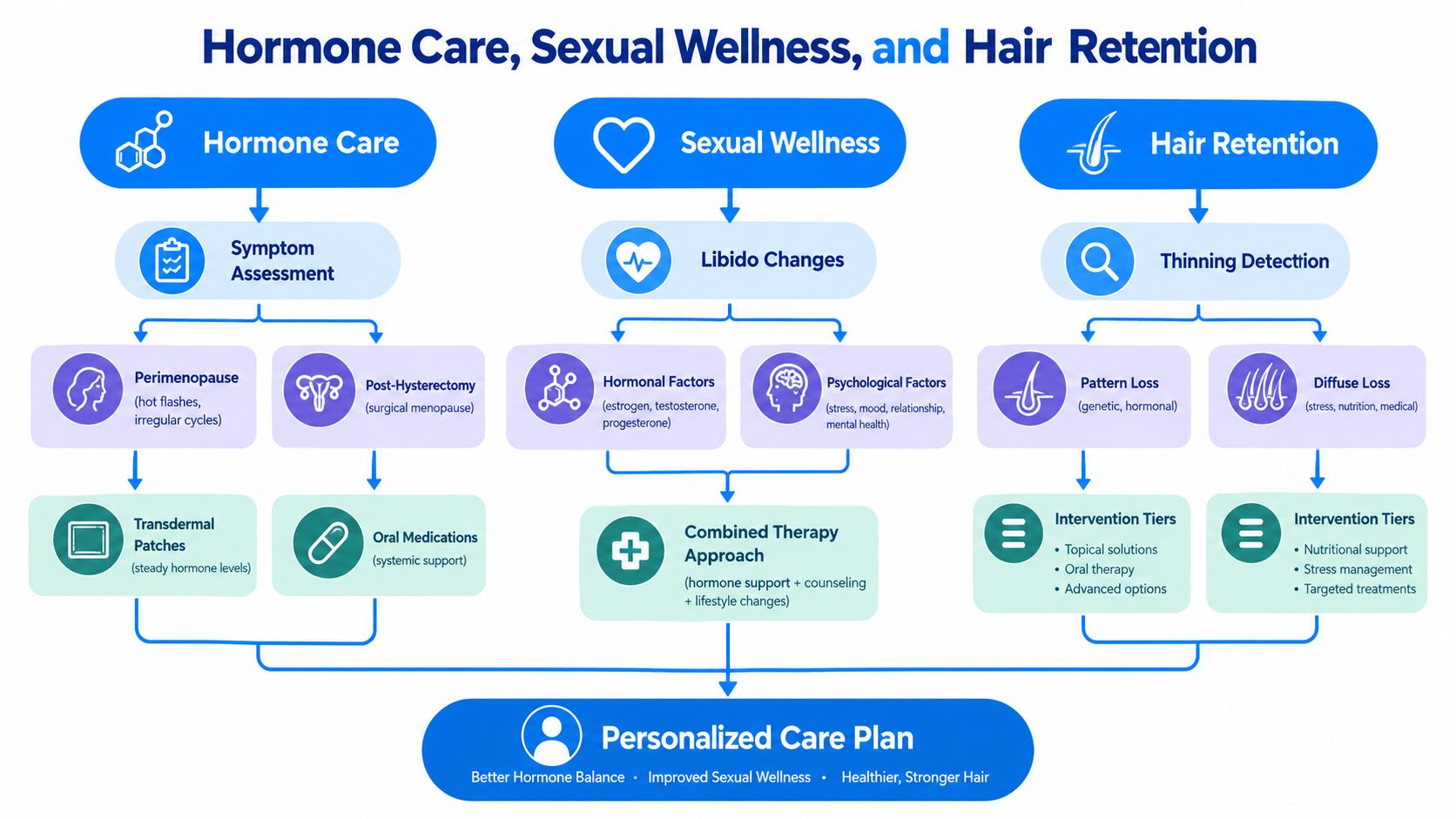
Hormone Care, Sexual Wellness, and Hair Retention
The same patient may report hot flashes, low desire, painful intercourse, and thinning hair, but those symptoms don't share one diagnosis. Online assessment should separate the biology before combining treatment.
Hormone care requires reproductive and surgical context
Perimenopause is a transition with changing cycles and hormone patterns. A patient who has had a hysterectomy may not have bleeding patterns that help identify the transition, and a patient who has had ovarian removal or cancer treatment may have a different clinical pathway altogether. A clinician should clarify the type of surgery, whether the ovaries remain, the timing of symptoms, pregnancy possibility, migraine history, clotting history, cancer history, and current medications.
Transdermal estradiol with micronized progesterone may be considered in appropriate patients, with route and progesterone decisions shaped by uterine status, risk factors, symptom goals, and clinician review. Transdermal treatment is often favored over oral estrogen when minimizing first-pass hepatic effects and considering venous thromboembolism risk, but that choice isn't a universal rule. FSH, estradiol, or TSH testing may be necessary when the history is atypical, the patient has surgical menopause, thyroid symptoms, an unclear diagnosis, or a medication decision that cannot be made safely from symptoms alone.
Sexual wellness needs more than a libido score
Low desire may involve hormones, medication effects, sleep, depression, anxiety, relationship context, pain, or the effects of chronic illness. Low-dose testosterone and bupropion have mixed evidence in this setting, so neither should be presented as a default answer. Dyspareunia and genitourinary syndrome of menopause require a different assessment, with options such as vaginal DHEA or ospemifene considered only after diagnosis, contraindication review, and shared decision-making.
Asynchronous intake can identify timing, triggers, medication changes, safety concerns, and whether STI testing may be appropriate. It can't reliably assess pelvic floor tone, cervical findings, vulvar lesions, pelvic masses, or causes of persistent bleeding. The review of telehealth interventions for contraceptive and interpersonal-violence services found generally equivalent clinical and patient-reported outcomes in some settings, but rated the evidence as low because relatively few studies were available and outcomes were not consistently examined.
Hair retention starts with diagnosis
Androgenetic alopecia usually produces a patterned reduction in density, while telogen effluvium causes more diffuse shedding after triggers such as childbirth, illness, nutritional deficiency, major stress, or medication change. A postpartum patient may have both, which is why a generic serum shipped without a differential diagnosis can miss the active cause.
Minoxidil may help selected patterns, but it requires realistic timing and monitoring. Ferritin evaluation can be relevant when iron deficiency is possible, and oral anti-androgens should not be started when scarring, inflammation, patchy loss, or another uncertain diagnosis warrants dermatology assessment. Dermoscopy or biopsy becomes essential when the diagnosis cannot be established safely through history, photographs, and laboratory review.
How Online Programs Handle Access and Logistics
A safe telehealth service is an operational system, not only a video visit. The prescribing clinician must be licensed for the state where the patient is located, and a program operating across multiple states must maintain appropriate medical coverage in each jurisdiction. State rules can affect asynchronous care, laboratory ordering, follow-up requirements, and whether a live consultation is necessary.
Pharmacy standards also require plain-language explanation. 503A pharmacies generally compound for individual prescriptions, while 503B outsourcing facilities compound under a different statutory framework and may supply office-use products. USP <795> addresses nonsterile compounding, while USP <797> addresses sterile compounding. These distinctions matter for formulation, dispensing, documentation, and quality controls, particularly when a therapy involves sterile injectable medication.
Credential checks should be visible
Patients can look for verifiable pharmacy and healthcare credentials rather than relying on a logo. NABP Digital Pharmacy accreditation is intended to identify pharmacies that meet applicable standards for safe online pharmacy practice. LegitScript Healthcare certification is another credential patients may verify through the certification provider. A platform should identify the dispensing pharmacy, the prescribing entity, the clinician's license status, and the process for reporting a problem.
Biologics and other temperature-sensitive medications require controlled shipping. A credible workflow may use insulated packaging, tracking, temperature loggers when appropriate, and signature requirements. On arrival, the patient should inspect the package for damage, labeling, storage instructions, and temperature concerns before using the medication. A questionable shipment should be held and reported to the dispensing pharmacy or clinical team.
The final layer is clinical accountability. Secure asynchronous messaging should identify who reviews laboratory results, whether that person is the ordering clinician, and how abnormal findings are communicated. Intake systems should route red flags to an in-person appointment, urgent care, or emergency services instead of allowing a prescription workflow to continue automatically.
A fast intake is useful only when a qualified clinician can stop the workflow.
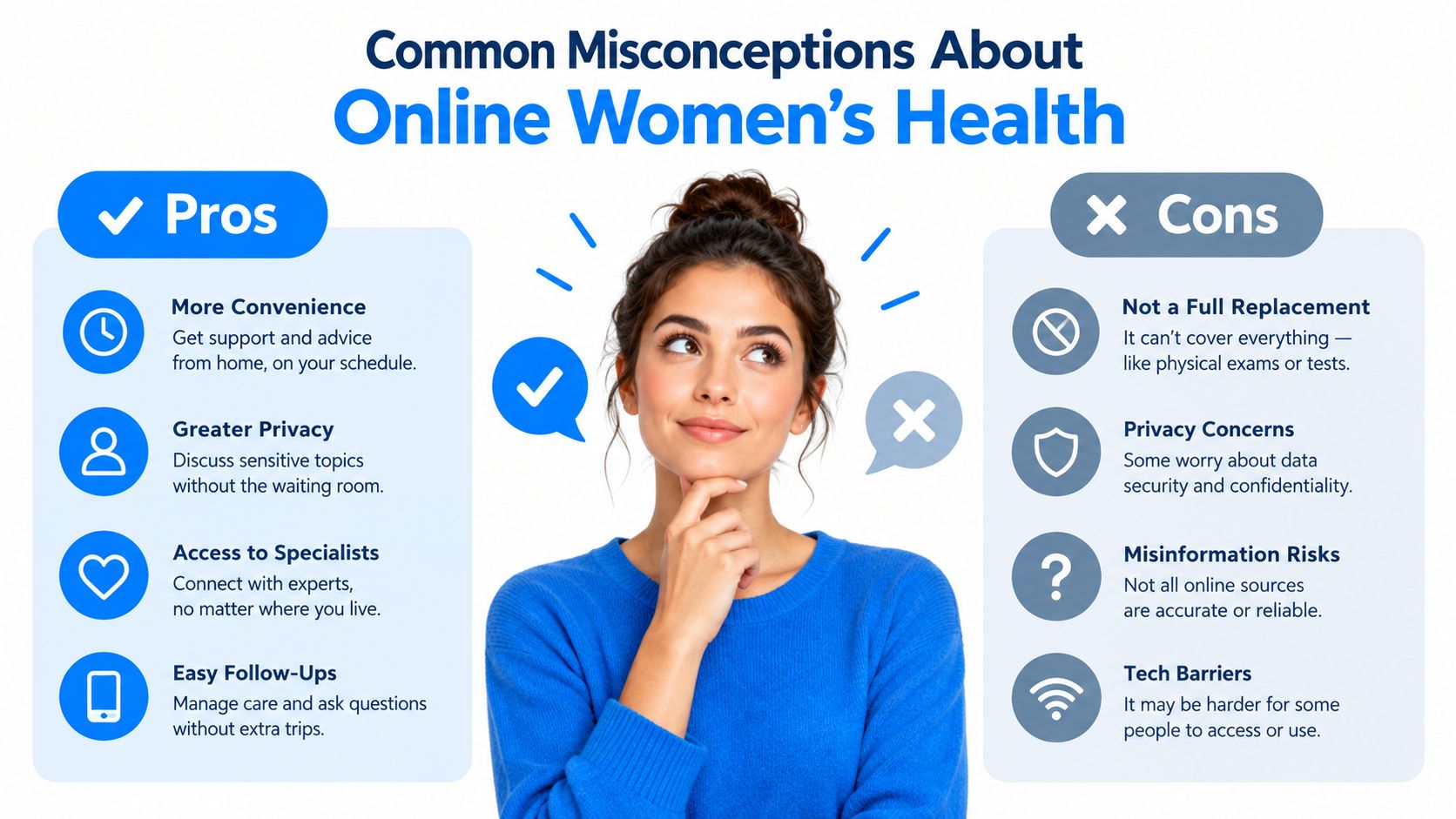
Common Misconceptions About Online Women's Health
Online healthcare marketing often compresses complex decisions into simple promises. The following claims deserve scrutiny before a patient submits medical information or pays a recurring fee.
- “Online care is always cheaper.” It may reduce travel and missed-work costs, but consultation fees, laboratory testing, medication, shipping, and follow-up can make the total cost higher than expected.
- “GLP-1 access is guaranteed.” Eligibility, contraindications, supply, insurance rules, and prior authorization can all affect access. A clinician should determine whether treatment is appropriate before payment is treated as a promise of medication.
- “Bioidentical hormone pellets have the evidence implied by marketing.” “Bioidentical” describes a chemical similarity, not proof that a delivery method is safer or better. Pellet therapy also creates a dosing problem when adverse effects occur because the dose can't be removed.
- “A hair serum is enough.” Hair loss can reflect androgenetic alopecia, telogen effluvium, thyroid disease, iron deficiency, inflammation, or scarring. Treatment without a differential diagnosis can delay appropriate care.
- “An asynchronous questionnaire equals a gynecologic examination.” It doesn't. Questionnaires can organize symptoms and identify risk, but they can't inspect lesions, assess pelvic findings, or replace imaging.
- “A compounding pharmacy is the same as an FDA-registered manufacturer.” Compounded medication and commercially manufactured medication operate under different regulatory frameworks. Patients should know which type is being prescribed and which pharmacy dispenses it.
- “Doctor on demand means specialty board certification.” A clinician may be licensed without being board-certified in obstetrics and gynecology, endocrinology, dermatology, or another relevant specialty. Credentialing should be transparent.
A reliable platform should answer practical questions directly: Who reviews the intake? What findings prevent prescribing? Which labs are required? What happens if symptoms worsen? Which pharmacy dispenses the medication? How are refills, dose changes, refunds, and in-person referrals handled? Evasive answers are more important than polished branding.
A Practical Decision Framework Before You Start
A patient can evaluate an online women's-health program with a short safety checklist:
- Verify credentials. Confirm state licensure, the clinician's specialty and board status, the dispensing pharmacy, and any NABP or LegitScript credentials that the platform displays.
- Confirm clinical requirements. Ask which labs, records, pregnancy testing, or examinations are necessary for the proposed treatment. A program that never requires information relevant to safety isn't practicing individualized medicine.
- Identify escalation triggers. Postmenopausal bleeding, severe abdominal pain, new neurologic deficits, chest pain, suspected pregnancy complications, and acute psychiatric symptoms require urgent or in-person evaluation. They shouldn't be managed through routine messaging alone.
- Review titration and side-effect protocols. For GLP-1 or dual-incretin treatment, the patient should know how dose increases work, which symptoms require holding medication, and how a clinician will respond.
- Clarify continuity and cost. Ask whether follow-up remains with the same clinical team, how laboratory results are reviewed, whether billing is subscription-based or per visit, and what medication, shipping, and testing charges are separate.
During the first consultation, useful questions include: “What diagnosis are you treating?” “What would make this unsafe for remote care?” “Which symptoms should trigger an in-person visit?” “How will reproductive goals affect this prescription?” and “Who will review abnormal results?” These questions don't create unnecessary barriers. They help ensure that convenience is connected to clinical accountability.
Vials + Vitals provides physician-directed telehealth pathways for metabolic health, hormone care, sexual wellness, and hair-related concerns, with online assessment, U.S.-licensed clinician review, individualized prescriptions, and follow-up support. Patients who want a structured evaluation with clear titration and escalation considerations can visit Vials + Vitals to review the available care pathways.
Ready to see if this protocol fits your biology?
A licensed provider reviews every request before anything is prescribed.
Explore hair protocols →