Online Hair Loss Prescription: A Clinical Guide

Learn how to obtain a legitimate online hair loss prescription through telehealth. Explore diagnostic triage, compounded formulations, and metabolic safety.
Popular advice frames online hair loss prescription primarily as a matter of speed and convenience. That view misses the clinical reality. Hair loss is not a cosmetic checkbox; it is a diagnostic problem. The quality of the intake, medication choice, and follow-up plan determines whether telehealth addresses the underlying cause rather than missing it.
Table of Contents
- The Clinical Reality of Telehealth Hair Care
- Navigating the Digital Intake and Diagnostic Triage
- Evaluating Prescription Options and Compounded Formulations
- Understanding the Intersection of Metabolic Health and Hair Retention
- Pharmacy Fulfillment and Cold-Chain Logistics
- Structuring Your Follow-Up and Long-Term Adherence
The Clinical Reality of Telehealth Hair Care
A serious online hair loss prescription starts with medical triage, not a checkout flow. Digital access has expanded quickly, but access alone does not equal clinical quality. In one NIH-indexed analysis, quarterly visitors rose sharply across three hair-loss platforms, and the largest platform reached about 3.3 million unique visitors in Q1 2022 GoodRx clinical review of online hair-loss prescription platforms. That scale shows hair-loss care is now a major digital service, not a niche add-on.
Questionnaire-driven routing is not the same as diagnosis
Telehealth works well when it uses physician-directed reasoning. It works poorly when it treats every thinning scalp as the same problem. A rigorous service asks what pattern of loss is present, when it began, whether systemic symptoms are present, and whether a broader workup is needed.
Practical rule: If the platform cannot explain why a prescription fits the pattern of loss, the intake is too shallow.
That matters because androgenetic alopecia is only one cause of shedding. A woman with diffuse thinning, a recent medication change, or symptoms that suggest an underlying medical issue may need more than a hair prescription. The right telehealth program uses the consultation to separate a likely pattern-hair-loss case from a patient who should be escalated to in-person care.
A high-quality process also respects the biology of the treatment itself. Prescription hair therapies often take months, not days, and benefit depends on adherence and correct patient selection. When the workflow is built around a predetermined product, the clinical question gets lost. When it is built around diagnostic triage, the prescription becomes part of a broader medical plan.
What legitimate telehealth care should prioritize
A credible board-guided platform should be able to show that it evaluates the patient as a person, not a product category. That means:
- Pattern recognition: The clinician or protocol should distinguish diffuse shedding from the patterned miniaturization seen in androgenetic alopecia.
- Escalation triggers: Sudden loss, scalp inflammation, or systemic symptoms should push the patient toward broader evaluation.
- Medication fit: The prescription should follow the diagnosis, not the other way around.
- Ongoing review: Hair care should include follow-up, because response and tolerability change over time.
Real telehealth hair care depends on that discipline. Without it, the service becomes a retail shortcut. With it, the prescription sits inside a medical plan that reflects diagnosis, safety, and the biology of hair retention.
Navigating the Digital Intake and Diagnostic Triage
A solid intake begins before any prescription is considered. The clinician needs standardized scalp photos, a clear symptom timeline, prior treatment history, current medications, and any prior lab or biopsy information that already exists. Telemedicine guidance for hair-loss care emphasizes this kind of structured review because it reduces the chance of treating the wrong condition as pattern hair loss Teledermatology review on alopecia diagnosis and treatment.
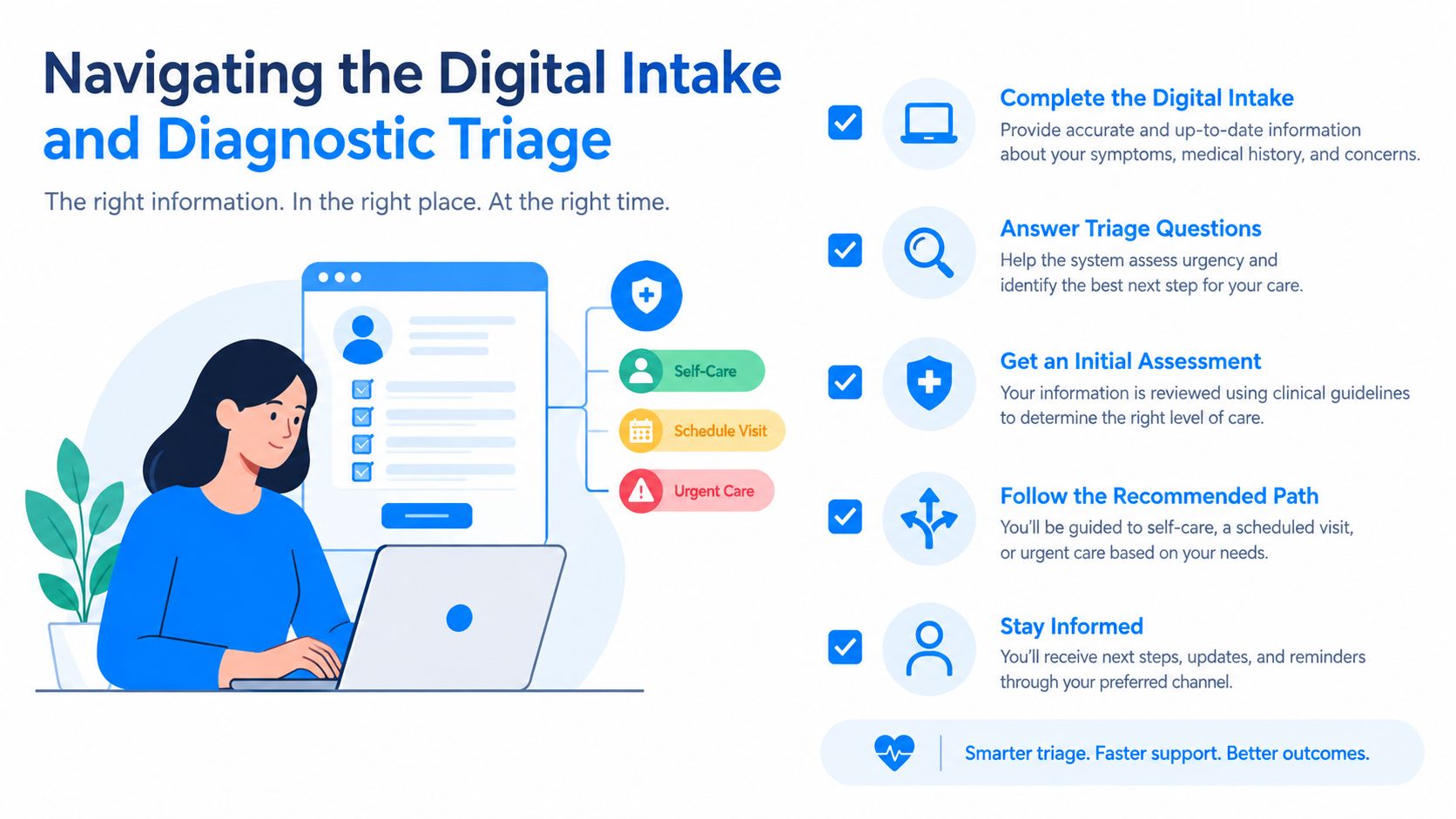
What a careful intake should ask
The best digital assessment goes beyond “How long have you been losing hair?” and asks what the shedding looks like, where it is concentrated, whether the part is widening, and whether the patient has noticed scalp symptoms. It also asks about recent weight change, medication changes, postpartum status, and other medical context that can alter hair cycling.
A concise intake should cover:
- Photo quality: Images should show the crown, part line, frontal hairline, and sides under consistent lighting.
- Symptom history: The clinician needs onset, pace, distribution, and any associated itching, burning, or scalp tenderness.
- Relevant context: Recent illness, new prescriptions, restrictive diets, or metabolic therapy can all matter.
- Prior workup: Past labs, biopsy reports, or prior dermatology notes can prevent duplicated or missed evaluation.
The reason for this structure is diagnostic mismatch. A questionnaire that pushes everyone toward the same prescription can miss telogen effluvium, inflammatory scalp disease, or another medical driver of shedding. The patient may still receive medication, but the underlying cause goes untreated.
When telehealth is appropriate, and when it is not
Telehealth is appropriate when the pattern strongly suggests androgenetic alopecia and the intake supports that conclusion. It is also useful when the patient needs a structured, accessible way to review treatment options and safety monitoring. It is not appropriate when the presentation is unclear, unstable, or suggestive of a broader disorder.
Hair loss can be the visible end of a deeper medical issue, so the triage question is never only, “Can this be prescribed online?”
That is why the most responsible services build explicit escalation criteria. If the photos are poor, the history is incomplete, or the shedding pattern does not fit a typical course, the right answer is usually more evaluation, not a faster prescription. The goal is accuracy first, convenience second.
Evaluating Prescription Options and Compounded Formulations
Online hair-loss treatment should start with agents that have a clear biologic rationale and a diagnosis that supports their use. Finasteride remains a core prescription option because it addresses androgen-related follicular miniaturization, and it is a prescription-only medication rather than an over-the-counter product. In finasteride studies, 86% of men taking 1 mg daily had no further hair loss at 1 year, and 65% had increased hair growth PMC clinical summary of finasteride and online hair-loss treatment. Those figures help explain why clinicians often return to anti-androgen therapy when the pattern and history fit androgenetic alopecia.
How to think about the medication classes
A prescription plan usually relies on a growth-supporting agent, a hormone-modulating agent, or both. Minoxidil supports the follicle's growth phase. Finasteride lowers the androgen signal that drives miniaturization in androgenetic alopecia. Some patients may also be offered off-label options, but off-label use only makes sense after a direct discussion of risk, expected benefit, and patient-specific constraints.
| Medication Class | Primary Mechanism | Common Formulations | Clinical Monitoring Focus |
|---|---|---|---|
| Finasteride | Reduces androgen-related follicular miniaturization | Oral prescription treatment | Sexual side effects, pregnancy precautions where relevant, response over time |
| Minoxidil | Supports follicular growth cycling | Topical or oral prescription use | Shedding phase, scalp tolerance, blood pressure concerns when orally used |
| Compounded combinations | Combines agents in a custom formulation | Custom topical or oral mixtures | Potency consistency, tolerability, clear rationale for combination |
The table matters because the clinical question is not only whether a drug can be prescribed, but whether the formulation matches the patient's diagnosis and risk profile. A custom mixture can be reasonable in a tightly supervised plan, but it should never be assumed to be better than standard monotherapy.
Why compounded “mashups” deserve skepticism
Compounded hair-loss products can help when they solve a real clinical problem, and they can create avoidable risk when the formula runs ahead of the evidence. The American Hair Loss Association has warned that many online companies sell “mashups” such as oral minoxidil, finasteride, and dutasteride that have not been tested for safety or efficacy by third-party organizations American Hair Loss Association warning on compounded online hair-loss medications. That warning is not a rejection of compounding. It is a call for tighter justification, closer monitoring, and better patient selection.
For practical use, patients should ask three questions before accepting a compounded hair-loss formula:
- Why this combination: The ingredients should match a documented clinical need, not marketing language.
- How quality is checked: Potency and sterility standards should be clear.
- What to watch for: Side effects, pregnancy precautions, and adherence rules need to be explicit.
One acceptable model is a physician-directed telehealth service that uses protocol-driven compounded care with licensed pharmacy fulfillment and individualized titration. For example, Vials + Vitals describes hair-health protocols that require an online consultation and a valid prescription from a licensed provider, which is the right general structure for any online hair-loss prescription service. The key question is not whether the formulation is custom. It is whether the formulation is justified, tested, and monitored.
Understanding the Intersection of Metabolic Health and Hair Retention
Hair retention biology does not sit apart from metabolic therapy. It sits inside it. As GLP-1 receptor agonists and related therapies become more common, clinicians need to separate medication-associated shedding from the hair changes that follow rapid weight loss, reduced intake, or shifting physiology. A 2026 systematic review found that semaglutide and tirzepatide were the agents most often implicated in reported hair-loss events, and one randomized obesity trial of oral semaglutide reported alopecia in 23 of 334 participants, or 7%, versus 9 of 333, or 3%, with placebo 2026 review of GLP-1 therapies and hair loss. That pattern supports monitoring, not panic.

Shedding is not always the same diagnosis
A patient starting metabolic therapy may notice more shedding and assume the medication is the only explanation. That assumption can be wrong. The clinical challenge is to distinguish diffuse shedding caused by metabolic change, often discussed as telogen effluvium, from androgenetic alopecia, which follows a patterned miniaturization process.
The evidence supports proactive screening. A 2026 cohort study found that at 6 months, GLP-1 receptor agonist users had higher adjusted odds of androgenetic alopecia, aOR 1.62, and nonscarring hair loss, aOR 1.26, with the strongest signal in telogen effluvium and androgenetic alopecia subtypes PMC cohort study on GLP-1 receptor agonists and hair loss. Another meta-analysis reported a pooled risk ratio of 3.252 for hair loss versus placebo, with a single-arm event rate of 3.9% PubMed meta-analysis on GLP-1 receptor agonists and hair loss. These findings do not mean every patient on GLP-1 therapy will lose hair. They do mean the signal is real enough to justify early follow-up.
Counseling should be sex-aware and time-aware
A 2026 analysis of semaglutide for weight loss reported a higher incidence of hair loss in women, with an adjusted hazard ratio of 2.08 in women versus bupropion-naltrexone and 1.52 overall, although the overall estimate crossed 1.0 2026 analysis of semaglutide and hair-loss risk. That pattern argues for sex-specific counseling without overstating certainty. Women who report shedding after starting metabolic therapy should be assessed carefully, because the biology may reflect treatment-related stress on the hair cycle, an underlying pattern-loss process, or both.
The cleanest clinical response is early follow-up, careful attribution, and a plan that protects both metabolic progress and hair retention.
That is the intersection. A good telehealth program does not treat weight management and hair loss as separate silos. It tracks how one affects the other and adjusts the plan before the patient loses both confidence and hair density.
Pharmacy Fulfillment and Cold-Chain Logistics
The prescription is only half the process. Fulfillment determines whether the product that arrives matches what the clinician intended. Legitimate online hair-loss prescription care should use licensed U.S. pharmacy partners, visible quality controls, and shipping methods that preserve formulation integrity from pharmacy to doorstep.
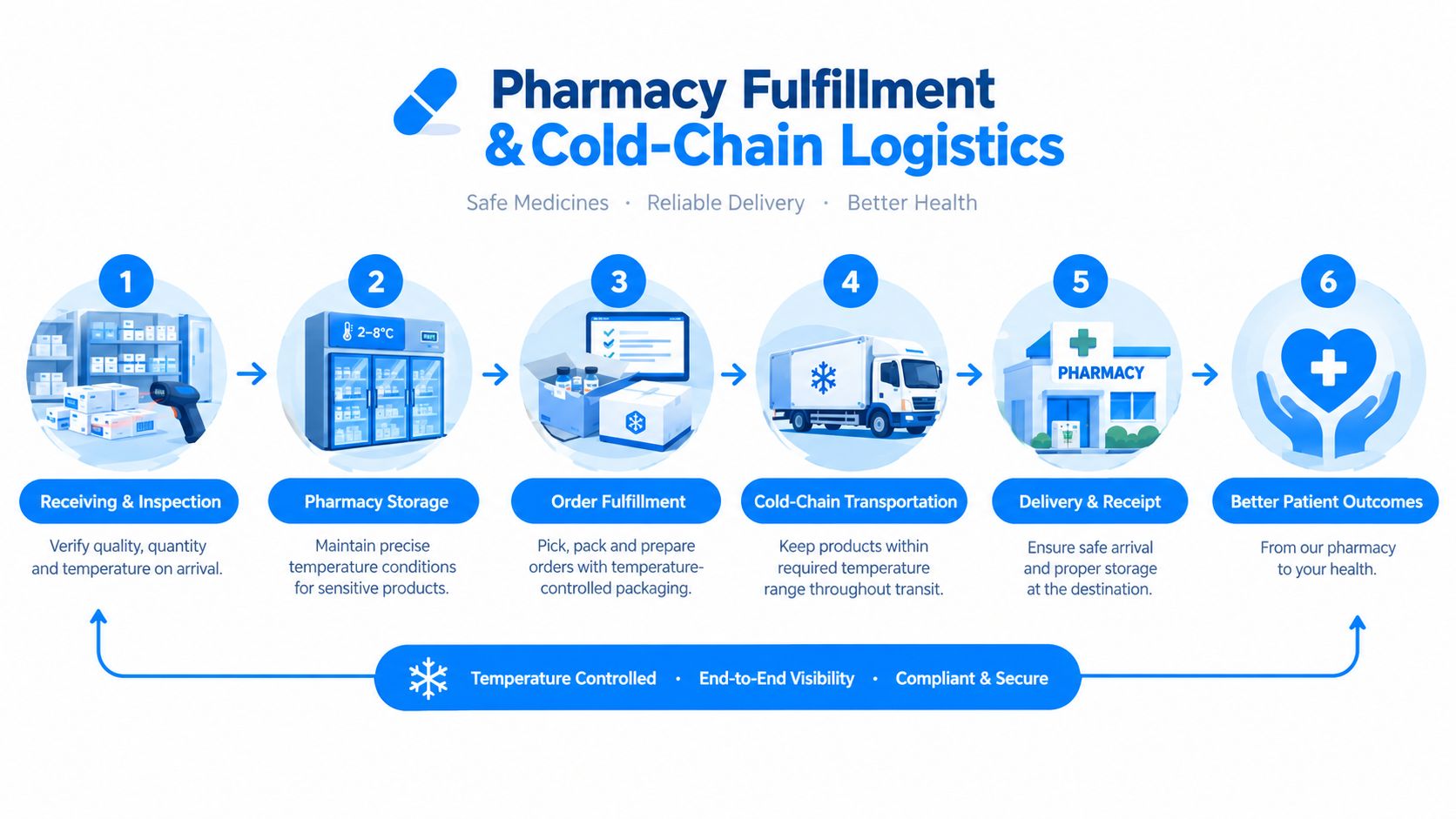
What patients should verify
A patient does not need to audit a pharmacy, but they do need to know whether the fulfillment chain is serious. The most important signals are accreditation, testing, and handling.
- Licensed dispensing: The pharmacy should be authorized to dispense in the patient's jurisdiction.
- Quality verification: Compounded products should be tied to potency and sterility checks.
- Appropriate packaging: Temperature-sensitive items should ship in insulated, cold-chain packaging when required.
- Discreet delivery: Unbranded packaging is a privacy feature, but it should never replace proper handling.
These details matter because compounded products can lose integrity if shipping is sloppy. A medication that was prescribed correctly but packed badly is still a patient-safety problem. The same goes for opaque pharmacy sourcing, where the patient cannot tell whether the product was prepared under the standards the clinician described.
Why the fulfillment chain belongs in the medical conversation
Operational quality is not a cosmetic detail. If the medication requires temperature control, the package needs to stay within the handling window through transit and delivery. If the product is compounded, the patient should know that the pharmacy has the procedures to support consistency from batch to batch.
A credible telehealth service treats this as part of care, not logistics afterthought. That is why protocols often specify how prescriptions are transmitted, how the patient is notified, and how refills are handled. Vials + Vitals, for example, describes physician review, individualized titration, and fulfillment through an accredited U.S. pharmacy network, which is the operational standard patients should expect from any service in this category. The point is not the brand name. The point is that the supply chain must support the prescription, not weaken it.
Structuring Your Follow-Up and Long-Term Adherence
Follow-up is where many telehealth hair programs fail. The 2026 cohort study of 638,629 men prescribed compounded topical finasteride/minoxidil found that only 23.7% completed a follow-up check-in, yet among respondents 80.4% reported satisfaction and 2.7% reported a side effect. Just 0.04% of all treated patients messaged the care team about a possible adverse reaction, and no patient reported needing a higher level of care or discontinuing treatment because of it 2026 telehealth cohort on compounded topical finasteride/minoxidil. That tells the full story. The data look reassuring, but they are heavily shaped by the minority who come back.
Adherence is the treatment
Hair therapy works on biology, and biology is slow. Patients who stop too early usually mistake a lag for failure. Patients who skip follow-up also leave the clinician blind to response, tolerability, and whether the initial diagnosis still fits.
A workable plan usually includes:
- Scheduled check-ins: Follow-up should be built into the protocol, not left to patient initiative.
- Photo comparison: Repeat scalp photos help detect subtle change that mirrors day-to-day observation poorly.
- Titration guardrails: Dose changes should follow a defined rule set, especially with compounded or off-label formulations.
- Stop points: The patient should know which side effects, pregnancy concerns, or symptom changes require a pause and reevaluation.
Passive treatment is the enemy of long-term results.
That is especially true in telehealth, where the patient may feel cared for because the prescription arrived quickly. Speed does not equal oversight. A strong program uses the first months to confirm that the diagnosis was right, the formulation is tolerated, and the patient is taking the medication as directed.
The right mindset for long-term care
Hair retention is not a one-time transaction. It is a sustained medical commitment with visible feedback over months. The most effective online programs make that explicit from the start, then reinforce it through structured follow-up, photographic monitoring, and a low-friction path back to the clinician when the plan needs adjustment.
A patient seeking online hair loss prescription care should look for a board-guided process, clear triage, honest counseling on metabolic therapies, and pharmacy fulfillment that respects safety. A telehealth service should never be just a faster way to buy a drug, it should be a disciplined way to get the right diagnosis, the right formulation, and the right follow-up. For patients who want that kind of physician-directed model, Vials + Vitals offers protocol-driven telehealth with clinical assessment, licensed provider review, and structured fulfillment, which makes it a relevant option to evaluate for hair-health care and related metabolic protocols.
Ready to see if this protocol fits your biology?
A licensed provider reviews every request before anything is prescribed.
Explore hair protocols →