Metabolic Health: Markers, GLP-1s & Strategies for 2026

Learn the essential markers of metabolic health, how GLP-1s work, and practical strategies to improve yours in 2026.
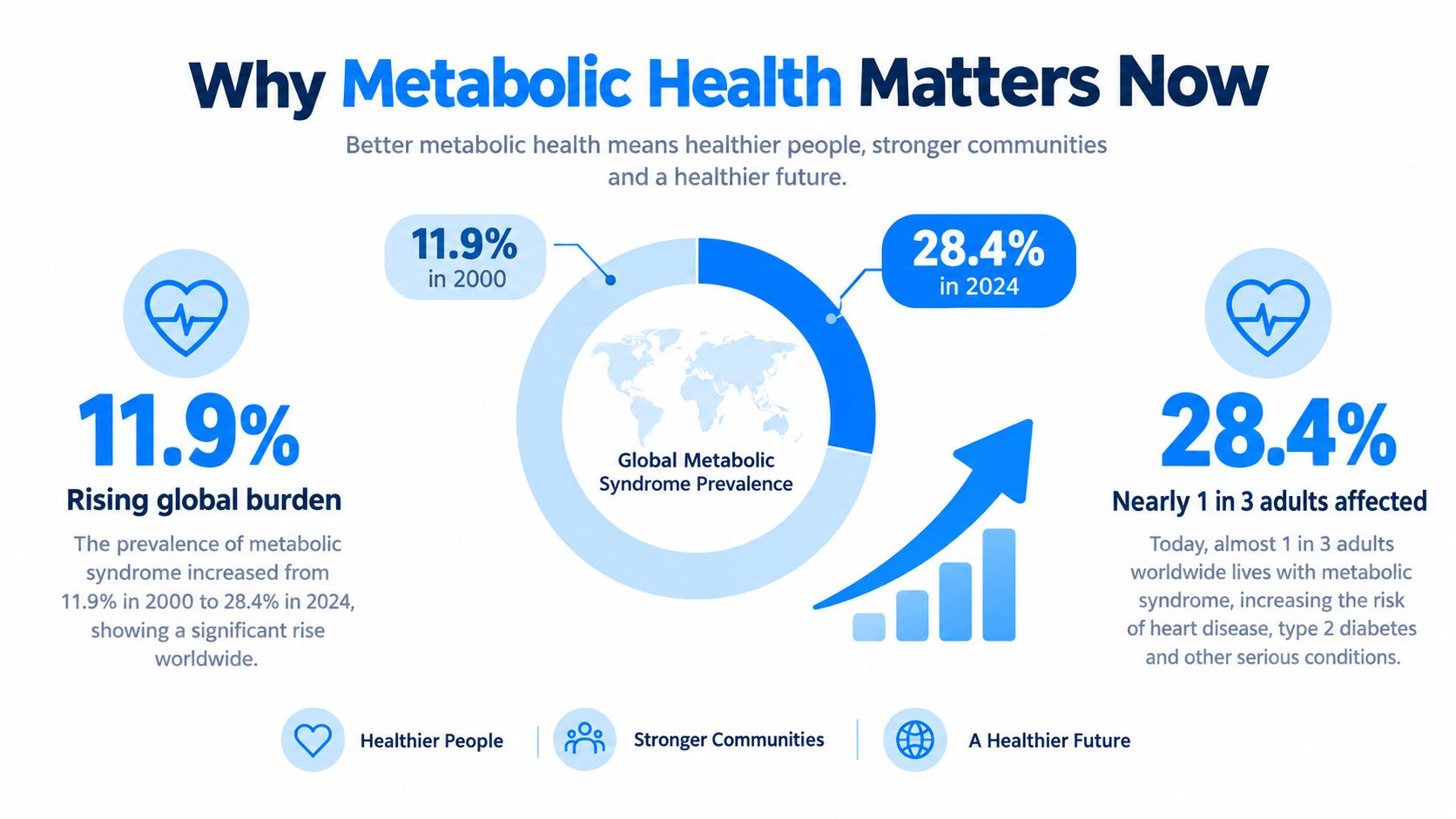
Global metabolic syndrome prevalence rose from 11.9% in 2000 to 28.4% in 2023, affecting an estimated 1.54 billion adults worldwide. Metabolic health therefore needs to be assessed as a multi-system risk profile, not reduced to body weight or a single scale reading.
For the Vials + Vitals Medical Board, that distinction guides responsible care. Glucose regulation, blood pressure, lipid metabolism, central adiposity, inflammation, appetite, and even hair retention biology can influence how a patient responds to treatment. GLP-1 and dual incretin therapies may be valuable tools, but they work best when clinicians monitor the broader physiology around them.
Table of Contents
- Why Metabolic Health Matters Now
- Understanding Insulin Resistance as the Core Driver
- GLP-1 and Dual Incretin Therapies Explained
- Assessing Metabolic Health Through Clinical Markers
- Hair Retention and GLP-1 Therapy Considerations
- Integrating Lifestyle and Medical Interventions for Lasting Results
Why Metabolic Health Matters Now
A patient may arrive concerned about weight gain, fatigue, or difficulty controlling appetite. Laboratory testing may reveal a more complex pattern: fasting glucose moving upward, triglycerides increasing, blood pressure becoming less favorable, or waist circumference expanding even before diabetes develops. Another patient may have a higher body weight but relatively stable markers, while a thinner patient shows insulin resistance and cardiometabolic risk. Neither profile can be understood from weight alone.
The population data show why this broader view matters. A 2025 systematic review and modelling analysis found that worldwide metabolic syndrome prevalence increased from 11.9% in 2000 to 28.4% in 2023, an absolute increase of 16.5 percentage points. In 2023, an estimated 1.54 billion adults were living with metabolic syndrome globally. Prevalence reached 31.0% among women and 25.7% among men, demonstrating that this is a widespread clinical pattern rather than a niche concern.
The education gap
Despite the scale of the problem, many adults don't have a working definition of metabolic health. A July 2026 survey of nearly 3,000 U.S. adults found that 80% either hadn't heard the term or didn't fully understand it, while 48% didn't realize metabolic health isn't only about body weight. The same survey found that 48% were unsure or incorrect about the relationship between blood pressure and metabolic health (Everyday Health survey coverage).
That gap affects decision-making. A person who treats the scale as the only outcome may overlook improving glycemic control, lipid trends, or blood pressure. Conversely, a patient who loses weight rapidly without maintaining adequate nutrition, muscle support, and clinical monitoring may not achieve the durable metabolic improvement they expected.
Clinical principle: Weight is one observable measure. Metabolic health is the interaction among several systems that determine long-term cardiometabolic risk.
The practical framework includes glucose regulation, triglycerides and cholesterol, blood pressure, waist circumference, and the clinical context surrounding them. It also includes appetite, medication tolerance, physical activity, sleep, and nutritional adequacy. This framework supports sustainable, physician-guided care rather than quick-fix weight loss.
Understanding Insulin Resistance as the Core Driver
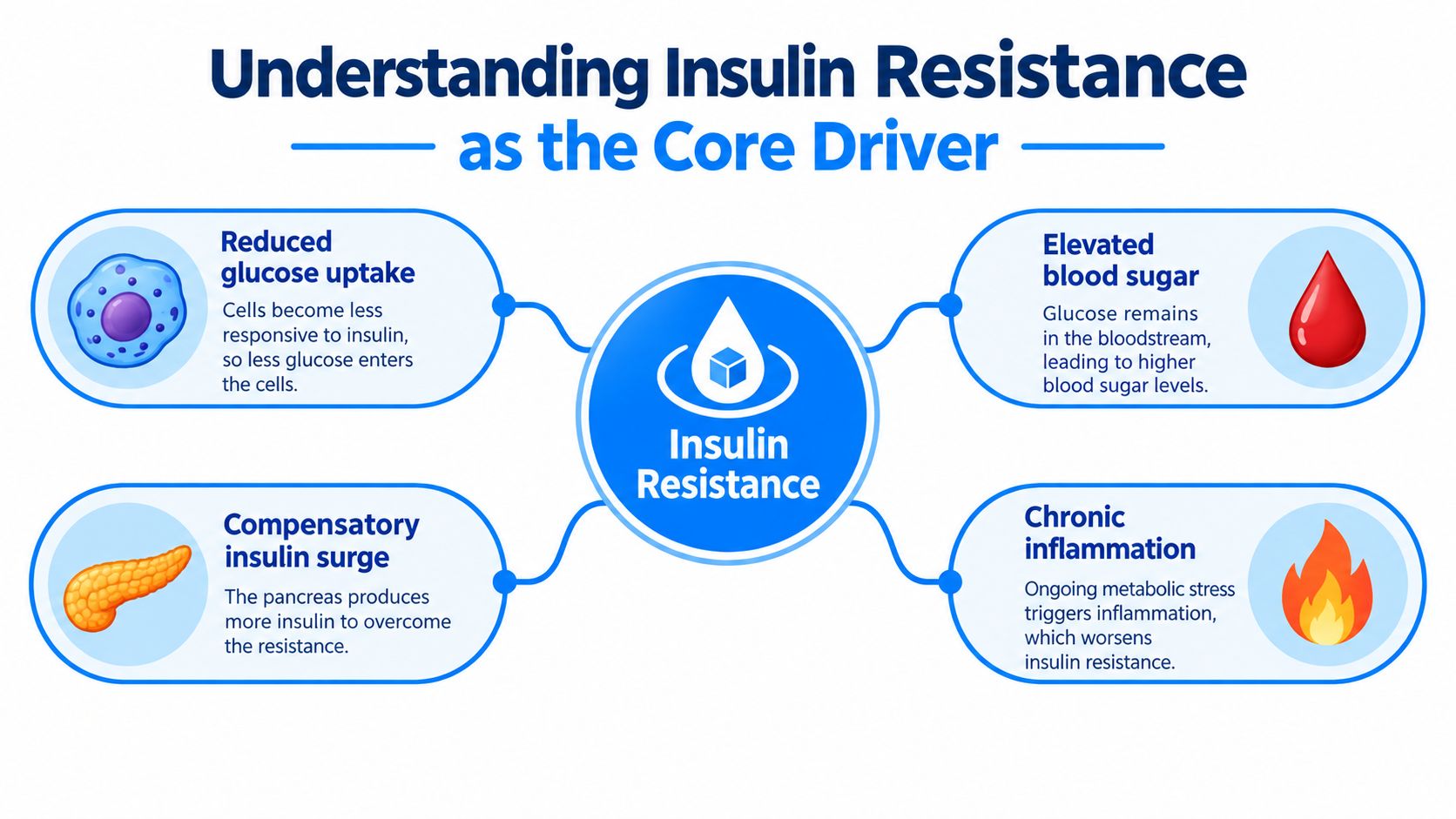
Insulin resistance helps explain why several apparently separate findings often appear together. When cells respond less effectively to insulin, glucose disposal becomes impaired. The pancreas may compensate by producing more insulin, while the resulting metabolic strain can contribute to hyperglycemia, hypertension, dyslipidemia, elevated inflammatory markers, endothelial dysfunction, and a prothrombotic state.
This isn't a problem that begins after diabetes. An NCBI clinical review of insulin resistance describes an NHANES-based analysis in which insulin resistance affected about 22% of U.S. adults over age 20. A newer NHANES analysis reported 40% prevalence among adults aged 18 to 44 by HOMA-IR. These findings illustrate why clinicians should look for early metabolic dysfunction before overt diabetes appears.
Why one marker isn't enough
A normal fasting glucose result can be reassuring, but it doesn't describe every aspect of insulin signaling. Similarly, a single weight measurement can't show whether visceral adiposity, blood pressure, triglycerides, or inflammation are changing. The clinical pattern matters more than an isolated result.
A useful assessment combines:
- Fasting glucose: Indicates baseline circulating glucose and helps identify dysregulation.
- HbA1c: Adds a longer-term view of glycemic exposure rather than relying on one morning result.
- Lipid markers: Triglycerides, HDL, and LDL help characterize cardiovascular risk and lipid metabolism.
- Blood pressure: Captures a major component of cardiometabolic risk that patients may not feel.
- Waist circumference: Offers a practical proxy for central adiposity, which often tracks with insulin resistance.
The physiology behind the cluster
Insulin resistance can make the body less efficient at moving glucose into cells. As glucose remains high, the pancreas may increase insulin output, while altered fat handling can contribute to higher triglycerides and lower HDL. Vascular and inflammatory changes add further risk, which is why clinicians evaluate the full pattern rather than treating one laboratory value in isolation.
This also explains why lifestyle changes and medication may produce benefits that appear in different order. Appetite can improve before weight changes become obvious. Glycemic excursions may become more stable before a patient sees a substantial change in waist circumference. Those signals deserve attention because they indicate metabolic response beyond the scale.
GLP-1 and Dual Incretin Therapies Explained
GLP-1 receptor agonists and dual incretin therapies influence metabolic health primarily by changing appetite and food intake. Expert reviews describe early satiety and delayed gastric emptying as central mechanisms, rather than direct fat-burning effects (Obesity review of GLP-1 mechanisms). Reduced energy intake can support adiposity reduction, which may then improve insulin resistance and related cardiometabolic risk.
Semaglutide provides a clear efficacy benchmark. In adults with overweight or obesity, semaglutide 2.4 mg once weekly produced mean body-weight reduction of 14.9% at 68 weeks, compared with 2.4% with placebo, for an estimated treatment difference of 12.4 percentage points (STEP 1 trial in the New England Journal of Medicine). That result describes an average trial outcome, not a guarantee for an individual patient.
Semaglutide and cardiovascular context
The clinical value of semaglutide isn't limited to weight change. In the SELECT cardiovascular outcomes trial, adults with overweight or obesity and established cardiovascular disease, but without diabetes, experienced a 20% reduction in major adverse cardiovascular events with semaglutide. Over 208 weeks, mean weight reduction was 10.2% with semaglutide versus 1.5% with placebo (SELECT trial follow-up).
Those findings apply to the studied population and shouldn't be generalized to every patient. A clinician still needs to evaluate medical history, contraindications, concurrent medications, nutritional status, and the patient's ability to continue treatment and monitoring.
Tirzepatide and the maintenance question
Tirzepatide is a dual incretin therapy that targets GLP-1 and GIP pathways. The distinction matters mechanistically, but practical decisions should focus on the patient's response, tolerability, metabolic markers, and long-term treatment plan.
Durability is especially important because appetite and weight regulation remain active after initial improvement. In a 112-week SURMOUNT-MAINTAIN report, continuing tirzepatide maintained a mean weight change of −21.9% at maximum tolerated dose and −16.6% at 5 mg, compared with −9.9% after switching to placebo (SURMOUNT-MAINTAIN report). The comparison reinforces a clinical reality: stopping or changing therapy can alter weight trajectory and should be planned with medical oversight.
| Clinical consideration | Semaglutide | Tirzepatide |
|---|---|---|
| Primary metabolic action | GLP-1 receptor agonism | GLP-1 and GIP pathway activity |
| Core appetite effect | Greater satiety and reduced intake | Greater satiety and reduced intake |
| What clinicians monitor | Weight, glucose, HbA1c, lipids, tolerance | Weight, glucose, HbA1c, lipids, tolerance |
| Key decision point | Individual response and safety | Individual response and safety |
The most meaningful response isn't scale weight alone. Appetite control, lower glycemic excursions, improved fasting glucose or HbA1c, and favorable lipid trends can show whether treatment is addressing metabolic risk. Dose escalation should follow a prescribed schedule, with adjustments based on tolerance and clinical response.
Assessing Metabolic Health Through Clinical Markers
A clinically useful assessment starts with a baseline rather than a target weight alone. The patient and provider should establish which markers are abnormal, which symptoms matter, and which outcomes will determine whether treatment is helping. A composite profile creates a clearer record of progress and makes it easier to identify an incomplete response.
A practical marker set
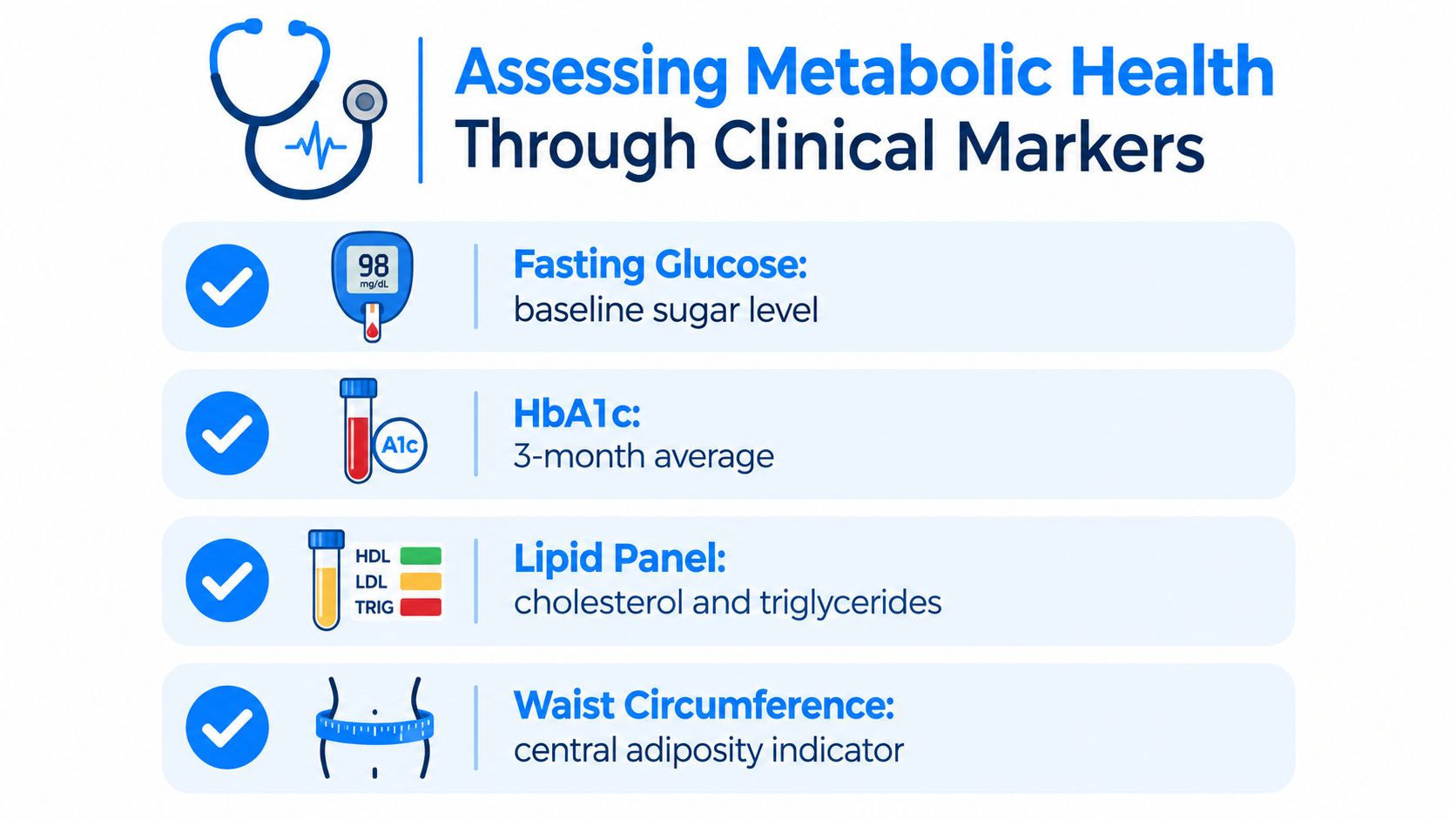
The initial panel commonly includes fasting glucose, HbA1c, triglycerides, HDL, LDL, blood pressure, and waist circumference. Each marker answers a different question:
- Fasting glucose shows the baseline level after fasting and can identify a pattern that warrants further evaluation.
- HbA1c reflects average glycemic exposure over time, helping distinguish a temporary fluctuation from a persistent pattern.
- Triglycerides and HDL add information about lipid metabolism and cardiometabolic risk.
- LDL contributes to cardiovascular risk assessment and should be interpreted within the patient's full clinical context.
- Blood pressure captures vascular strain that may remain silent without measurement.
- Waist circumference helps track central adiposity even when total body weight changes slowly.
Turning measurements into decisions
A provider should interpret trends, not isolated readings. For example, improving appetite with stable or improving glucose and lipid markers suggests a different response than weight loss accompanied by poor intake, declining strength, or worsening laboratory results. The same number can also mean different things depending on medication use, family history, sleep, activity, and comorbid conditions.
Structured clinical tools can help organize this process. Vials + Vitals uses a GLP-1 Titration Calculator, Metabolic Calorie Tool, and Follicular Retention Index within its physician-directed protocols. These tools support individualized eligibility review, titration planning, and monitoring during an approximately 12-week evaluation period, but they don't replace licensed clinical judgment.
What progress should look like
A realistic monitoring plan tracks more than the scale:
- Establish baseline data before treatment or major lifestyle changes.
- Review appetite and tolerability alongside food intake and daily function.
- Repeat relevant markers according to the provider's clinical plan.
- Assess waist and weight trends without treating either as the sole endpoint.
- Adjust the protocol when response, adverse effects, or new medical information changes the risk-benefit balance.
A treatment plan is working when the patient is safer, more metabolically stable, and able to sustain the approach, not merely when the scale moves quickly.
Hair Retention and GLP-1 Therapy Considerations
Hair loss deserves direct discussion before GLP-1 therapy begins. Patients may associate shedding with the medication itself, but follicular biology also responds to nutritional adequacy, physiological stress, illness, hormonal changes, and rapid shifts in body composition. A careful clinical conversation avoids both extremes, dismissing the concern or assuming that every episode of shedding has the same cause.
A systematic review found alopecia incidence of 6.0 per 1,000 patient-years among GLP-1 receptor agonist users versus 0.8 per 1,000 patient-years in placebo groups, corresponding to a risk ratio of 3.40 (systematic review of GLP-1 therapies and alopecia). Pharmacovigilance analyses showed the strongest signal with semaglutide and tirzepatide. The signal is documented but relatively uncommon, and it doesn't establish that every reported case is caused solely by the medication.
Why shedding can occur
Hair follicles cycle through growth and resting phases. A systemic stressor can shift more follicles into a resting phase, leading to noticeable shedding later. Reduced appetite, inadequate protein or micronutrient intake, rapid physiological change, and the underlying metabolic condition may all need consideration when a patient reports new hair loss.
The correct response isn't necessarily to abandon effective treatment. It is to assess the timing, severity, nutritional intake, concurrent illness, medication history, scalp findings, and other possible contributors. Persistent, patchy, painful, or inflammatory hair loss requires clinical evaluation rather than self-treatment.
Monitoring follicular retention
Patients concerned about hair should document baseline density and shedding patterns in a consistent way. Providers can review:
- Timing: When did shedding begin relative to treatment or a dose change?
- Pattern: Is thinning diffuse, patterned, patchy, or associated with scalp symptoms?
- Nutrition: Is the patient eating enough protein and maintaining a balanced intake?
- Medical context: Are thyroid disease, hormonal shifts, illness, or other medications relevant?
- Treatment tolerance: Are nausea or appetite suppression limiting adequate nutrition?
The Follicular Retention Index can help structure provider counseling and individual risk assessment within a broader protocol. It shouldn't be treated as a diagnostic test or a promise that shedding won't occur. The appropriate goal is informed monitoring, early recognition, and a balanced decision that considers both metabolic benefit and follicular concerns.
Integrating Lifestyle and Medical Interventions for Lasting Results
Medication can reduce appetite and support glycemic control, but it doesn't replace the behaviors that preserve muscle, maintain nutritional adequacy, and improve cardiovascular fitness. A sustainable plan generally pairs treatment with meals that provide sufficient protein and fiber, regular movement, resistance exercise when appropriate, sleep support, and monitoring that reflects the patient's medical risk.
The most useful lifestyle plan is specific enough to follow but flexible enough to survive real life. A patient might begin by building meals around minimally processed foods, adding consistent walking, and introducing strength-focused movement according to ability. Another patient may need a different starting point because of pain, limited mobility, medication effects, or a history of restrictive eating.

What physician-directed care adds
A telehealth model can provide structured review when in-person access is limited. Vials + Vitals uses confidential online assessments followed by review from U.S.-licensed providers, who determine eligibility, formulation, and dosing schedules. Protocols may include semaglutide, tirzepatide, needle-free sublingual orally disintegrating tablets for select therapies, or injectable vial formats when clinically appropriate.
Clinical oversight also addresses practical barriers that often disrupt treatment:
- Dose changes: Titration follows guardrails rather than unsupervised escalation.
- Needle aversion: Select oral dissolving formulations may offer an alternative to syringes.
- Appetite rebound: Follow-up can identify loss of control before it becomes a long-term setback.
- Medication handling: Temperature-sensitive formulations use insulated cold-chain shipping.
- Pharmacy fulfillment: Accredited U.S. pharmacy partners, including EPIQ Scripts, Foothills Pharmacy, and Emerald Compounding, dispense prescribed therapies.
- Patient protections: HIPAA-compliant processes support privacy, and consultation fees are refunded when treatment isn't clinically appropriate.
A sustainable clinical pathway
The first stage is assessment, including medical history, current medications, goals, and relevant metabolic markers. The next stage is a carefully selected protocol with a defined titration approach. Ongoing review then evaluates appetite, adverse effects, weight, waist circumference, glucose, HbA1c, lipid trends, nutrition, and hair concerns when relevant.
What doesn't work well is treating medication as a substitute for assessment or assuming that faster weight loss automatically means better health. A clinically sound plan protects against both undertreatment and overpromising by asking whether the patient can continue the intervention safely and whether the broader metabolic profile is improving.
Vials + Vitals provides physician-directed GLP-1 and dual incretin protocols, individualized titration, clinical decision tools, and pharmacy fulfillment designed around metabolic monitoring and patient safety. Adults seeking a structured assessment for weight management, glucose control, or hair retention considerations can begin with Vials + Vitals to determine whether a provider-guided approach is clinically appropriate.
Ready to see if this protocol fits your biology?
A licensed provider reviews every request before anything is prescribed.
Calibrate your metabolic protocol →