Medically Supervised Weight Loss: A Complete Clinical Guide

Learn what medically supervised weight loss involves, from clinical assessments and GLP-1 protocols to monitoring, safety, and telehealth access.
A patient can do everything that online weight-loss advice recommends and still feel stuck. Consider a 44-year-old adult with class II obesity, prediabetes, and a history of unsuccessful diet attempts who orders semaglutide online, develops persistent gastrointestinal symptoms, and then reaches a plateau without knowing whether the dose, nutrition plan, or diagnosis is responsible. The problem isn't a lack of effort. It's the absence of clinical decision-making around the treatment.
Medically supervised weight loss is more than receiving a prescription. It combines diagnostic assessment, evidence-based pharmacotherapy when appropriate, nutrition and behavior support, and longitudinal monitoring. The physician-led framework matters because incretin therapy requires eligibility screening, gradual dose adjustment, side-effect management, and a plan for what happens after initial weight loss.
Table of Contents
- What Medically Supervised Weight Loss Actually Means
- The Clinical Assessment Before Treatment Begins
- How GLP-1 and Dual Incretin Therapies Drive Weight Loss
- Injectable, Sublingual, and Compounded Options Compared
- Titration, Monitoring, and the First 12 Weeks
- Compounded GLP-1s After the Shortage Era
- Plateaus, Maintenance, and Long-Term Outcomes
- Choosing a Program and Starting Safely
What Medically Supervised Weight Loss Actually Means
In the example above, a physician-led program would begin by reviewing the patient's medical history, current medications, metabolic risks, previous weight-loss attempts, and symptoms. The online medication would not be continued merely because it had already been purchased. The provider would determine whether the patient is an appropriate candidate, whether the adverse effects suggest excessive dosing or another condition, and whether the treatment plan needs to be paused or redesigned.
The three structural differences
A supervised program has three features that distinguish it from self-directed use:
Eligibility verification comes before dispensing. The clinician evaluates obesity-related disease, contraindications, medication interactions, pregnancy considerations when relevant, and the patient's ability to follow the monitoring plan.
Protocol-driven titration uses documented decision points. The dose is adjusted according to tolerability, appetite response, glycemic considerations, and adverse effects. A patient shouldn't be told to increase the dose just because a calendar reminder says it is time.
Ongoing safety surveillance continues after the prescription is written. Follow-up includes symptom review, relevant laboratory testing, comorbidity tracking, nutritional assessment, and explicit triggers for holding, reducing, or stopping treatment.
The historical development of incretin therapy helps explain the shift in practice. Liraglutide became the first GLP-1 receptor agonist approved in the United States for obesity in 2014, followed by semaglutide in 2021 and tirzepatide in November 2023. A national research summary reported that 1.7% of U.S. patients with a healthcare visit in 2023 were prescribed semaglutide, representing a 40-fold increase over the prior five years. Those figures appear in the large real-world analysis of medically supervised weight management.
Clinical takeaway: A prescription is one component of care. The safety advantage comes from the system around the prescription.
The system also has to acknowledge that obesity is a chronic disease, not a short project. The World Health Organization reported that about 16% of adults worldwide were living with obesity in 2022, which places weight management in a broad public-health context rather than a niche wellness category. In supervised care, the central question isn't only whether weight falls. It is whether the patient can achieve meaningful improvement without avoidable harm and maintain the benefit with an appropriate long-term plan.
The Clinical Assessment Before Treatment Begins
A responsible intake visit starts with measurements, not a medication menu. The provider documents weight, height, BMI, waist circumference, and blood pressure, then interprets those findings alongside the patient's health history. A single measurement rarely explains the entire clinical picture, but it establishes a baseline for later decisions.
A practical intake sequence
The laboratory assessment should be targeted to the patient rather than ordered as a generic checklist. Common baseline testing can include:
- Fasting glucose and HbA1c: These help identify dysglycemia and establish a reference point for future metabolic monitoring.
- Lipid profile: This clarifies cardiovascular risk and can show whether the treatment plan needs to address more than weight.
- TSH: Thyroid testing can be appropriate when symptoms or history suggest thyroid dysfunction.
- Full metabolic panel: Kidney and liver markers affect medication safety and help identify conditions that may contribute to fatigue, nausea, or poor tolerance.
- Additional testing when indicated: Insulin, expanded liver evaluation, and sleep apnea screening may be appropriate when the history and examination support them.
The medication review is equally important. The provider should ask about prior pancreatitis, gallbladder disease, severe gastrointestinal disorders, eating-disorder history, and medications that affect weight or glucose. The clinician also needs to assess personal or family history of medullary thyroid carcinoma or multiple endocrine neoplasia type 2 before considering relevant incretin therapies.
Turning findings into a treatment plan
Eligibility isn't determined by BMI alone. The provider weighs comorbidity burden, prior attempts at lifestyle intervention, current medications, eating patterns, mobility, sleep, and the patient's ability to attend follow-up. In the SURMOUNT-1 trial, adults with BMI of at least 30, or at least 27 with a weight-related complication, were enrolled, providing a commonly used clinical benchmark for obesity pharmacotherapy research. The trial included a structured dose-escalation period, as detailed in the phase 3 tirzepatide study.
Baseline goals should include more than a target number on the scale. A clinically useful plan may track appetite control, glycemic measures, blood pressure, waist measurement, strength, sleep, and the ability to follow a sustainable eating pattern. Hair retention also deserves discussion. Diffuse shedding can begin approximately two to three months after a triggering event, and rapid weight loss is a recognized trigger for telogen effluvium. The dermatology review of telogen effluvium supports correcting the underlying trigger rather than relying on a single hair-growth medication.
How GLP-1 and Dual Incretin Therapies Drive Weight Loss
GLP-1 therapies influence several systems involved in appetite and glucose regulation. GLP-1 receptor agonism enhances glucose-dependent insulin secretion, reduces inappropriate glucagon signaling, slows gastric emptying, and acts on appetite-regulating pathways in the brain. Patients often describe the practical effect as less persistent hunger, earlier satiety, and fewer intrusive food thoughts.
Tirzepatide activates both the GLP-1 and GIP receptors. The additional GIP activity may affect insulin signaling, nutrient handling, and adipose-tissue biology, but the clinical response still depends on dose, adherence, titration, diet, activity, and individual physiology. A dual mechanism doesn't eliminate variability.
What the major trials show
In STEP 1, adults receiving once-weekly semaglutide 2.4 mg had a mean body-weight reduction of 14.9% at week 68, compared with 2.4% with placebo. The estimated treatment difference was 12.4 percentage points, as reported in the STEP 1 trial.
Across a review of STEP 1, 3, 4, and 8, semaglutide 2.4 mg produced mean weight loss ranging from 14.9% to 17.4% over 68 weeks in adults without type 2 diabetes. Between 69% and 79% achieved at least 10% weight loss, while 51% to 64% achieved at least 15%, according to the review of semaglutide clinical trials.
In SURMOUNT-1, the 15 mg tirzepatide group reached weight loss of approximately 20.9% at 72 weeks in the treatment-policy analysis. The study included 2,539 adults and used gradual escalation over a 20-week period. That design is clinically important because the highest maintenance dose isn't the starting dose, and gastrointestinal tolerability has to be developed over time.
Translating averages into individual expectations
Trial averages guide counseling, but they don't predict one patient's result. Some patients respond strongly at a modest dose. Others need more time, experience limiting nausea, have medications or endocrine conditions that affect weight, or cannot sustain the eating and activity pattern needed to support treatment. A plateau doesn't automatically mean the medication has failed, and a smaller response doesn't automatically justify escalation.
| Outcome | Semaglutide 2.4 mg, STEP 1 | Tirzepatide 15 mg, SURMOUNT-1 | Tirzepatide versus semaglutide |
|---|---|---|---|
| Trial context | Once-weekly treatment over 68 weeks | Once-weekly treatment over 72 weeks with gradual escalation | Head-to-head comparisons require interpretation of their specific trial populations and protocols |
| Mean or observed weight reduction | 14.9% at week 68 | About 20.9% at week 72 in the treatment-policy analysis | A higher average in one study should not be treated as a guarantee for an individual |
| Clinical meaning | A meaningful benchmark for semaglutide response | A benchmark for higher-dose tirzepatide response | Tolerability, access, comorbidities, and persistence influence treatment choice |
The practical role of a clinician is to set expectations around ranges, not promises. Treatment should be judged by health response, tolerability, adherence, and progress toward an agreed goal.
Injectable, Sublingual, and Compounded Options Compared
Delivery format affects convenience, but it doesn't determine clinical quality by itself. Weekly subcutaneous semaglutide and tirzepatide have the strongest evidence for obesity treatment among the options discussed here. Oral, sublingual, and compounded products require closer scrutiny because approval status, formulation, absorption, stability, and quality controls may differ.
Claims that sublingual or oral peptide products lose a specific percentage of potency shouldn't be accepted without formulation-specific pharmacokinetic evidence. Absorption can vary with the molecule, excipients, manufacturing process, administration technique, and whether a product has been evaluated in a controlled clinical trial. A convenient route isn't automatically an equivalent route.
Comparing the practical choices
| Format | FDA status | Bioavailability | Storage | Typical cost band | Evidence strength |
|---|---|---|---|---|---|
| FDA-approved injectable semaglutide | FDA-approved for specified indications | Established through product-specific studies | Product-specific storage requirements | Varies by coverage and dispensing route | Strongest obesity-treatment evidence for semaglutide |
| FDA-approved injectable tirzepatide | FDA-approved for specified indications | Established through product-specific studies | Product-specific storage requirements | Varies by coverage and dispensing route | Strong obesity-treatment evidence for tirzepatide |
| Oral semaglutide tablet | Approval depends on the specific indication and product | Product-specific, not interchangeable with injectable dosing | Label-specific storage | Varies by coverage and indication | Evidence depends on the approved use |
| Sublingual or orally disintegrating compounded product | Not FDA-approved as an equivalent copy of an approved injectable | Formulation-specific and not assumed to match injectable exposure | Pharmacy-specific instructions | Varies widely | Limited when the exact formulation lacks robust clinical evidence |
| Compounded injectable formulation | Not FDA-reviewed for safety, effectiveness, or quality as an approved product | Depends on formulation and preparation | Pharmacy-specific cold-chain or storage instructions | Varies widely | Lower certainty than an approved product |
The FDA states that compounded versions don't undergo the same review for safety, effectiveness, or quality as approved medications. The agency has also described dosing errors involving compounded GLP-1 products, including cases in which patients took five to twenty times the intended dose, as outlined in its post-shortage compounding policy update.
A clinician's decision rubric
The appropriate format depends on needle tolerance, gastrointestinal history, prior response, storage reliability, insurance access, and the quality of the dispensing pathway. A patient who can't manage injections may need a discussion of alternatives, but that discussion should distinguish an evidence-supported product from a convenient formulation with limited data.
Compounding can be considered only within applicable regulatory requirements and with clear pharmacy verification. A patient should receive exact concentration and dosing instructions, a reliable measuring device when needed, and a direct route for reporting symptoms. The word “supervised” doesn't repair an unverified supply chain.
Titration, Monitoring, and the First 12 Weeks
Incretin therapy should begin conservatively and increase only when the patient is tolerating the current dose. Semaglutide and tirzepatide protocols use low starting doses followed by stepwise escalation, rather than beginning at the target maintenance dose. In SURMOUNT-1, the escalation phase lasted 20 weeks, reinforcing that titration is a central part of treatment design rather than an administrative detail.
What the first weeks should look like
During escalation, the care team checks appetite, nausea, vomiting, constipation, reflux, hydration, bowel function, energy, and any symptoms that could indicate a more serious problem. Contact may be weekly or occur at clinically appropriate intervals, but patients shouldn't be left without a clear pathway for reporting adverse effects.
Nutrition affects tolerability. Smaller meals, slower eating, adequate fluids, and protein-forward food choices can help patients preserve lean tissue and avoid making nausea worse through large, high-fat meals. Severe or persistent vomiting, inability to maintain hydration, intense abdominal pain, fainting, or signs of an allergic reaction require prompt medical assessment.
Decision points matter more than the calendar
A clinician may hold the dose, extend the interval before escalation, return to a previously tolerated dose, or stop treatment when symptoms outweigh benefit. The decision depends on the symptom pattern, examination, hydration status, laboratory findings when indicated, and the patient's overall risk.
A baseline laboratory profile and later reassessment can include HbA1c, lipid testing, and kidney function when clinically appropriate. Resting heart rate, weight trajectory, waist measurement, and medication adherence add context that a scale alone can't provide.
Most problems during titration aren't solved by telling the patient to “push through.” A structured program documents what happened, what was changed, and what will trigger the next decision. That record helps distinguish a temporary adjustment period from a treatment that isn't suitable.
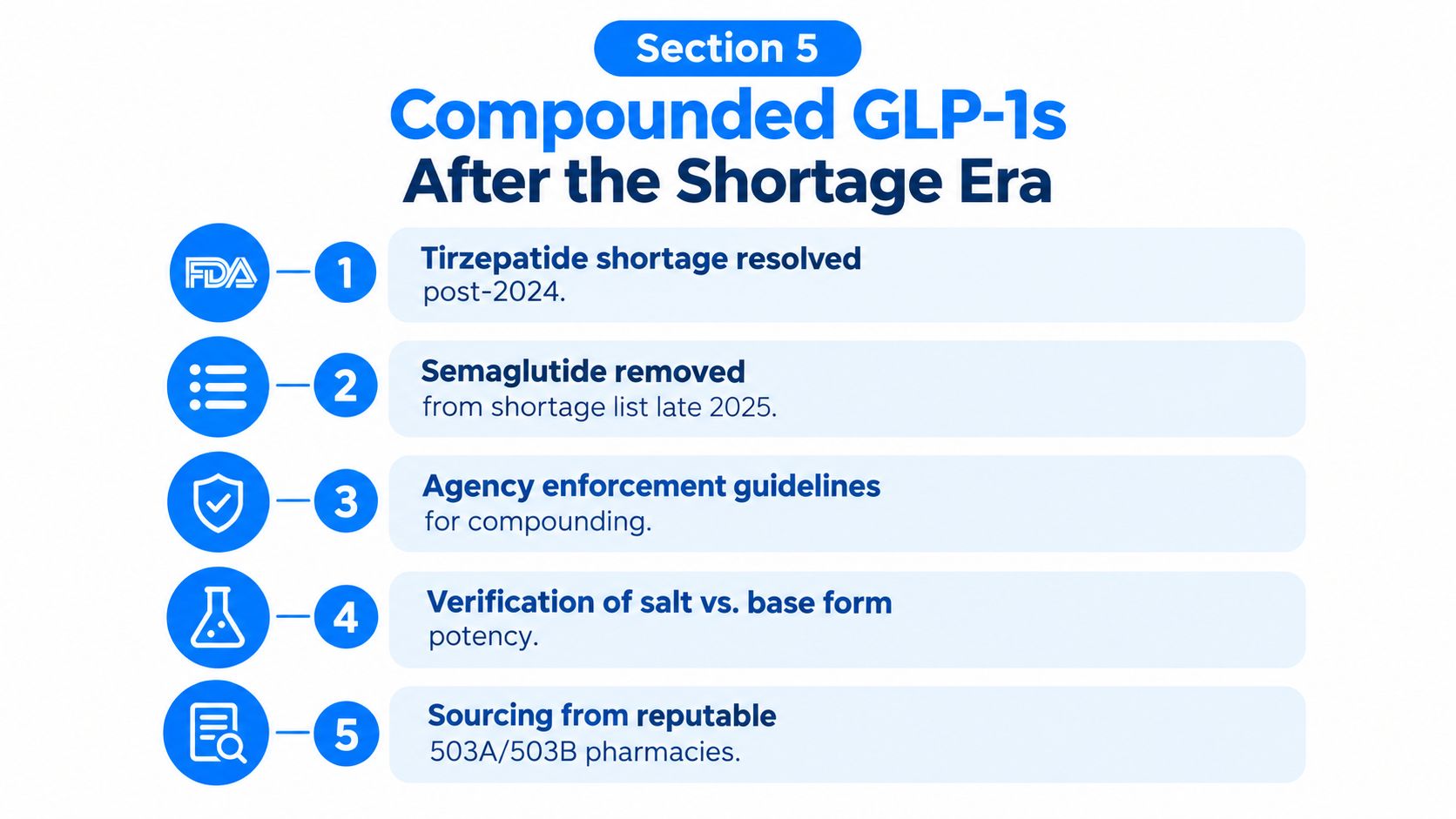
Compounded GLP-1s After the Shortage Era
The shortage-era logic for compounding has changed. The FDA reported that the semaglutide shortage was resolved in February 2025 and stated that exact-copy compounding should wind down, while also emphasizing that compounded products aren't reviewed by the agency for safety, effectiveness, or quality. The legal and operational status of compounding depends on applicable federal requirements, the drug's shortage status, the pharmacy's category, and the prescription circumstances.
The practical concern is not limited to legality. Dosing errors can occur when concentrations differ between vials, syringes are marked in unfamiliar units, or patients receive instructions that don't match the prescribed formulation. The FDA has also described adverse-event reporting associated with compounded semaglutide and tirzepatide, making verification and patient education essential.
What a legitimate safety review includes
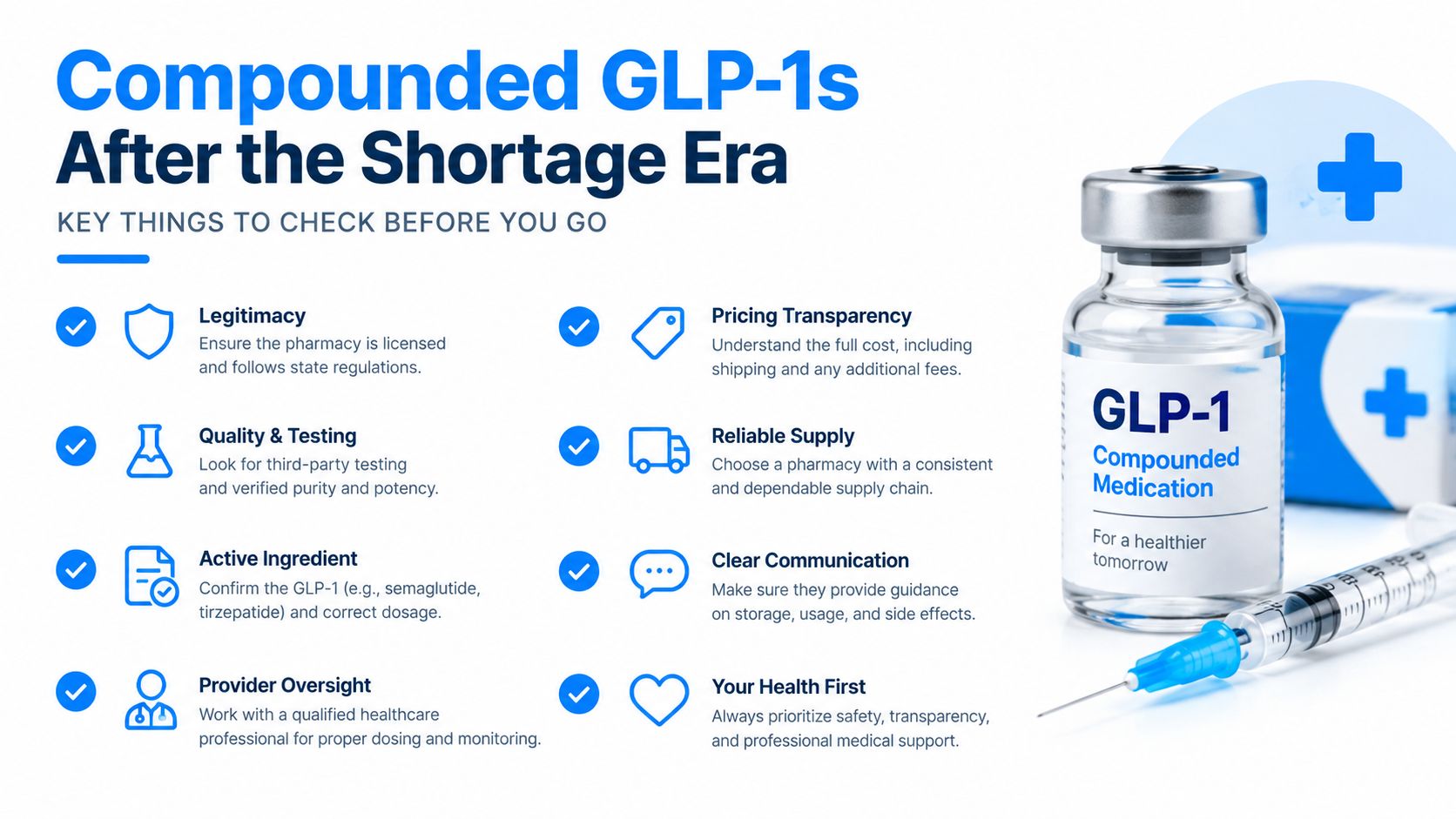
A prescriber and patient should be able to identify:
- The exact active ingredient: The prescription should distinguish the intended drug and formulation from an unfamiliar salt or blended product.
- The concentration and measuring instructions: The patient should know precisely how much medication corresponds to the prescribed dose.
- The pharmacy's credentials: The dispensing source should be identifiable, appropriately licensed, and subject to relevant inspection and regulatory oversight.
- Quality documentation: A certificate of analysis and sterility information may support review, but documents should be traceable to the actual batch and shouldn't replace clinical judgment.
- A follow-up pathway: The prescriber should review symptoms and dosing after treatment begins rather than treating shipment as the endpoint.
Safety rule: Physician involvement lowers risk only when the physician controls the clinical plan and can verify the medication's source, concentration, storage, and instructions.
A single telehealth screening followed by an automatic shipment isn't the same as medically supervised care. Genuine oversight includes documented reasoning, medication reconciliation, titration guardrails, adverse-event counseling, and a plan for switching to an approved pathway when available or clinically preferable.
Plateaus, Maintenance, and Long-Term Outcomes
Diane illustrates a common clinical moment. After losing a substantial amount of weight on tirzepatide, her weight reaches a flat line around the ninth month. The plateau doesn't automatically mean that the medication has stopped working. Early fluid changes have settled, appetite has adapted, daily energy expenditure has changed, and the remaining weight may require a different balance of nutrition, resistance training, sleep support, and medication strategy.
What the clinician investigates first
The review starts with adherence and administration technique, then examines protein intake, alcohol, liquid calories, constipation, sleep, stress, activity, and medications that promote weight gain. The clinician also considers whether the current dose is tolerated, whether the goal has shifted from active loss to maintenance, and whether a medical condition is interfering with progress.
Patients often ask whether they should stop once they reach a desired weight. Evidence from maintenance research argues against assuming that discontinuation will preserve the full result. In a tirzepatide maintenance study, participants who had already completed an initial treatment period had a mean weight reduction of 20.9% before entering the maintenance phase. In the later SURMOUNT-MAINTAIN trial, those who remained on the maximum tolerated dose maintained a 21.9% reduction, compared with 9.9% among those switched to placebo, as reported in the JAMA maintenance analysis.
| Outcome | Discontinued or switched to placebo | Continued maintenance dose |
|---|---|---|
| Appetite control | May weaken as treatment effect is withdrawn | May remain more consistent while treatment is tolerated |
| Weight trajectory | Partial regain can occur | Greater preservation of prior loss was observed in maintenance research |
| Clinical response | Requires reassessment rather than blame | Still requires nutrition, activity, and safety monitoring |
| Next decision | Consider restarting, changing strategy, or addressing barriers | Continue, reduce, or adjust only with clinical review |
A maintenance plan can include periodic metabolic testing, body-composition or waist reassessment when useful, medication review, and predefined rules for dose changes. The lowest effective dose may be appropriate for some patients, but it shouldn't be assumed without reviewing symptoms and response. Long-term care is a treatment phase, not a failure to finish.
Choosing a Program and Starting Safely
A strong program makes its process visible before treatment begins. Appropriate candidates often include adults with BMI of at least 30, or at least 27 with a weight-related complication, particularly when prior lifestyle efforts haven't produced durable improvement. The provider still has to assess contraindications, comorbidities, current medications, pregnancy considerations when relevant, and the patient's ability to follow monitoring instructions.
Questions that expose weak programs
A patient should ask:
- Are baseline labs reviewed by a licensed clinician? A form that collects data without clinical interpretation isn't a medical assessment.
- Is there a written titration protocol? The plan should explain how dose changes depend on tolerability and response.
- Who handles adverse effects? Patients need a direct clinical contact, not only a shipping or customer-service channel.
- Which pharmacy dispenses the medication? The source, formulation, concentration, and storage instructions should be clear.
- What happens at a plateau? A credible program should discuss maintenance and reassessment before treatment starts.
- Are records shared when appropriate? Coordination with a primary-care clinician can reduce medication conflicts and duplicated testing.
A legitimate telehealth pathway can collect a confidential history, have a U.S.-licensed provider determine eligibility, coordinate with the patient's established clinicians, and document follow-up. A direct-to-consumer subscription that emphasizes automatic dispensing but offers no meaningful review, laboratory interpretation, or titration oversight carries a different risk profile.
A practical first week
The patient can gather prior laboratory results, medication and allergy lists, relevant imaging or specialist notes, and a record of previous weight-loss attempts. The next step is confirming that the provider is licensed to practice in the patient's state and asking how follow-up works after the first dose. A baseline metabolic panel and other clinically indicated tests should be arranged before treatment is finalized.
Cost navigation also deserves a clinical conversation. Patients can ask whether insurance prior authorization is available, whether manufacturer savings programs apply to an approved medication, and whether eligible expenses may be paid through a health savings account. Coverage changes, and eligibility rules vary, so the program should avoid promising a particular price or reimbursement outcome.
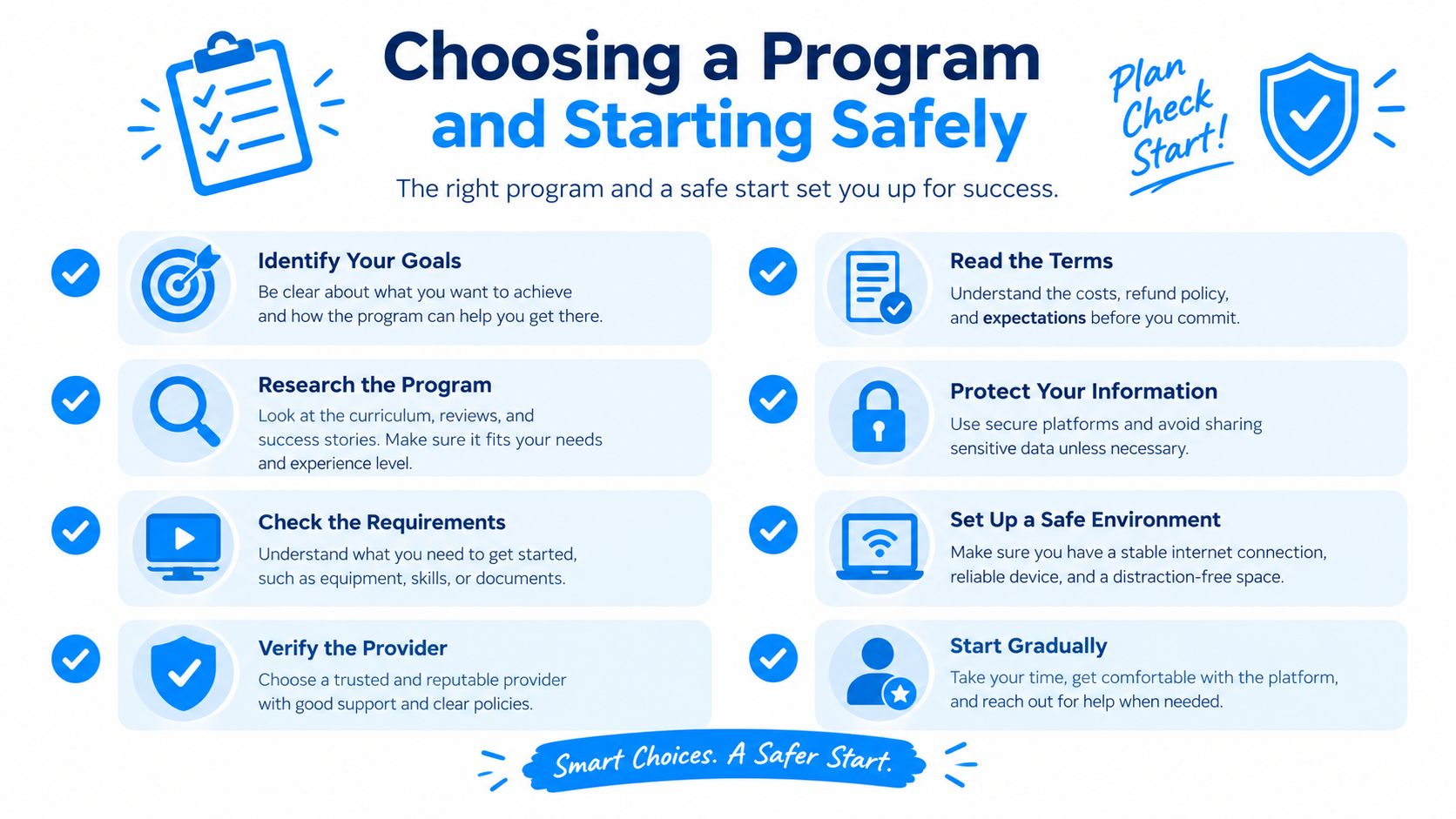
The safest next action is a clinical intake that answers three questions: Is treatment appropriate, which formulation has the strongest evidence and safest supply chain for this patient, and what will happen if side effects or a plateau appear? Those answers are more valuable than a fast shipment or an attractive subscription.
Vials + Vitals provides physician-directed telehealth assessment for selected GLP-1 and dual incretin protocols, including individualized eligibility review, titration planning, and ongoing clinical oversight. Adults seeking medically supervised weight loss can review the care pathway and request an evaluation through Vials + Vitals.
Ready to see if this protocol fits your biology?
A licensed provider reviews every request before anything is prescribed.
Calibrate your metabolic protocol →