Longevity Medicine: A Clinical Guide to Evidence-Based Aging

Explore longevity medicine principles, metabolic interventions like GLP-1s, biomarkers, and telehealth models from a clinical perspective.
By 2019, the average global gap between lifespan and healthspan had widened to 9.6 years, up from 8.5 years in 2000. Longevity medicine matters because the central problem isn't living longer. It's reducing the years spent alive but limited by disease, frailty, or loss of function.
That framing changes the entire conversation. For most patients, the useful question isn't whether a protocol promises “anti-aging.” The useful question is whether it improves metabolic health, preserves muscle and physical function, lowers inflammatory burden, and helps maintain independence over time.
Modern medicine has already lengthened life on a population scale. Global life expectancy has risen dramatically over the past century, and demographic estimates continue to project further gains in survival. But longer survival by itself doesn't guarantee better aging. That gap between added years and healthy years is where longevity medicine now sits clinically. It is less about chasing immortality and more about delaying dysfunction in ways that can be monitored.
Within that reality, the strongest practical tools available today are not exotic. They are structured, physician-supervised interventions that target known drivers of decline, especially excess adiposity, insulin resistance, poor glycemic control, chronic inflammation, inadequate sleep, and loss of physical capacity. Among prescription options, GLP-1 and dual incretin therapies have become central because they address several of those drivers at once. They also raise new questions, including how weight-loss treatment intersects with hair retention biology and what level of telehealth oversight is necessary to use them safely.
Table of Contents
- The Healthspan Gap Driving Modern Longevity Medicine
- Core Interventions in Evidence-Based Longevity Protocols
- Biomarkers That Predict Healthspan Outcomes
- Tirzepatide vs Semaglutide for Metabolic Longevity
- How Telehealth Models Deliver Longevity Care
- Common Misconceptions About Longevity Medicine
- Getting Started With Longevity Medicine Safely
The Healthspan Gap Driving Modern Longevity Medicine
A large WHO-based analysis found that the average healthspan-lifespan gap increased from 8.5 years in 2000 to 9.6 years in 2019, a 13% increase across two decades, with women experiencing a 2.4-year larger gap than men according to the same research published in JAMA Network Open on the global healthspan-lifespan gap. That is the problem longevity medicine is trying to solve.
It is a subtle point, and patients often miss it at first. Rising life expectancy sounds like unqualified success. In one sense it is. But if those added years are dominated by metabolic disease, vascular disease, weakness, cognitive decline, poor sleep, and reduced mobility, then survival has improved faster than function.
A simple visual helps clarify the concept.
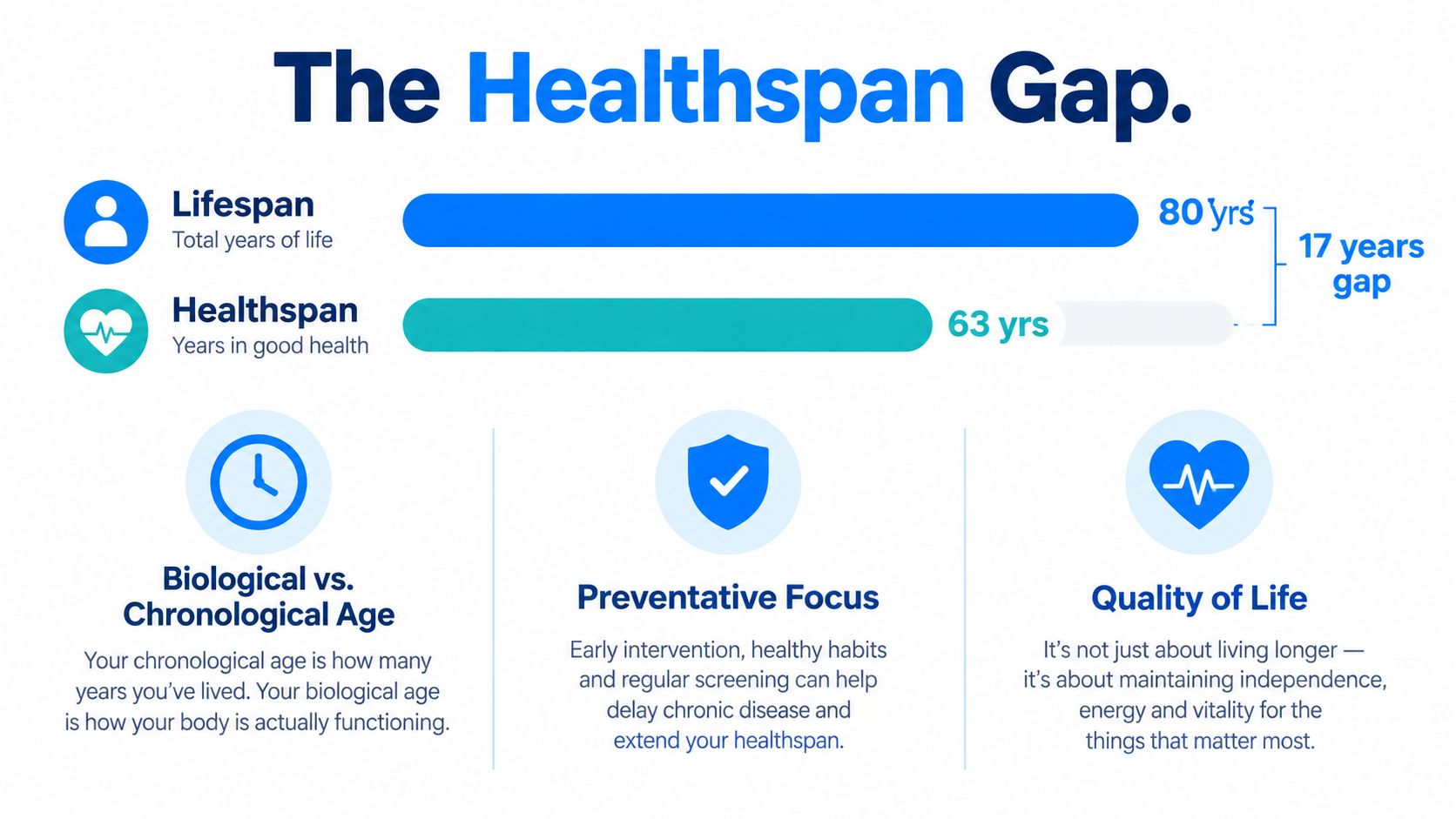
Why function matters more than the headline lifespan number
Longevity medicine now focuses on compression of morbidity. That means pushing disability, dependency, and chronic disease burden later in life rather than adding years at the end.
Clinically, this shifts attention toward outcomes patients can feel and physicians can follow:
- Metabolic stability: better glycemic control, improved insulin dynamics, and less visceral adiposity.
- Lower inflammatory load: not because a lab value alone is magic, but because persistent inflammation tracks with many age-related disorders.
- Preserved capability: walking speed, strength, balance, stamina, and cognition.
Patients rarely ask for more years of pill bottles, falls, and fatigue. They ask for more years of mobility, clarity, and independence.
Why this is still a growing need
Life expectancy continues to move upward globally. One widely used population dataset shows a rise from roughly the low 30s in 1900 to just over 70 by the early 2020s, while another demographic analysis found global life expectancy rose from 49.0 years in 1950 to 71.7 years in 2021, a gain of 22.7 years, as shown in Our World in Data life expectancy estimates. Projections in that same source indicate continued improvement through mid-century.
That long rise in survival is a major public health achievement. It also means more adults will spend more calendar years exposed to the slow physiology of aging. In practice, longevity medicine is becoming less a niche idea and more a framework for earlier prevention. The emphasis is practical: identify reversible drivers of decline early, track them repeatedly, and adjust before loss of function becomes obvious.
Core Interventions in Evidence-Based Longevity Protocols
The most credible longevity protocols don't start with “anti-aging” branding. They start with a biological question. Which systems are drifting first: appetite regulation, glucose control, body composition, sleep architecture, hormonal signaling, inflammatory tone, or recovery capacity?
Metabolic modulation has the clearest clinical footing
At present, metabolic intervention carries the strongest practical evidence base. A recent clinical synthesis reported that caloric restriction, intermittent fasting, and related mimetics can improve intermediate markers including IGF-1, insulin, HbA1c, CRP, TNF-α, IL-6, and mTOR-related signaling, but also stressed an important limitation: these biomarker improvements haven't yet shown consistent reductions in mortality, disability, or major clinical events in long-term human trials according to the International Journal of Molecular Sciences review on aging interventions and biomarkers.
That distinction matters. Better pathway engagement is useful. It isn't the same thing as proven lifespan extension.
For that reason, evidence-based longevity medicine often prioritizes interventions that improve measurable metabolic strain:
- GLP-1 and dual incretin therapy: used to improve appetite control, weight regulation, and glycemic patterns under medical supervision.
- Nutrition structure: usually aimed at reducing large glucose excursions and supporting lean mass retention.
- Sleep and recovery optimization: because appetite, insulin sensitivity, and inflammation don't behave normally when sleep is chronically poor.
Hormonal care requires restraint and context
Hormonal optimization gets a great deal of attention, often more than the evidence justifies. In legitimate practice, hormone therapy isn't used as a blanket “youth restoration” strategy. It is considered when symptoms, examination, and laboratory patterns support a real deficiency or imbalance, and when treatment goals are specific.
A careful program asks narrow questions. Is there a documented endocrine issue affecting body composition, recovery, sexual function, or quality of life? Is treatment likely to improve function in a measurable way? Are there safety concerns that make therapy inappropriate?
Clinical takeaway: In longevity medicine, a therapy earns its place by improving a meaningful health domain and by being monitorable over time.
Peptides remain a mixed category
Peptide-based therapies attract intense interest, but this area is heterogeneous. Some peptide discussions are grounded in legitimate physiology. Others move far ahead of clinical evidence. The responsible position is cautious: use peptide language precisely, avoid broad anti-aging claims, and distinguish established medical use from exploratory interest.
That same discipline applies to service design. A physician-directed telehealth model such as Vials + Vitals can organize protocol-driven care around prescription assessment, titration oversight, and formulation selection, but the medical value still depends on whether the intervention itself has a reasonable evidence base and clear monitoring plan.
Biomarkers That Predict Healthspan Outcomes
One of the most common mistakes in longevity medicine is treating a biomarker as if it were an outcome. It isn't. A biomarker is a signal. Sometimes it is useful, sometimes noisy, and sometimes overinterpreted.
Reviews of aging biomarkers note that no biomarker class has been approved by U.S. regulators as a validated surrogate endpoint for clinical aging use, and the field still lacks enough validation across multiple human cohorts to treat epigenetic age, proteomic signatures, or inflammatory panels as definitive proof of clinical benefit, as summarized in the peer-reviewed review of biomarkers of aging and clinical utility.
What a realistic longevity panel tries to answer
A sensible biomarker panel isn't searching for a single “true age.” It is trying to answer several narrower questions:
- Is glucose handling worsening? HbA1c and fasting insulin help identify sustained glycemic stress and insulin resistance patterns.
- Is inflammatory burden present? hsCRP and IL-6 can provide a rough signal of chronic low-grade inflammation.
- Is anabolic signaling excessive or suppressed? IGF-1 may offer context, especially when nutrition, body composition, and recovery are being evaluated.
- Is function holding up? Physical performance often tells the truth before a blood test does.
The visual below summarizes the categories most often discussed in healthspan tracking.
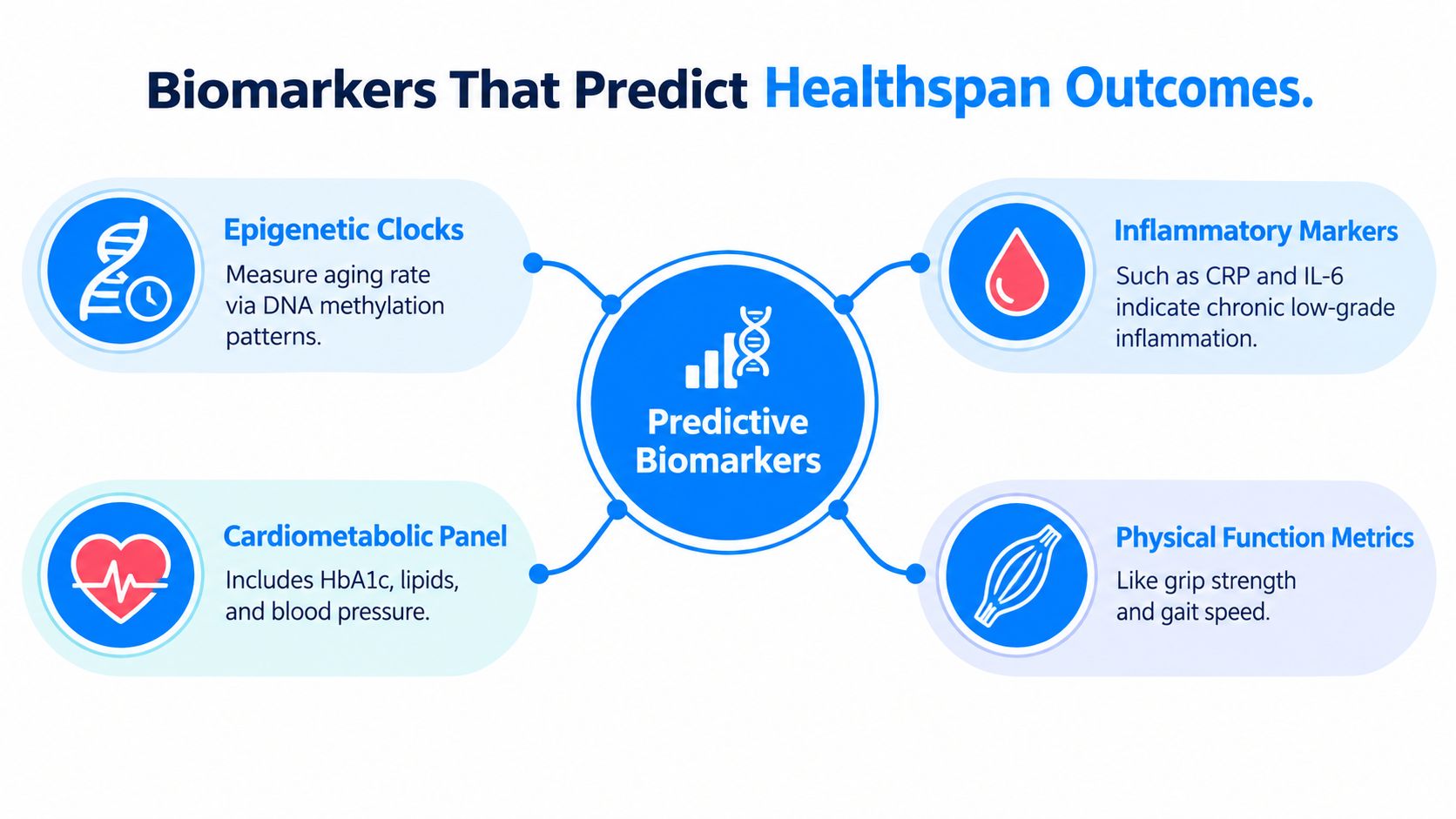
Why functional metrics deserve more attention
Many patients expect the most advanced answer to come from a molecular test. In older adults, it often comes from basic function. Expert consensus has shifted toward combining molecular and clinical measures, especially gait speed, grip strength, Timed Up and Go, frailty index, and cognition, because these predict morbidity and mortality better than isolated single-analyte testing in many settings, as noted in the review linked above.
A useful way to think about this is simple:
| Measure type | What it can show | Main limitation |
|---|---|---|
| Blood biomarkers | Metabolic and inflammatory trends | They don't directly prove better aging outcomes |
| Epigenetic clocks | A research-oriented signal of biological aging pace | Interpretation is still unsettled clinically |
| Functional testing | Real-world capability and vulnerability | Requires repeated measurement and context |
Practical rule: If a program claims to “reverse aging” from one lab result alone, skepticism is appropriate.
The strongest longevity monitoring programs repeat measurements over time and compare them with changes in sleep, training tolerance, medication use, body composition, appetite, and day-to-day function. That approach is less marketable than a single biological age score. It is also more medically honest.
Tirzepatide vs Semaglutide for Metabolic Longevity
GLP-1 therapies are often discussed as if they were simple weight-loss tools. That is too narrow. In a longevity framework, their relevance comes from how they affect the physiology behind future disease burden: appetite regulation, glycemic control, body composition pressure, and downstream inflammatory stress.
What the head-to-head data show
In the SURMOUNT-5 trial in adults with obesity but without diabetes, tirzepatide produced a mean 72-week body-weight reduction of 20.2% compared with 13.7% for semaglutide. Average losses were 22.8 kg versus 15.0 kg, and the between-group difference was statistically significant according to the American College of Cardiology summary of SURMOUNT-5.
That doesn't mean tirzepatide is automatically the right choice for every patient. It does mean the metabolic potency difference is clinically meaningful when body-weight reduction is a major therapeutic target.
A real-world matched cohort study in 18,386 adults initiating either tirzepatide or semaglutide for type 2 diabetes also found that discontinuation was common, but most patients achieved at least 5% weight loss within one year, with tirzepatide associated with greater weight loss according to JAMA Internal Medicine comparative outcomes in tirzepatide and semaglutide users.
Side-by-side clinical comparison
| Metric | Tirzepatide | Semaglutide |
|---|---|---|
| Weight reduction in SURMOUNT-5 | 20.2% at 72 weeks | 13.7% at 72 weeks |
| Average loss in SURMOUNT-5 | 22.8 kg | 15.0 kg |
| Real-world effectiveness signal | Greater weight loss in matched cohort | Strong, but lower than tirzepatide in that cohort |
| Hair-loss pharmacovigilance signal | Present, lower and more variable | Strongest signal reported in review |
Where hair retention biology enters the discussion
Rapid weight change, nutritional shifts, metabolic stress, and medication effects can all intersect with hair cycling. Patients often assume any shedding after GLP-1 initiation means a direct toxic effect on the follicle. That is too simplistic.
A 2026 systematic review found that pharmacovigilance signals for hair loss were strongest for semaglutide, with reporting odds ratios ranging from 2.46 in one analysis, while tirzepatide signals were also present but lower and more variable. The same review concluded the overall association is weak and needs better study according to the International Journal of Dermatology review on GLP-1 receptor agonists and hair loss.
Hair shedding during metabolic treatment shouldn't be dismissed, but it also shouldn't be overread. The right response is clinical review of timing, rate of weight change, protein intake, micronutrient status, and scalp history.
For patients focused on metabolic longevity, the practical lesson is straightforward. The stronger agent for weight reduction may improve cardiometabolic risk more aggressively, but treatment selection still requires tolerance, adherence, formulation preference, and monitoring for unintended tradeoffs such as excessive lean-mass loss or bothersome shedding.
How Telehealth Models Deliver Longevity Care
Longevity care lends itself well to telehealth because much of the work is structured, longitudinal, and data-driven. The key activities are assessment, eligibility review, prescription decisions, titration, lab follow-up, and adjustment based on response. Those don't always require an exam room.

What a legitimate telehealth workflow looks like
A credible model usually begins with a confidential intake that covers health history, current medications, treatment goals, and practical constraints. Those constraints matter. Needle aversion, prior intolerance, appetite rebound, or concern about hair shedding can change the protocol discussion substantially.
The next step is physician review. A licensed clinician determines whether treatment is appropriate, whether exclusions apply, and how conservative or aggressive titration should be. In a well-run system, the protocol isn't generated by marketing logic. It is constrained by medical guardrails.
Common safety features include:
- Defined exclusion criteria: independent medical oversight should establish who isn't a candidate.
- Titration guardrails: dose escalation should follow symptom response, not impatience.
- Pharmacy quality controls: compounded formulations should come from licensed U.S. partners operating under USP standards.
- HIPAA-compliant handling: privacy matters because metabolic, sexual, sleep, and hair concerns are sensitive topics.
Why telehealth can work well in longevity medicine
Most longevity interventions require repetition rather than drama. Patients need monitoring over time, not a one-time wellness event. Telehealth is well suited to that pattern because follow-up can focus on symptom tracking, appetite changes, adherence, weight trajectory, functional trends, sleep, and adverse effects.
A patient using a GLP-1 protocol, for example, may need dose adjustment because satiety is adequate but nausea is limiting intake. Another may be losing weight effectively but noticing hair shedding that prompts discussion of nutrition, pace of loss, and whether the regimen should be modified. Those are the kinds of practical decisions telehealth can handle efficiently when physician oversight is real and pharmacy logistics are reliable.
The distinction that matters is simple. Evidence-based telehealth uses protocols, clinical review, and longitudinal follow-up. Unregulated online wellness markets usually skip one or more of those protections.
Common Misconceptions About Longevity Medicine
The longevity field attracts motivated patients and aggressive marketing in equal measure. That combination creates confusion fast.
Five ideas that need correction
- Biological age tests are fully validated for clinical decision-making. They aren't. As discussed earlier, biomarker science is advancing faster than validation.
- Any supplement that changes a pathway extends life. Mechanism isn't outcome.
- GLP-1s are only about body weight. In clinical practice, they also affect glycemic control and broader metabolic strain.
- Longevity requires extreme protocols. Most durable gains come from sustained, monitorable interventions.
- Compounding is unsafe. The question is whether prescribing, pharmacy standards, and oversight are rigorous.
A recent critical review of the field concluded that mechanistic progress is moving faster than clinical translation, and an evidence-focused overview stated that no completed randomized trial has shown any longevity intervention extends human lifespan, as summarized in the PubMed-indexed critical review of longevity interventions.
Why skepticism is healthy
That statement doesn't mean nothing in longevity medicine is worthwhile. It means the field must be interpreted correctly. There are interventions that improve weight, glycemic control, inflammatory markers, and physical function. There are not yet randomized human data proving a treatment extends lifespan itself.
Another underappreciated issue is how easily biomarker claims can get ahead of the evidence. A recent report discussing GLP-1s, senolytics, and epigenetic clocks noted early human signals in some settings but also emphasized that many longevity-drug studies have been underpowered and affected by publication bias, according to the preprint review of longevity biomarkers and drug claims.
Good longevity medicine doesn't sell certainty. It manages risk, tracks response, and stays honest about what isn't known.
Getting Started With Longevity Medicine Safely
Most patients don't need a futuristic protocol. They need a disciplined starting point. The safest way to begin longevity medicine is to treat it as preventive chronic care with better measurement, not as a shortcut.
A practical starting sequence
Start with a physician-directed evaluation. A medical review should clarify goals, current diagnoses, medication interactions, and whether treatment is aimed at weight reduction, glycemic control, sleep, recovery, hair retention, or several of these at once.
Establish a baseline panel. The exact panel varies, but a reasonable starting framework often includes HbA1c, fasting insulin, inflammatory markers such as hsCRP and possibly IL-6, and other cardiometabolic labs. Those values don't “diagnose aging.” They identify pressure points that can be followed.
Pair labs with functional status. If function isn't measured, the program is incomplete. Baseline mobility, strength, stamina, and cognition give context that a blood draw cannot.
Choose the formulation strategically. Some patients prefer injectable protocols. Others need a needle-free option because route of administration affects adherence more than enthusiasm does.
Questions worth asking before treatment begins
Patients often focus on the drug name first. The better questions are operational:
- Who reviews eligibility? Every intake should be reviewed by a U.S.-licensed clinician.
- How is titration handled? Escalation should be individualized and governed by symptoms and response.
- What happens if treatment isn't appropriate? A legitimate program needs a clear off-ramp.
- How are compounded medications prepared? USP-standard preparation and testing matter.
- How is follow-up structured? Longevity medicine should include reassessment, not just dispensing.
What realistic progress looks like
The near-term goals are usually modest and concrete. Better satiety. Fewer large swings in hunger. Improved glycemic control. Lower inflammatory burden. Better sleep continuity. More stable energy. Preservation of function during body-composition change.
Those changes are meaningful because they affect the biology that drives downstream disease burden. They also create better conditions for hair retention than aggressive, poorly supervised weight loss does. Follicles are sensitive to systemic stress, nutritional inadequacy, and abrupt metabolic shifts. A careful program tries to reduce those insults rather than ignore them.
The most useful mindset is longitudinal. A protocol should be adjusted as biology changes, not defended because it sounded impressive at the start.
Longevity medicine works best when expectations are calibrated properly. It isn't a promise of longer life on demand. It is a method for identifying what is accelerating decline, applying interventions with the strongest current clinical footing, and monitoring whether function is being preserved while risk is being reduced.
If that standard sounds more conservative than popular “anti-aging” messaging, that's a strength. Patients usually do better when medicine stays boring enough to be measurable.
Vials + Vitals offers physician-directed telehealth care built around protocol-driven GLP-1, dual incretin, peptide, sleep, and hair health treatment, with licensed clinician review, individualized titration guardrails, and fulfillment through accredited U.S. pharmacy partners. For adults who want a medically supervised path into longevity medicine that stays focused on metabolic health, function, and safety, Vials + Vitals is a practical place to review options and determine whether treatment is clinically appropriate.
Ready to see if this protocol fits your biology?
A licensed provider reviews every request before anything is prescribed.
Calibrate your metabolic protocol →