HIPAA Compliance for Telehealth: A Clinical Guide

Master HIPAA compliance for telehealth with evidence-based safeguards, risk assessments, and workflows for physician-directed digital care.
A patient completes an online assessment after deciding that structured metabolic care may be appropriate. The form includes weight history, medication use, contraindications, pregnancy status, and laboratory information. A physician reviews the answers, a prescription may move to a pharmacy, and follow-up messages may continue through several systems. The patient experiences one care journey. The practice manages a chain of systems, people, vendors, and access permissions.
That distinction defines HIPAA compliance for telehealth. A secure video visit is useful, but it doesn't make the intake form, clinical calculator, prescription workflow, pharmacy handoff, analytics environment, or refund process compliant by itself. For physician-directed GLP-1 care, privacy and security must follow the patient from the first data entry through monitoring, titration, fulfillment, and deletion.
Table of Contents
- Telehealth Compliance Evolution and Standards
- Conducting Systematic Risk Assessments
- Clinical Safeguards for ePHI Protection
- Beyond Video Encryption - The Full Data Path
- Business Associate Agreements and Vendor Management
- Patient Privacy Workflows in Metabolic Health
- Integrating Compliance into Clinical Safety
Telehealth Compliance Evolution and Standards
Telehealth practices operated under unusual temporary conditions during the COVID-19 public health emergency. On March 17, 2020, the HHS Office for Civil Rights announced enforcement discretion for covered providers using remote communication technologies in good faith. The policy applied to telehealth for any reason, not only COVID-19 care, and allowed non-public-facing tools such as consumer video and messaging services that didn't fully satisfy every HIPAA requirement. It didn't authorize public-facing services, and HHS continued recommending vendors willing to sign business associate agreements and provide stronger privacy protections. HHS explains the telehealth enforcement-discretion policy and its limits.
That flexibility was temporary, not a permanent exemption. OCR announced on April 12, 2023, that the discretion would end when the public health emergency ended on May 11, 2023. Providers then had a 90-calendar-day transition period, from May 12 through August 9, 2023, to return to ordinary HIPAA compliance for telehealth. A service offering online clinical assessments, medication counseling, physician consultations, or follow-up monitoring must now treat ordinary Security Rule controls as part of clinical operations.
The practical standard for current care
A modern telehealth program needs more than an acceptable video connection. It needs documented safeguards for electronic protected health information, or ePHI, wherever the information is created, received, maintained, or transmitted. That includes a patient's intake answers, medication history, clinical notes, prescription decisions, payment-linked identifiers, and pharmacy communications.
Consent documentation belongs in the same disciplined workflow. A practice reviewing electronic consent processes may find BoloSign telehealth consent solutions useful as a reference point for organizing patient authorization and acknowledgment steps, but consent collection doesn't replace Security Rule safeguards.
The clinical reason for this rigor is straightforward. A compromised prescription, altered titration decision, unavailable medication history, or misdirected message can affect care, not just privacy. HIPAA compliance is therefore part of safe metabolic practice, particularly when appetite, glycemic control, nutrition, hydration, and medication tolerability require ongoing assessment.
Conducting Systematic Risk Assessments
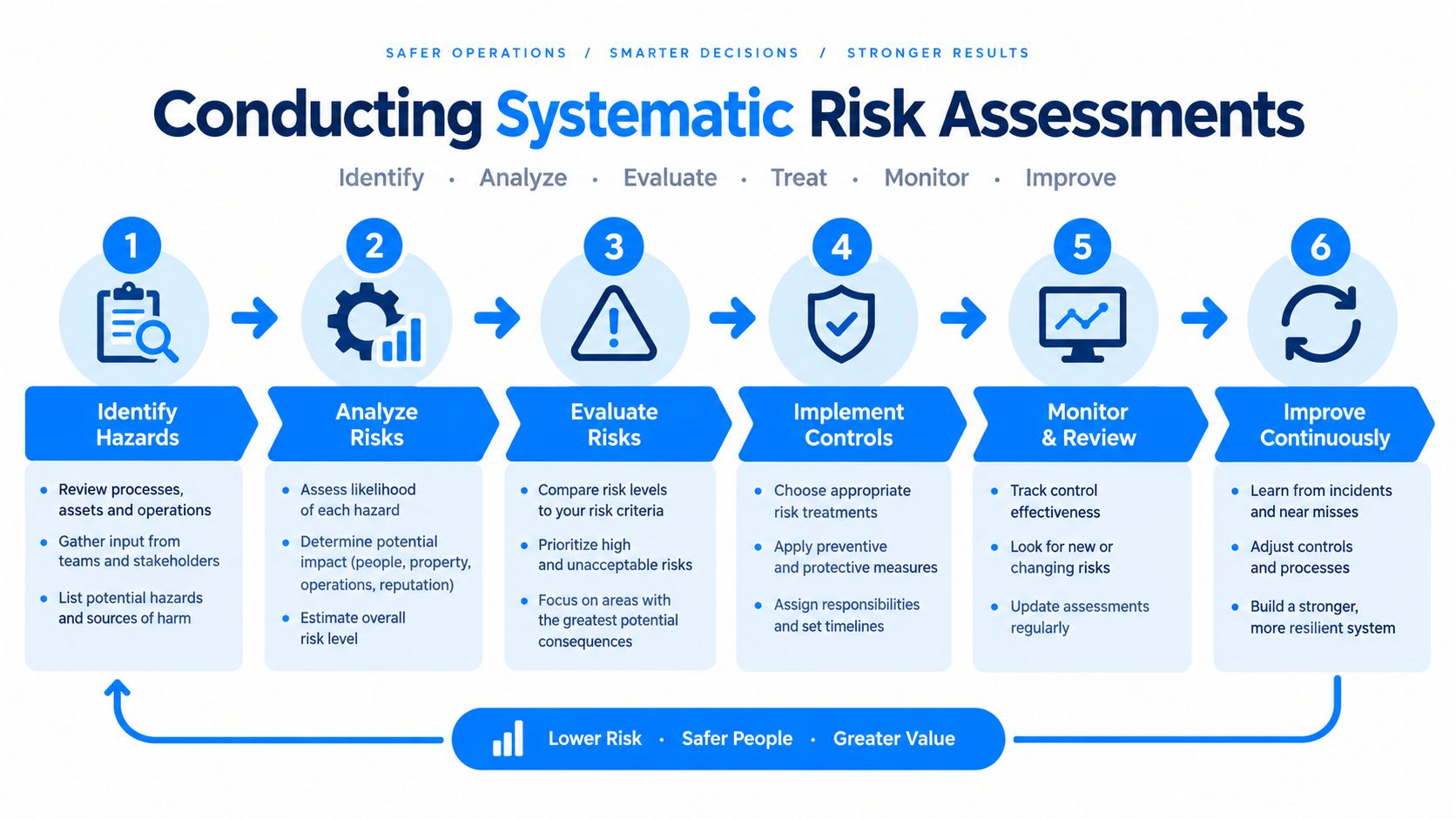
A telehealth risk assessment should follow the same path the patient and clinician follow. In GLP-1 care, that means tracing ePHI from the first intake answer through prescribing, fulfillment, follow-up messaging, and eventual record retention or disposal. HHS risk-analysis guidance frames risk analysis as an accurate, thorough review of where ePHI is created, received, maintained, or transmitted, along with the threats, vulnerabilities, and corrective actions tied to those points.
Map the complete clinical workflow
Start with a data-flow map grounded in actual care operations. For a GLP-1 service, that usually means following information through these steps:
- Patient intake: The patient submits identity details, weight history, medication lists, contraindication answers, and other clinical information through an online assessment.
- Identity and account verification: The organization confirms that the person accessing the record is the intended patient and assigns the right account permissions.
- Provider review: A licensed clinician reviews the assessment, documents clinical reasoning, and decides whether treatment is appropriate.
- Clinical communication: The patient uses asynchronous messaging or a live consultation, depending on the care pathway and applicable state requirements.
- Decision support: Calculators, protocol logic, and titration tools process clinical inputs and may create additional ePHI stores.
- Prescription and fulfillment: Prescription details move to a pharmacy. Delivery notifications, support messages, and refund communications can create additional access paths.
That map should name each system, integration, database, device, user group, and subcontractor involved. It should also account for what happens when treatment stops, an account is deactivated, or a vendor relationship ends. Those transition points often expose gaps in retention, access removal, and data return procedures.
Estimate exposure, then document the response
Listing systems is only the start. The practice also needs to assess likely threats, the sensitivity of the information involved, the effect a failure could have on confidentiality, integrity, and availability, and the controls that reduce that exposure. A shared workstation in a clinical office, an insecure messaging channel, staff permissions that exceed job duties, or a pharmacy integration that copies more data than necessary each needs a documented response tied to ownership and follow-up.
A data protection risk assessment tool can help a practice organize inventories, ownership, remediation status, and reassessment dates. The tool does not make the workflow compliant by itself. Leadership still has to approve controls, assign responsibility, verify implementation, and retain evidence that corrective action occurred.
Practical rule: Every new data store is a reason to revisit the risk analysis.
A new orally disintegrating tablet protocol, pharmacy connection, patient messaging feature, calculator, or temperature-controlled delivery workflow can introduce another ePHI store or another handoff where information can be exposed, altered, or lost. Reassessment should follow meaningful workflow changes, security incidents, vendor changes, and new clinical functions. Strong programs connect risk findings to staff training, access reviews, incident response, backup testing, and documented governance decisions.
Clinical Safeguards for ePHI Protection
Telehealth safeguards work as a system. Administrative policies define who may access records and how incidents are handled. Physical controls protect the work environment and devices. Technical controls restrict access, protect transmissions, preserve records, and create evidence when someone views or changes medication information.
For physician-directed care, the minimum-necessary principle needs practical interpretation. A pharmacist may need prescription and fulfillment details, while a support representative may need delivery information but not a complete clinical history. A clinician may need the patient's medication list and relevant contraindication responses, but broad access to every patient record increases unnecessary exposure.
Match safeguards to clinical responsibilities
Unique user IDs, multifactor authentication, role-based permissions, session timeout, endpoint management, and audit logs should align with actual job functions. Audit logs need review, not merely collection. An unusual access pattern involving medication histories, prescriptions, or large numbers of patient files should trigger investigation under the organization's incident-response process.
Encryption should protect ePHI in transit and at rest. Secure backups support availability after an outage or security event, while workforce training helps staff avoid preventable disclosures through unattended screens, misdirected messages, or insecure document handling. Written procedures should cover access provisioning, termination, lost devices, correction requests, breach response, and secure deletion.
| Safeguard Type | Key Requirements |
|---|---|
| Administrative | Risk analysis, corrective-action records, workforce training, incident response, access policies, vendor oversight, and periodic reassessment |
| Physical | Controlled workspaces, managed endpoints, device protection, secure storage, and procedures for lost or retired equipment |
| Technical | Unique user IDs, multifactor authentication, role-based access, audit logs, encryption, session timeout, secure backups, and endpoint controls |
A practice evaluating infrastructure or services may consult healthcare IT security buying advice as one input to procurement planning. The purchasing decision still belongs inside the practice's own risk analysis. A feature list can't substitute for evidence that the selected configuration, workforce, and vendor relationships protect the actual care workflow.
Beyond Video Encryption - The Full Data Path
Video security covers one interaction. HIPAA compliance for telehealth covers the ePHI journey before, during, and after that interaction.
Consider two workflows. In the first, the video channel uses encryption and restricted meeting access, but the online intake form sends clinical answers into an unreviewed database. The platform may also expose those answers to an analytics script, retain them indefinitely, or allow broad internal access. The video session looks protected while the intake process remains weak.
In the second, the organization maps the patient journey and assigns a control to each handoff:
- Assessment: The form collects only information needed for clinical evaluation and sends it through a protected connection.
- Identity verification: Access controls confirm the patient's identity before records or messages are disclosed.
- Provider review: Clinicians see the information required to determine eligibility, formulation, and titration.
- Messaging or video: Communications use a protected channel with appropriate access restrictions and documentation.
- Prescription transmission: The receiving pharmacy gets the information required to dispense the prescribed treatment.
- Monitoring: Follow-up measurements and tolerability reports remain available to the clinical team without unnecessary exposure.
- Support and refunds: Operational staff receive the minimum information needed to resolve delivery, billing, or refund questions.
Test every handoff
The important question isn't “Is the video platform secure?” It is “Which systems touch the patient's information, and what happens at each transfer?” A practice should identify the owner of each system, the data elements it receives, the people who can access them, the retention period, the deletion process, and any subcontractor relationship.
HHS also recommends educating patients about privacy and security protections for remote technologies, including records, appointment discussions, documents, and images shared during care. Patients should receive practical guidance about private locations, device security, and the risks of discussing sensitive information where others can overhear.
For GLP-1 care, the data path can include weight, medication history, contraindications, pregnancy status, laboratory information, prescriptions, and titration decisions. A secure video interface cannot protect information that enters an insecure form, travels through an unreviewed integration, or remains accessible after the care relationship ends.
Business Associate Agreements and Vendor Management
A business associate agreement, or BAA, establishes how a vendor may handle ePHI on behalf of a covered entity or another business associate. HHS states that telehealth technology vendors must comply with HIPAA and enter into BAAs for video or other remote communication services where applicable. The agreement should be in place before the vendor handles protected information, not after an integration has already gone live.
Review the relationship before signing
Practice managers should start with an inventory of every external party that touches ePHI. That inventory may include form providers, hosting services, communication services, clinical decision tools, prescribing connections, pharmacy networks, delivery systems, payment-linked services, support providers, and analytics vendors.
A defensible vendor review asks:
- Data use: What information does the vendor receive, and may it use that information only to perform contracted services?
- Security controls: Can the vendor describe access management, encryption, logging, backups, incident response, and workforce safeguards?
- Breach notification: Does the agreement establish how and when the vendor will notify the covered entity about a suspected or confirmed incident?
- Subcontractors: Does the vendor disclose subcontractors and maintain appropriate obligations throughout the chain?
- Retention and deletion: What happens to ePHI when the service changes, the contract ends, or the patient record is no longer needed?
- Operational change: How will the practice learn about material changes to infrastructure, data flows, or subprocessors?
A signed BAA doesn't guarantee that a vendor's implementation is safe. It creates a contractual and governance framework, while the covered entity remains responsible for understanding how the service is configured and used. The practice should retain due-diligence records, review vendor performance, reassess integrations, and remove access when a relationship ends.
A BAA documents accountability. It doesn't transfer clinical governance to the vendor.
Patient Privacy Workflows in Metabolic Health
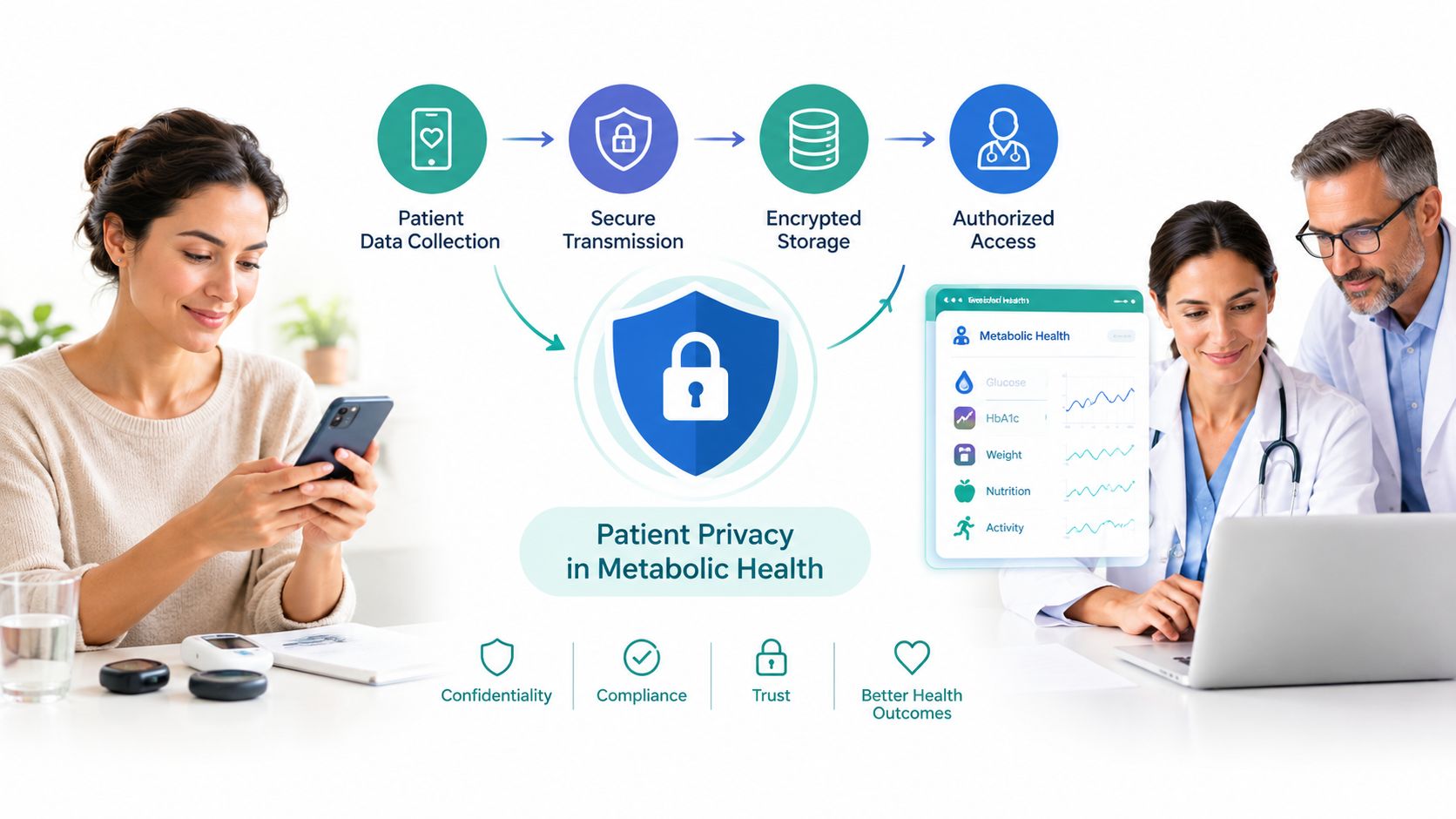
A patient begins with a confidential online assessment. The questions may cover weight history, current medications, medical conditions, contraindications, pregnancy status, nutrition, and prior treatment experience. At submission, the practice should protect the connection, limit collection to a clinical purpose, authenticate the account, and preserve an audit trail showing how the information entered the care workflow.
Follow the information, not just the encounter
The provider then reviews the assessment and documents the clinical decision. If treatment is appropriate, the record may include the selected formulation, prescription instructions, titration guardrails, counseling, and follow-up plan. The organization should ensure that only authorized clinical personnel can view this information and that changes remain attributable to a specific user.
The pharmacy handoff creates another sensitive point. Prescription details, patient identifiers, formulation information, and delivery instructions must travel through an approved relationship with appropriate contractual and technical safeguards. Discreet fulfillment protects patient dignity, but privacy also depends on secure transmission, accurate recipient verification, controlled support access, and careful handling of tracking information.
Protect follow-up care
Monitoring may involve patient-reported appetite, weight trajectory, tolerability, hydration, nutrition, or adverse symptoms. These updates can arrive through asynchronous messaging or a live consultation, and each channel should preserve the clinical record without creating unmanaged copies. A patient asking for a refill, reporting a side effect, or requesting a refund should be routed to the appropriate role rather than exposing the full chart to a broad support queue.
This workflow illustrates why compliance can't stop at the consultation. Every handoff should answer three questions: Who needs the information, what exactly do they need, and how will the practice document the access or transfer? Those answers protect confidentiality while keeping clinically important information available to the people responsible for care.
Integrating Compliance into Clinical Safety
A strong telehealth compliance program protects more than records. It helps clinicians make decisions from complete, accurate, and available information. If a medication history is altered, a contraindication is hidden, or a follow-up message cannot be retrieved, the resulting clinical risk may exceed the privacy issue that first drew attention.
The most reliable operating model has three connected parts:
- Continuous risk analysis: The practice maps ePHI flows and reassesses them when protocols, tools, integrations, or vendors change.
- Evidence-based vendor governance: Each business associate is evaluated for Security Rule capability, contractual obligations, subcontractor oversight, retention, deletion, and incident response.
- End-to-end safeguards: Administrative, physical, and technical controls protect intake, review, communication, prescribing, pharmacy coordination, monitoring, and support.
Clinical outcomes also require appropriate interpretation of treatment evidence. In a randomized trial of adults with overweight or obesity without diabetes, once-weekly semaglutide 2.4 mg plus lifestyle intervention produced a mean 14.9% reduction in baseline body weight by week 68, compared with 2.4% with placebo; the estimated between-group difference was 12.4 percentage points, with a 95% confidence interval of 11.5 to 13.4 percentage points. The published trial reports the semaglutide benchmark and study population. Those findings support monitoring over a defined interval rather than judging efficacy after only a few doses.
Similarly, the SURMOUNT-1 trial reported mean weight reductions at 72 weeks of 16.0% with tirzepatide 5 mg, 21.4% with 10 mg, and 22.5% with 15 mg, compared with 2.4% with placebo. The proportions achieving at least 5% weight loss were 85%, 89%, and 91%, respectively, compared with 35% with placebo. The trial publication describes the dose-dependent results and population. These data reinforce individualized titration, attention to adverse effects, contraindications, comorbidities, concurrent medications, nutrition, and hydration.
Hair retention requires the same measured approach. A systematic review identified telogen effluvium and androgenetic alopecia as the predominant reported hair-loss subtypes associated with GLP-1 receptor agonists, while emphasizing nutritional deficiencies and the rate and magnitude of weight loss as possible contributors. The review summarizes the reported hair-loss patterns and proposed contributors. Available evidence doesn't establish that semaglutide or tirzepatide directly damages human follicles. A clinical review discusses the indirect stress mechanism and the need to evaluate alternative causes.
A compliant workflow supports that clinical caution by keeping intake, treatment decisions, monitoring, and follow-up connected. It also gives patients a reason to trust that sensitive information will be handled with the same care as the medication itself. As protocols and technology evolve, practices should treat reassessment, training, vendor review, and access monitoring as routine clinical maintenance.
Vials + Vitals offers physician-directed telehealth assessments, licensed provider review, individualized GLP-1 and peptide protocols, and pharmacy fulfillment with ongoing titration oversight. Patients seeking a structured approach to metabolic and related health care can review the clinical process and available services at Vials + Vitals.
Ready to see if this protocol fits your biology?
A licensed provider reviews every request before anything is prescribed.
Calibrate your metabolic protocol →