GLP-1 Telehealth Clinical Workflow and Safety

Explore the GLP-1 telehealth clinical workflow, from medical intake and titration guardrails to cold-chain delivery and evidence-based safety protocols.
Telehealth claim lines associated with overweight or obesity diagnoses rose from 0.3% of all medical claim lines in 2019 to 10.3% in 2024, a relative increase of 3,483.3%, according to FAIR Health's analysis of U.S. claims data. That shift changes the central question. The issue isn't whether GLP-1 telehealth is convenient. It's whether the remote program provides the medical judgment, titration discipline, pharmacy controls, and longitudinal support required for safe metabolic treatment.
Table of Contents
- The Evolution of Virtual Metabolic Care
- Clinical Intake and Diagnostic Triage
- Protocol Design and Titration Guardrails
- Accredited Dispensing and Cold-Chain Logistics
- Preserving Lean Tissue During Weight Loss
- Managing Follicular Retention and Hair Health
- Evaluating Long-Term Telehealth Efficacy
The Evolution of Virtual Metabolic Care
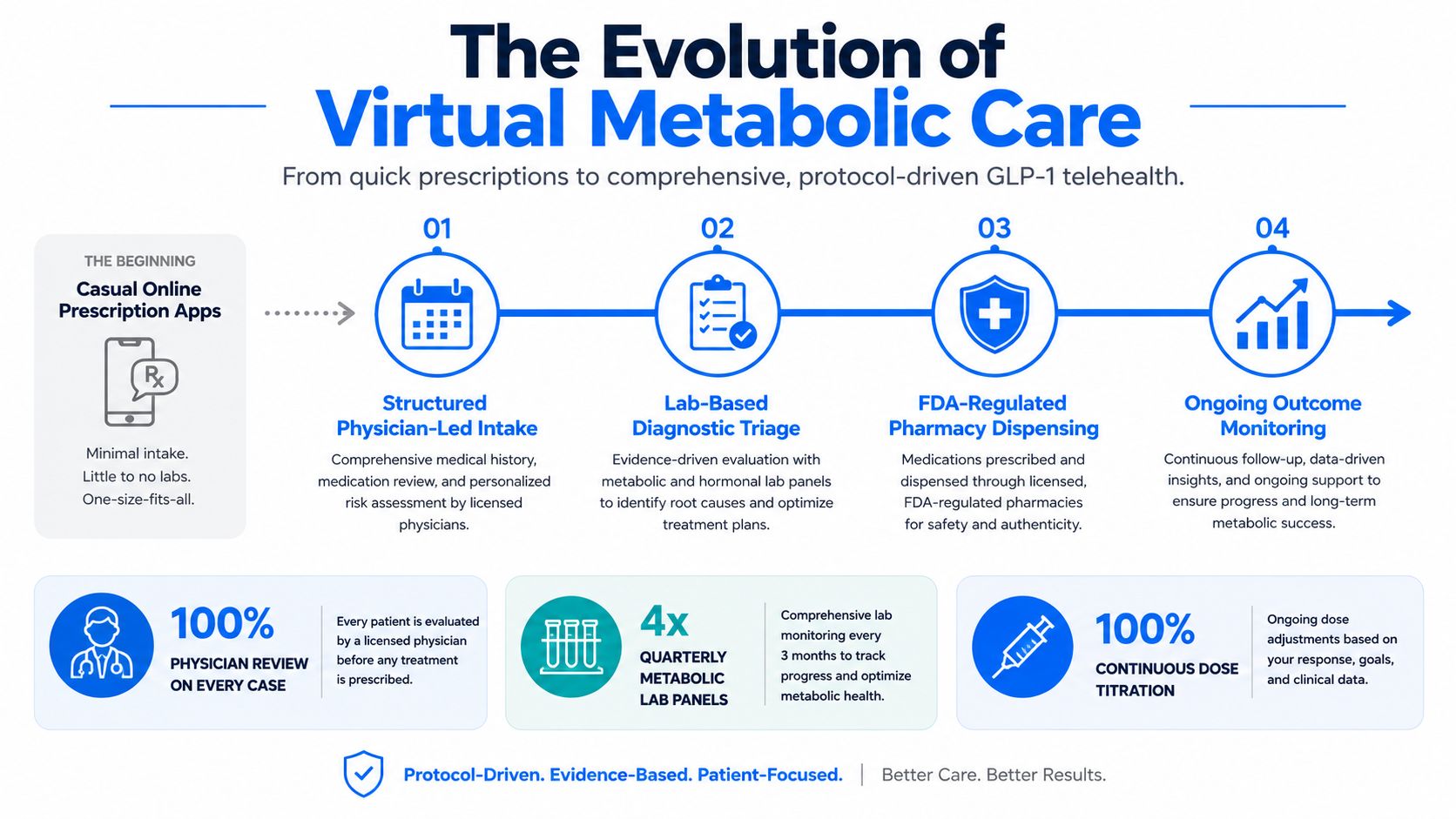
The share of adult patients with overweight or obesity diagnoses who received a GLP-1 prescription rose from 0.30% in 2019 to 2.05% in 2024, a nearly sevenfold increase, according to FAIR Health. Over the same period, overweight or obesity diagnoses became a larger part of telehealth activity. The figures show expanding access, not proof that every online service provides adequate clinical oversight.
Earlier prescribing was far more limited. A real-world telehealth cohort study found that among more than 2.2 million people studied from 2009 to 2015, only 1.3% of patients eligible for anti-obesity medication received a prescription. By February 2024, monthly prescriptions for semaglutide and tirzepatide in the reported virtual-care cohort had reached 0.42 million and 0.25 million, respectively, as described in the telehealth obesity medication cohort study. The comparison shows how rapidly access expanded as virtual care and incretin therapies converged.
What a clinical model must contain
A legitimate GLP-1 telehealth program operates as a medical workflow, not an online checkout process. The provider gathers a meaningful history, evaluates eligibility, selects an appropriate formulation, establishes dose limits, and reassesses symptoms and outcomes throughout treatment.
The core elements include:
- Physician review: A licensed clinician evaluates the patient before authorizing treatment.
- Diagnostic triage: Medical history, current medications, metabolic risks, and relevant contraindications guide the decision.
- Dose governance: Escalation depends on tolerability and response rather than a fixed calendar.
- Ongoing follow-up: Appetite, weight trajectory, glycemic status, gastrointestinal symptoms, hydration, and adherence require review.
- Pharmacy accountability: Medication sourcing, labeling, storage, and delivery require documented operational controls.
Clinical standard: Remote care is clinically credible only when the program can identify the prescribing decision-maker, define how dose changes are authorized, and explain the response process for adverse effects.
Long-acting anti-obesity medications dominated treatment in the reported cohort. 84.2% of participants used long-acting agents at the start of follow-up, and 81.1% continued using them at the end, as reported in that same cohort. Persistence reinforces the operational requirement for a system that supports months of treatment, changing tolerability, and evolving nutritional and metabolic needs. Initiating therapy is only one part of the work. Safe prescribing also depends on reassessment, controlled titration, and reliable medication handling.
Clinical Intake and Diagnostic Triage
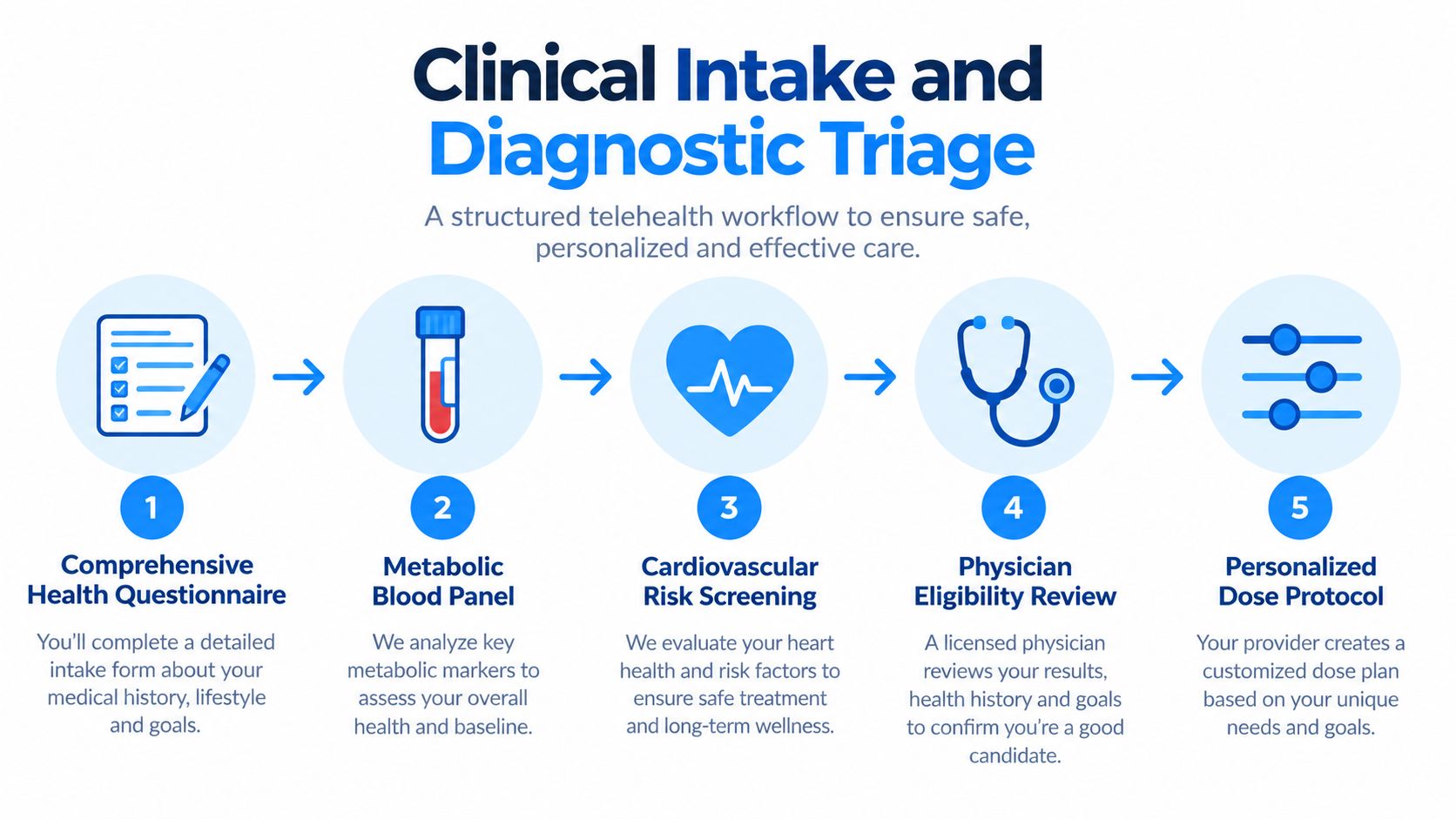
The intake process should answer a basic question before any prescription is considered: Is this treatment appropriate for this patient, in this formulation, at this starting intensity? A short questionnaire that produces an automatic approval doesn't answer that question reliably.
A stronger workflow begins with a confidential health assessment. The patient reports current diagnoses, medications, allergies, previous weight-management treatments, gastrointestinal symptoms, eating-pattern concerns, relevant surgical history, pregnancy-related considerations where applicable, and any history that could affect prescribing. The provider also needs a clear account of treatment goals, baseline weight-related concerns, injection comfort, and practical barriers to adherence.
From questionnaire to clinician decision
Asynchronous intake can collect information efficiently, but it shouldn't replace clinical judgment. Depending on jurisdiction and patient circumstances, the provider may use written review, real-time video, audio consultation, or a combination of pathways. State licensure and telehealth rules determine which encounter types are available.
The diagnostic triage should establish a baseline that can support safe follow-up:
- Medical history review identifies conditions and medicines that may alter risk or treatment choice.
- Medication reconciliation checks for duplications, interactions, and prior exposure to incretin therapies.
- Metabolic assessment determines whether available laboratory information is sufficient or whether updated testing is needed.
- Symptom screening captures nausea, vomiting, constipation, reflux, fatigue, dehydration risk, and relevant mental-health or eating-pattern concerns.
- Eligibility review determines whether treatment is clinically indicated and whether a particular formulation is reasonable.
A patient who dislikes needles may require a different discussion from a patient who has no injection concerns. Some programs offer sublingual orally disintegrating tablets, including semaglutide or combined semaglutide and tirzepatide formulations, but formulation choice still requires clinician review. An alternative route doesn't eliminate the need to evaluate appropriateness, absorption expectations, dosing instructions, and follow-up.
What should happen when treatment isn't appropriate
A safe service must be willing to decline treatment or request more information. The patient may need an in-person examination, laboratory testing, primary-care coordination, specialist input, or treatment of an uncontrolled condition before a GLP-1 prescription is considered.
The difference between clinical oversight and automated dispensing becomes visible. A real evaluation produces a documented rationale, a defined plan, and clear instructions for contacting the care team. It doesn't promise that every patient qualifies.
Protocol Design and Titration Guardrails
Semaglutide and tirzepatide affect appetite regulation and glucose metabolism through incretin pathways, but their clinical use still depends on individualized dosing. The same dose can be tolerated well by one patient and produce clinically important nausea, vomiting, constipation, poor oral intake, or dehydration in another.
Titration should therefore function as a feedback loop. The provider reviews response and tolerability, then decides whether to maintain, delay, reduce, or advance the dose. A protocol that advances automatically because a scheduled interval has passed ignores the main variable that matters, the patient's clinical response.
The escalation decision
A remote titration review should consider:
- Gastrointestinal tolerance: Persistent nausea, vomiting, abdominal symptoms, or constipation may require a slower progression or clinical reassessment.
- Oral intake and hydration: Appetite reduction becomes unsafe when the patient can't maintain adequate fluids or nutrition.
- Weight and appetite response: A plateau may reflect adherence, insufficient support, an incorrect expectation, or the need for a different clinical strategy.
- Glycemic context: Patients using glucose-lowering medications may need coordinated monitoring to reduce avoidable hypoglycemia risk.
- Treatment persistence: A patient who repeatedly stops and restarts therapy shouldn't automatically resume the previous dose without review.
The objective isn't maximal escalation. It's the lowest effective and tolerable regimen that supports meaningful metabolic treatment while preserving safety and adherence.
Practical rule: A dose increase is a clinical decision, not an appointment with the calendar.
Managing plateaus without reflexive escalation
Appetite rebound and weight plateaus deserve investigation before a dose is changed. The clinician should examine missed doses, administration errors, dietary adequacy, sleep, stress, gastrointestinal effects, medication access, and the patient's actual treatment target. A plateau can also signal that the patient needs behavioral or nutritional support rather than more medication.
Vials + Vitals describes physician evaluation, individualized titration schedules, injectable vial options, and selected needle-free sublingual formulations within its telehealth workflow. It also identifies decision tools such as a GLP-1 Titration Calculator, a metabolic calorie tool, and a Follicular Retention Index. Those tools can organize clinical information, but they shouldn't replace a licensed provider's assessment.
Combined semaglutide and tirzepatide ODTs may be offered by some physician-directed services for selected situations, including plateau management. Such formulations require careful explanation of what the patient is taking, how it should be administered, and when the clinician should be contacted. More medication isn't automatically a better answer to treatment resistance.
Accredited Dispensing and Cold-Chain Logistics
A clinically appropriate prescription can still fail if the medication is mislabeled, mishandled, or shipped under unsuitable conditions. The risk deserves particular attention with compounded GLP-1 products. The FDA states that compounded products are not reviewed for safety, effectiveness, or quality before marketing. Its safety communication on unapproved GLP-1 drugs also describes complaints involving warm shipments, inadequate refrigeration, and dosing errors with compounded injectable semaglutide.
As of May 31, 2026, the FDA had received 990 adverse-event reports for compounded semaglutide and more than 730 for compounded tirzepatide, according to that same FDA safety communication. These reports do not establish that every compounded prescription is unsafe. They do show why pharmacy verification, clear concentrations, patient education, and controlled delivery belong in the prescribing protocol.
The pharmacy control layer
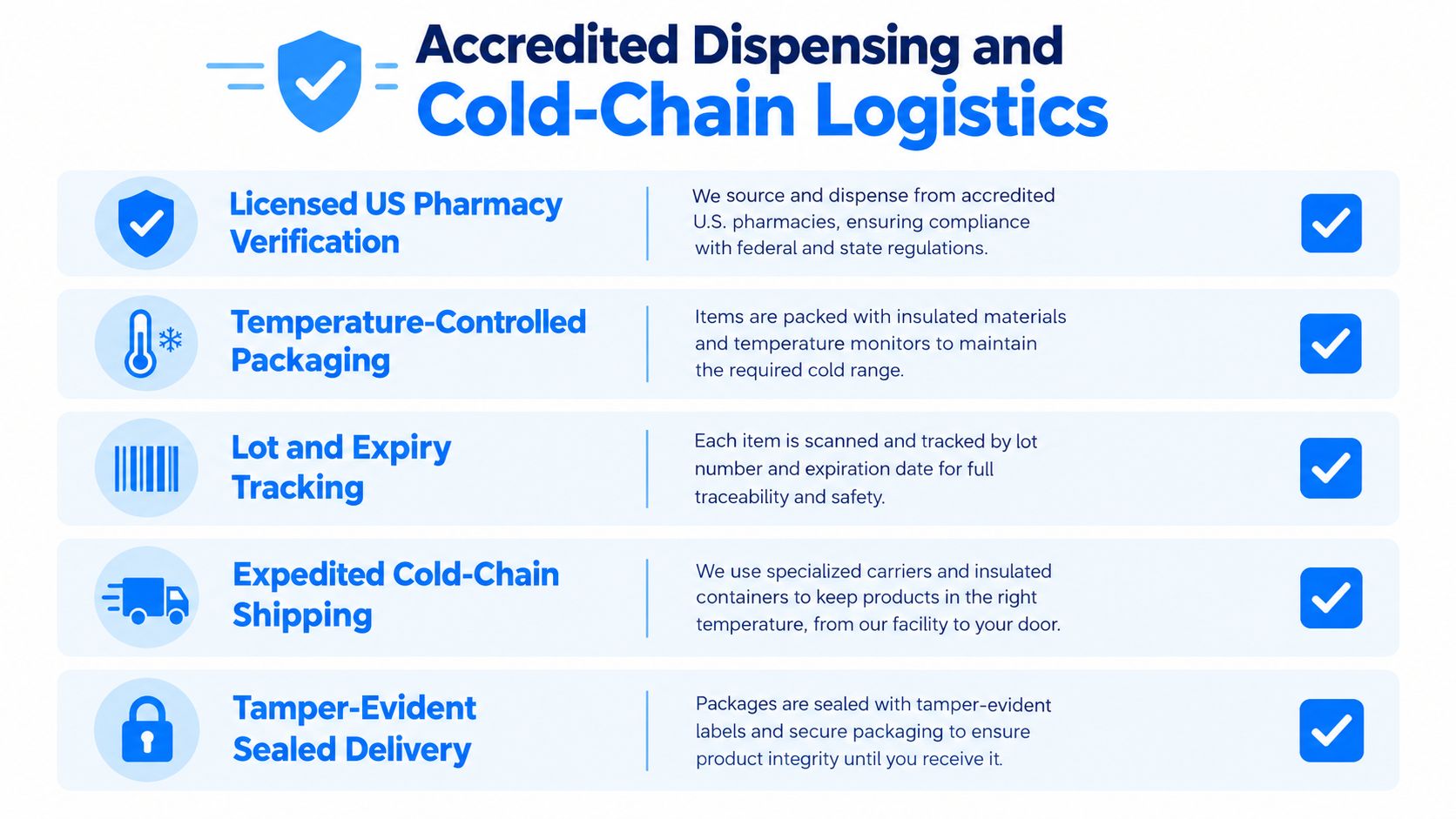
A responsible telehealth program should identify the dispensing pharmacy and explain how the prescription is prepared, checked, packaged, and released. Patients should have access to:
- Licensed pharmacy verification: The program should name the U.S. pharmacy dispensing the medication and provide contact information.
- Label clarity: The label should state concentration, total volume, route, storage requirements, beyond-use information, and administration directions in understandable terms.
- Potency and sterility processes: Compounded sterile products require appropriate testing and documented quality procedures.
- Lot tracking: A traceable lot number and expiration or beyond-use designation support recalls and follow-up.
- Tamper-evident delivery: Packaging should make it apparent whether the shipment was opened before arrival.
Cold-chain shipping requires written patient instructions. Temperature-sensitive medication should travel in packaging designed for expected transit conditions, with tracking and a defined response for delays, damaged packages, or a delivery that arrives warm. The patient should know who to contact and whether the product can be used, rather than making that decision alone.
Dosing errors are preventable
Concentration changes create risk, particularly when a patient receives a different formulation from a previous prescription or uses a syringe without understanding its markings. Instructions must connect the prescribed dose to the exact concentration and device. A clinician or pharmacist should resolve uncertainty before injection.
Discreet, unbranded packaging can protect privacy. It does not replace transparency. Patients still need accessible pharmacy information and prompt clinical support when a shipment, label, or storage condition appears incorrect.
Preserving Lean Tissue During Weight Loss
Weight reduction does not guarantee improved body composition. Appetite suppression can reduce protein and energy intake, while inactivity can accelerate losses in muscle, strength, and functional reserve. A safe remote protocol therefore tracks physical capacity alongside weight.
A 2026 scoping review summarized in JMIR reported a 24% to 39% reduction in caloric intake across 12 trials of GLP-1 users, with approximately 40% of weight lost as lean tissue. Only 3 of the 12 studies included a registered dietitian, and some participants developed nutrient inadequacies. Nutritional assessment should therefore be part of prescribing and follow-up, not an optional wellness service.
What remote muscle-preservation support looks like
A telehealth assessment should cover strength, mobility, exercise history, falls, fatigue, protein and fluid intake, bowel function, and the patient's ability to prepare and tolerate meals. These findings help determine whether titration should continue, pause, or be adjusted.
The care plan can include:
- Protein structure: Set practical protein opportunities across meals and snacks that remain tolerable when appetite is reduced.
- Resistance training: Use progressive strength work to stimulate muscle retention, adapted to age, health status, mobility, and prior training.
- Functional monitoring: Ask about stairs, lifting, walking speed, balance, and daily activity. Functional decline may appear before weight changes are informative.
- Dietitian involvement: A registered dietitian can address inadequate intake, food aversion, nutrient density, and meal planning during titration.
- Behavioral screening: Assess eating concerns, mood symptoms, and stress because each can affect adherence and nutritional adequacy.
The related clinical critique in that JMIR review notes that telehealth-only models may miss baseline nutritional assessment, screening for eating or mood disorders, and physical-function testing. Remote care can close these gaps when the workflow assigns responsibility for each assessment and documents the findings.
Body-composition principle: The target is better metabolic health with preserved strength, function, and nutritional status, rather than a lower number on the scale.
Managing Follicular Retention and Hair Health
Hair shedding during GLP-1 treatment can have more than one explanation. Rapid weight loss, reduced caloric intake, protein insufficiency, illness, stress, and medication-related effects can all contribute to shedding. The clinical distinction matters because the response may involve nutrition and rate-of-loss adjustments rather than immediate discontinuation.
A 2026 systematic review found that semaglutide and tirzepatide had the highest reported incidence rates of hair loss among GLP-1 receptor agonists reviewed, and noted that semaglutide-associated hair loss appeared dose-dependent. The review reported that doses below 2 mg weekly were rarely implicated, while higher obesity-treatment doses were more commonly associated with hair loss, as detailed in the systematic review of GLP-1 receptor agonists and hair loss.
Separating shedding patterns
A pooled analysis of randomized and real-world data reported a hair-loss risk ratio of 3.252 versus placebo overall and 3.587 in trials restricted to overweight or obesity populations. Its single-arm analysis reported a hair-loss event rate of 3.9%, as published in the pooled GLP-1 hair-loss analysis.
A separate review found hair loss reported in 9,933 of 626,894 patients with documented hair outcomes, or 1.6%, while hair regrowth was reported in 52 patients, or 0.008%. It also identified positive pharmacovigilance signals for alopecia with semaglutide and tirzepatide in FAERS analyses, according to the review of GLP-1 receptor agonist hair outcomes.
The figures come from different methods and shouldn't be treated as a single universal incidence estimate. They do support a practical approach: document baseline hair status, monitor changes, assess nutritional intake and rate of weight loss, and investigate persistent or patterned loss rather than assuming every episode is temporary telogen effluvium.
Monitoring follicles within metabolic care
Hair monitoring can include patient photographs taken under consistent lighting, a shedding history, scalp examination when clinically appropriate, and review of iron, thyroid, protein, or other nutritional concerns when indicated. A tool such as a Follicular Retention Index may help organize longitudinal observations, but it should support, not replace, clinical evaluation.
A telehealth study reported that constipation, fatigue, and nausea declined over time, while hair loss increased during treatment, as described in the remote GLP-1 weight-management study. Hair health belongs in the follow-up conversation because patients may stop treatment abruptly when shedding is dismissed or unexplained.
Evaluating Long-Term Telehealth Efficacy
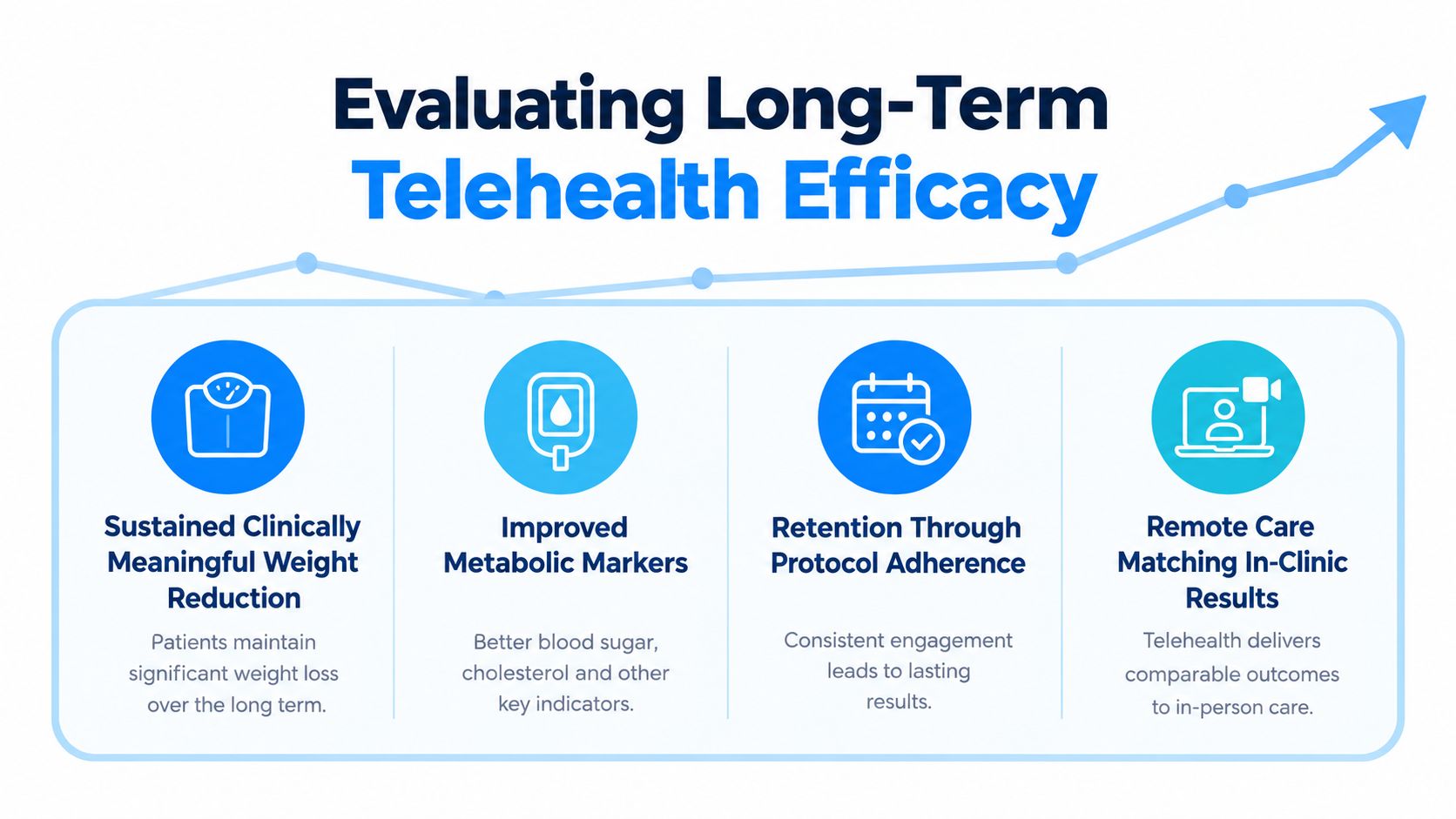
Telehealth can produce clinically meaningful outcomes when the remote channel is paired with disciplined medical management. In a real-world cohort of 655 adults treated through a nationwide telehealth platform, mean body-weight reduction reached 16.6% over 68 weeks. The most common adverse events were nausea or vomiting at 37.3% and constipation at 15.6%, with no new safety signals reported, according to the real-world telehealth GLP-1 cohort study.
The significance isn't that telehealth makes medication more potent. The result suggests that protocol fidelity, persistence, titration management, and physician oversight determine whether remote care can approach trial-level outcomes. Patients need a care system that responds to symptoms and changing response, not a prescription that disappears after delivery.
The markers of a robust service
Patients evaluating a GLP-1 telehealth program should look for evidence of:
- Licensed clinical accountability: A named, appropriately licensed provider determines eligibility and manages treatment.
- Structured reassessment: Follow-up reviews symptoms, response, adherence, nutrition, and dose tolerance.
- Conservative titration: The program can pause or modify escalation when the patient needs more time.
- Pharmacy traceability: The dispensing source, labeling, storage, and delivery process are transparent.
- Integrated support: Nutrition, strength preservation, behavioral health screening, and hair concerns are not ignored.
- Clear escalation pathways: The patient knows when to contact the care team and when urgent in-person evaluation is needed.
Remote care works best when it behaves like healthcare delivered at a distance, not retail delivered through an app. The technology handles communication, documentation, monitoring, and logistics. Licensed clinicians still make the decisions.
Final clinical takeaway: The safest GLP-1 telehealth workflow connects assessment, prescribing, titration, pharmacy quality, cold-chain delivery, and long-term follow-up into one accountable process.
Vials + Vitals provides physician-directed evaluation for semaglutide and tirzepatide protocols, individualized titration planning, selected sublingual and injectable formulations, and fulfillment through accredited U.S. pharmacy partners. Adults considering GLP-1 telehealth can review the clinical assessment process and request an evaluation through Vials + Vitals.
Ready to see if this protocol fits your biology?
A licensed provider reviews every request before anything is prescribed.
Calibrate your metabolic protocol →