GLP-1 Medication Explained: How It Works and What to Know

Learn how GLP-1 medication works for weight and metabolic health, key safety facts, and how telehealth access shapes modern treatment decisions.
Most advice about GLP-1 medication treats it like a shortcut. That framing misses the harder truth, these drugs work best when patients can stay on them, tolerate them, afford them, and keep getting the right product over time. The practical question is less “How fast can weight come off?” and more “What plan keeps treatment safe, effective, and sustainable after the first few months?”
That matters because the real-world challenge is not only starting therapy, it's continuing it. The science behind appetite control, blood sugar regulation, and weight reduction is important, but the decision to use a GLP-1 also depends on adherence, access, and side-effect management. For patients and clinicians, that changes the conversation from a short burst of weight loss to a long-term metabolic strategy.
Table of Contents
- Why GLP-1 Medication Is a Long Game, Not a Quick Fix
- How GLP-1 Medication Works in the Body
- Semaglutide vs Tirzepatide and Other Common GLP-1 Medications
- What the Evidence Shows About Cardiovascular and Hair-Related Effects
- Why So Many People Stop GLP-1 Medication Within a Year
- Risks Behind Compounded GLP-1 Products
- Accessing GLP-1 Medication Through Telehealth
- Clinical Takeaways for Patients and Providers
Why GLP-1 Medication Is a Long Game, Not a Quick Fix
GLP-1 medication is often sold like a fast answer to a complex problem, but durable results depend on staying with treatment. When the drug stops, the appetite-suppressing signal fades too, and weight regain becomes a real risk. That is why a medication can look highly effective early on and still underperform in practice if follow-through is not part of the plan.
The biggest issue is staying on therapy
The underdiscussed question is not whether these drugs can work, it is whether patients can keep using them. A large Danish study found that 52% of adults without diabetes discontinued semaglutide for weight loss within 1 year, with 18% stopping by 3 months and 42% by 9 months. Younger adults and people in lower-income areas were more likely to stop (Medscape summary of the Danish real-world study). That pattern puts adherence planning at the center of care, not at the end of the visit.
The reasons are usually practical, not philosophical. Side effects during dose increases, refill gaps, coverage changes, and supply interruptions can all break momentum. When a drug is treated like a short course, patients may also expect the appetite effect to stay strong without ongoing treatment, which sets up disappointment later.
Practical rule: if a GLP-1 plan does not address refills, follow-up, and tolerability from day one, it is incomplete.
Success should mean sustained control, not just the first weight drop
Patients often judge success by the first visible change. Clinically, success also includes whether the dose can be maintained, whether symptoms stay manageable, and whether the treatment fits the patient's budget and schedule. A strong early response means little if the medication is stopped before habits and monitoring can catch up.
The strongest GLP-1 plans therefore look more like chronic care than a temporary intervention. They include education, follow-up, and honest discussion of what happens if treatment pauses. They also prepare patients for the possibility that maintenance, not maximum loss, may be the more useful endpoint.
How GLP-1 Medication Works in the Body
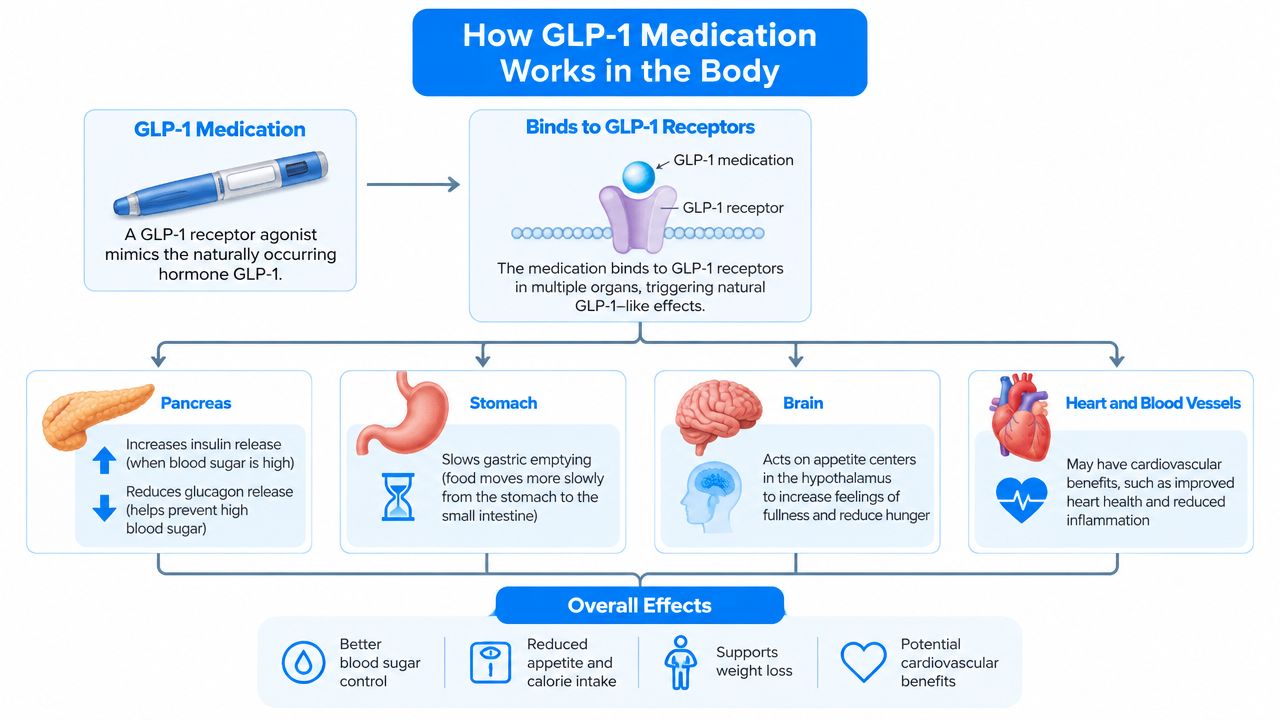
GLP-1 stands for glucagon-like peptide-1, a hormone the gut releases after eating. GLP-1 medication copies that signal so the body behaves as though a meal has already sent the message to slow down, store glucose more efficiently, and stop feeling hungry so quickly. That's the basic logic, and it helps explain why these drugs affect both appetite and blood sugar.
A simple way to picture the mechanism
Think of GLP-1 as a set of coordinated messages between the gut, pancreas, and brain. The stomach empties more slowly, so food stays around longer and fullness arrives earlier. The pancreas gets a glucose-dependent insulin signal, while glucagon output is suppressed, which helps blunt post-meal glucose spikes.
That glucose-dependent pattern matters because it's part of why GLP-1s are different from some older diabetes medications. They work most strongly when blood sugar is high, rather than forcing insulin release in every situation. In plain language, the body gets help when it needs it, and less unnecessary pressure when it doesn't.
GLP-1 signaling also reaches brain pathways involved in satiety and food reward. That's why many patients describe less “food noise,” fewer cravings, and less mental effort spent fighting hunger. This isn't about moral discipline. It's about a medication changing the intensity of the biological signals that drive eating.
What realistic weight loss looks like
In clinical reviews of obesity treatment, average weight loss after about 1 year has been reported in the 15% to 25% range, with the largest effects seen in higher-dose subcutaneous semaglutide 2.4 mg and tirzepatide 10 to 15 mg (clinical review in PMC). Those results vary by dose, adherence, baseline body weight, and how well side effects are managed.
That range is useful because it keeps expectations grounded. GLP-1 medication can meaningfully reduce intake, but it doesn't erase the need for eating patterns, hydration, protein intake, or movement. It shifts the biological starting point, which is powerful, but the rest of the plan still matters.
The body's natural GLP-1 is short-lived. Medication therapy extends and strengthens that signal so the satiety message lasts long enough to change behavior and metabolism.
Semaglutide vs Tirzepatide and Other Common GLP-1 Medications
Semaglutide and tirzepatide come up first for good reason, but they do different jobs. Semaglutide is a GLP-1 receptor agonist. Tirzepatide adds GIP agonism to GLP-1 activity, which helps explain why it usually produces more weight loss in comparative evidence. The practical limit is the same for both. Gastrointestinal side effects can slow dose increases or make them hard to sustain.
| Agent | Mechanism | Typical Weight Loss | Dosing | Tolerability Notes |
|---|---|---|---|---|
| Semaglutide | GLP-1 receptor agonist | Strong weight loss in obesity treatment, dose-dependent | Weekly subcutaneous titration to 2.4 mg for obesity care | Common GI effects during escalation |
| Tirzepatide | Dual GIP and GLP-1 agonist | Greater than semaglutide in pooled comparisons | Weekly subcutaneous titration up to 15 mg | GI effects remain the main issue |
| Liraglutide | GLP-1 receptor agonist | Generally lower than semaglutide and tirzepatide | Daily injection | GI side effects can still limit use |
| Dulaglutide | GLP-1 receptor agonist | Modest weight effect relative to newer agents | Weekly injection | Often used more for diabetes than weight loss |
| Exenatide | GLP-1 receptor agonist | Lower weight-loss magnitude | Injection formulations, less commonly used | GI symptoms may still occur |
Why tirzepatide often looks stronger on paper
A systematic review and meta-analysis found tirzepatide produced greater percentage weight reduction than semaglutide by 4.28 percentage points and greater absolute loss by 4.43 kg (Wiley meta-analysis). Pooled analyses from the same review also reported that 78.22% of patients on tirzepatide achieved at least 5% weight loss, 55.60% achieved at least 10%, and 32.28% achieved at least 15%.
Those figures explain why tirzepatide often attracts attention in conversations about larger weight loss. They do not change the day-to-day reality of treatment. If nausea, vomiting, diarrhea, or constipation make dose escalation difficult, the gap between drugs can narrow in practice. For many patients, adherence is the primary bottleneck, not receptor biology.
How the older agents fit in
Liraglutide, dulaglutide, and exenatide still have a place, but usually lower on the list for obesity-focused care. Their weight-loss effect is smaller, and some are used more often for type 2 diabetes than for weight management. Oral semaglutide exists for diabetes at lower exposure, but it is not the same obesity-dose exposure used with the weekly injection form.
The comparison is fairly simple. If a patient needs the strongest appetite suppression and can manage weekly injections, semaglutide and tirzepatide usually matter most. If daily dosing, a lower-intensity effect, or a diabetes-first goal is the better fit, older agents may still make sense, but the expected weight loss should be different.
What the Evidence Shows About Cardiovascular and Hair-Related Effects
Not all GLP-1 effects are about weight. The strongest evidence outside body weight involves cardiovascular outcomes in specific high-risk populations, while hair-loss signals are more emerging and require careful interpretation. Those are very different kinds of data, and they should not be mixed together.
Cardiovascular benefit is established for selected patients
The SELECT cardiovascular outcomes trial enrolled 17,604 adults aged 45 or older with established cardiovascular disease and overweight or obesity but without diabetes. In the primary outcome analysis, major adverse cardiovascular events occurred in 6.5% of patients receiving semaglutide versus 8.0% with placebo, corresponding to a hazard ratio of 0.80 and a relative risk reduction of about 20% (American College of Cardiology summary of SELECT). That makes semaglutide more than a weight-loss drug in the right population, it becomes a cardiovascular risk-reduction therapy.
This matters clinically because it changes the value proposition. In patients with obesity and known cardiovascular disease, the decision is not only about appearance or scale weight. The medication can serve a broader cardiometabolic purpose when used under the approved indication and in the right risk context.
Hair loss deserves counseling, not panic
Hair loss is a different story. A 2026 systematic review found pharmacovigilance reporting odds ratios of 2.46 for semaglutide and 1.73 for tirzepatide, and concluded that GLP-1 receptor agonists were associated with about a 40% increased risk of non-scarring alopecia, largely driven by telogen effluvium and androgenetic alopecia (PMC review). A separate 2026 cohort study in adults found higher odds of new-onset nonscarring alopecia with semaglutide and tirzepatide compared with other GLP-1 agents (Wiley cohort study).
Those findings are clinically relevant, but they don't prove that every case of shedding is caused by the drug itself. Rapid weight loss, inadequate protein intake, and micronutrient issues can also trigger telogen effluvium. Patients who notice shedding should be evaluated for the broader causes before the medication is blamed automatically.
| Medication | Cardiovascular Trial Result | MACE Reduction | Hair-Loss FAERS Signal | Evidence Strength |
|---|---|---|---|---|
| Semaglutide | SELECT showed fewer major adverse cardiovascular events in high-risk adults | About 20% relative reduction | Stronger alopecia signal than some comparators | Strong for cardiovascular benefit, emerging for hair loss |
| Tirzepatide | Cardiovascular benefit is less established in the cited data here | Not cited in the verified data | Reported alopecia signal present | Emerging, needs counseling and monitoring |
| Other GLP-1 agents | Cardiovascular outcome evidence varies by agent and indication | Not cited here | Lower or mixed signal in review data | More limited for both outcomes |
Why So Many People Stop GLP-1 Medication Within a Year
A lot of people hear GLP-1 therapy as if it were a short course with a clean finish line. That framing misses the challenge. As noted earlier, many patients discontinue within a year, and the reason is usually not one single failure. It is the slow accumulation of side effects, refill problems, cost friction, and plateau anxiety.
The dropout problem is usually practical
The best adherence plan starts before the first dose is increased. If gastrointestinal symptoms are anticipated, titration can move more slowly, meals can be smaller, and patients can be told that nausea is common early but should still be reviewed if it becomes hard to tolerate.
Out-of-pocket cost needs the same kind of planning. If coverage is uncertain, a refill strategy should be discussed up front so treatment does not stall when the first approval changes.
Supply shortages also need backup plans. If a patient cannot reliably get the next dose, the routine breaks, and the body has to restart the adaptation process.
Plateaus deserve a script, not a shrug. A slower rate of loss does not mean the drug has stopped working. It often means the body has adjusted to a new intake pattern, and that is the point where coaching matters most.
Weight-loss plateaus often feel like failure, but they are usually a sign that the body has adapted to a new baseline. The response should be reassessment, not abandonment.
Stopping changes the body's set point
When GLP-1 medication is stopped, appetite tends to come back, much like a brake being released on a car that was helping control speed. The food-related friction that supported intake control also fades. If the rest of the plan is not stable, rebound weight gain becomes more likely.
That is why adherence is the clinical center of gravity. A medication can work well in theory and still underperform if the plan does not prepare for the first missed refill, the first nausea flare, or the first insurance denial.
Risks Behind Compounded GLP-1 Products
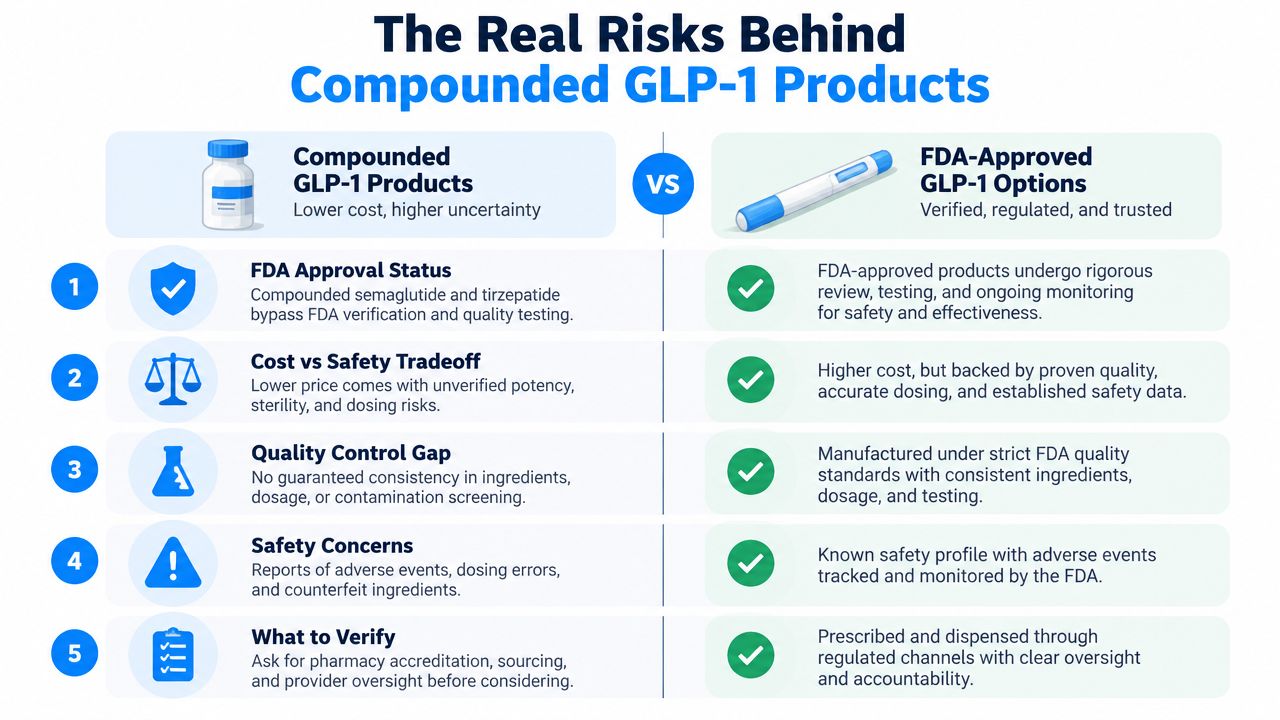
Compounded GLP-1 products are often sold as an access solution, but they are really a trade-off in risk. They can fill a gap when approved products are hard to obtain, yet they bypass the FDA approval pathway that checks manufacturing, labeling, and quality standards. That difference matters most with an injectable medicine, where dose precision can shape both benefit and harm.
A simple way to understand the concern is to separate the problems into four buckets.
- Wrong concentration: A vial may be drawn up incorrectly, which can lead to underdosing or overdose.
- Sterility concerns: Weak facility controls can raise the risk of contamination.
- Poor traceability: If something goes wrong, follow-up is less consistent and safeguards are less standardized.
- Formulation confusion: Salt forms or other nonstandard preparations can leave patients and clinicians unclear about how the product will behave in the body.
Public safety concerns have centered on dosing errors, unexpected reactions, and quality problems. The FDA has logged hundreds of adverse-event reports linked to compounded semaglutide and tirzepatide, including hospitalizations and dosing mistakes, and one summary reported higher counts by mid-2025. A university review cited lower but still substantial report totals by spring 2025 and noted that many patients unintentionally took several times the intended dose (The Medicine Maker summary of regulator alerts). A 2025 pharmacovigilance study also found compounded GLP-1 receptor agonists may be associated with higher odds of adverse events and product-quality issues than non-compounded products.
Cost savings need to be weighed against that uncertainty. The lower sticker price can look appealing, but it does not erase questions about dose accuracy, source transparency, or follow-up. For long-term metabolic care, those details are part of the clinical risk, not side issues.
Patients considering compounded products should verify pharmacy credentials, prescribing oversight, and why the formulation is being used. If an approved product is unavailable, that should be clear. If access is blocked another way, that should be discussed before the first shipment, not after a problem starts.
Accessing GLP-1 Medication Through Telehealth
Telehealth can make GLP-1 treatment more accessible, but it should still look like medical care, not a checkout page. A safe workflow starts with eligibility screening and ends with follow-up, dose adjustment, and symptom review. The process matters because these medications are long-term therapies, not one-time prescriptions.
A legitimate pathway has checkpoints
The first step is intake. A clinician needs the patient's BMI, medical history, current medications, pregnancy status, and any contraindications such as a history of medullary thyroid cancer or certain endocrine tumor syndromes. That information determines whether the medication is appropriate in the first place.
Next comes a licensed clinical review. The prescriber checks the FDA-approved indication, chooses the formulation, and starts at the lowest titration dose. Follow-up should then monitor nausea, hydration, bowel changes, appetite suppression, and weight trajectory so the dose can be advanced safely.
A sound telehealth setup also includes pharmacy coordination and state licensure boundaries. If the medicine needs refrigeration, shipping has to protect the cold chain. If the platform can't tell a patient who is prescribing, what is being dispensed, and how the dose will be adjusted, that's a warning sign.
Patients should ask direct safety questions
The fastest way to assess a platform is to ask simple questions:
- Who reviews the intake? The answer should be a state-licensed clinician.
- What product is being dispensed? The patient should know whether it's FDA-approved or compounded.
- How is follow-up handled? Ongoing monitoring should be built in.
- What happens if side effects appear? There should be a response plan, not just a refill link.
Vials + Vitals offers physician-directed GLP-1 and dual-incretin protocols through telehealth, with individualized titration and pharmacy fulfillment, which is the kind of structure patients should look for when comparing access models. The label on the product still matters more than the speed of the intake.
Clinical Takeaways for Patients and Providers
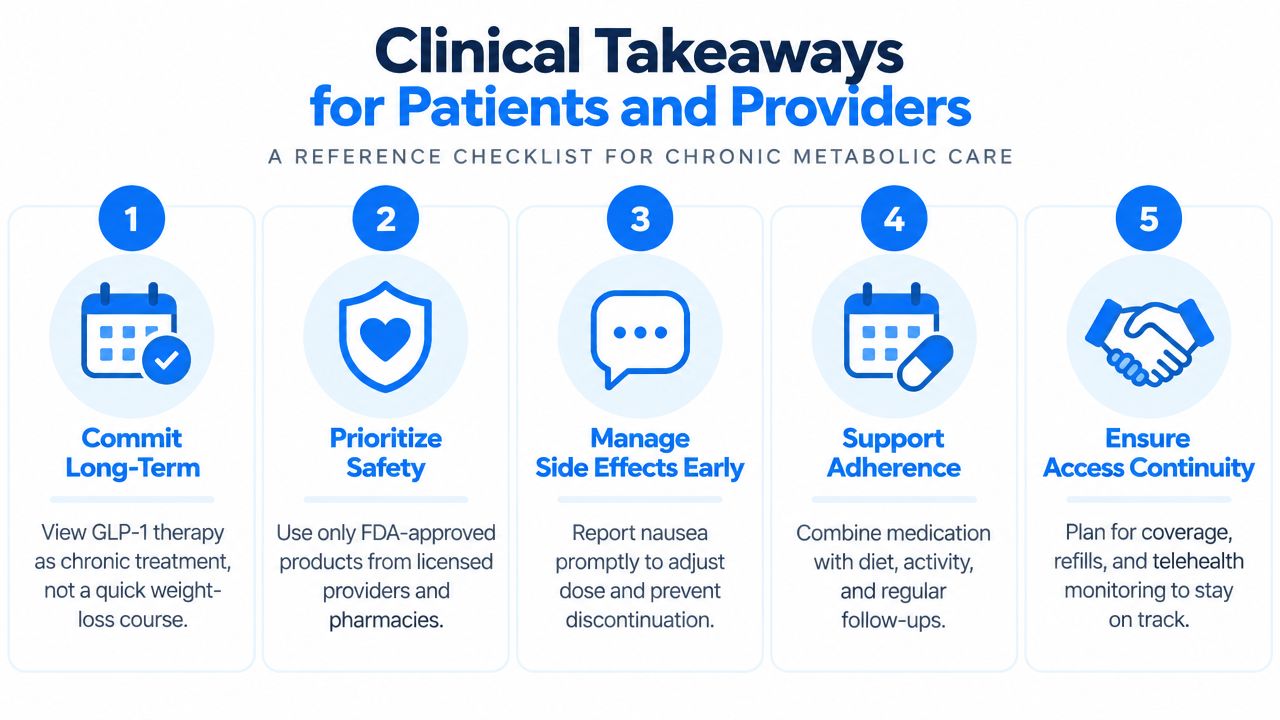
GLP-1 medication should be treated as chronic metabolic therapy, not a cosmetic quick fix. The best outcomes usually come from matching the drug to the patient's goals, then building a plan that can survive side effects, refill gaps, and changing insurance coverage. When that infrastructure is missing, even a good prescription can become a short-lived experiment.
A practical checklist for shared decision-making
- Set realistic expectations: Weight reduction is often meaningful, but the goal should be sustainable metabolic improvement, not a temporary transformation.
- Plan for maintenance early: If therapy stops, appetite usually returns and weight regain can follow, so the long-term strategy matters from the start.
- Treat hair shedding carefully: Don't assume every case is the drug, especially if weight loss has been rapid or nutrition has been inconsistent.
- Prefer verified products: FDA-approved medication has a clearer quality and safety pathway than compounded alternatives.
- Watch GI symptoms early: Nausea, vomiting, diarrhea, and constipation should be addressed before they drive discontinuation.
- Make access part of treatment: Coverage, refills, and follow-up visits are part of the therapeutic plan, not administrative extras.
Clinical priority: the right GLP-1 plan is the one the patient can safely keep using.
Shared decision-making should also include pregnancy planning, injection comfort, lab follow-up, and the possibility that a non-medication option may fit better in some cases. That conversation is more useful than asking only how much weight can come off in the first month. It helps patients choose a path they can sustain.
Vials + Vitals provides physician-directed GLP-1 and dual-incretin care through telehealth, with individualized eligibility review, titration, and pharmacy fulfillment for patients who need a structured metabolic plan. For adults comparing FDA-approved options, compounded products, and long-term follow-up models, visit Vials + Vitals to review the clinical workflow and see how guided treatment is organized.
Ready to see if this protocol fits your biology?
A licensed provider reviews every request before anything is prescribed.
Calibrate your metabolic protocol →