GLP-1 for Men: Efficacy, Hormones, and Side Effects

Explore evidence-based GLP-1 for men protocols. Learn how semaglutide and tirzepatide impact weight loss, testosterone, muscle mass, and sexual health.
In U.S. adults with diagnosed diabetes, 25.9% of men used GLP-1 injectables in 2024 to lower blood sugar or lose weight, compared with 27.2% of women, according to the CDC National Center for Health Statistics. GLP-1 therapy is no longer a niche conversation for men, but the evidence base and the clinical discussion still often treat male patients as an afterthought.
That matters because the relevant outcomes extend beyond the scale. A properly managed GLP-1 protocol for men should account for adiposity-driven hypogonadism, lean-mass preservation, sexual function, fertility goals, and hair retention. Semaglutide and tirzepatide can be powerful metabolic tools, but neither replaces diagnostic work, resistance training, adequate nutrition, or physician-directed monitoring.
Table of Contents
- The Male Metabolic Baseline and GLP-1 Adoption
- Efficacy and Weight Loss Expectations in Male Cohorts
- Body Composition and Lean Mass Preservation Strategies
- Endocrine Impacts and Testosterone Dynamics
- Sexual Health and Fertility Considerations
- Hair Retention Biology and Telogen Effluvium Risks
- Clinical Monitoring and Protocol Selection
The Male Metabolic Baseline and GLP-1 Adoption
Population-level adoption matters less to an individual man than what those figures cannot show: how fat distribution, insulin resistance, hormone status, and baseline muscle mass will shape treatment response. Men represent a substantial share of current incretin care, but population data do not determine whether medication is appropriate for a particular patient.
Why male physiology changes the conversation
Men often carry more visceral adipose tissue, which can connect excess weight with insulin resistance and impaired reproductive-hormone signaling. Visceral adiposity may contribute to lower testosterone through insulin resistance, inflammatory signaling, and increased conversion of testosterone to estrogen within adipose tissue. A man with obesity, low libido, fatigue, or erectile symptoms therefore needs a clinical assessment rather than an assumption that weight loss will resolve every concern.
Semaglutide activates the GLP-1 receptor. Its relevant effects include glucose-dependent insulin release, reduced glucagon signaling, slower gastric emptying, and lower appetite. Tirzepatide acts through both GLP-1 and GIP pathways. In practice, these medicines can improve appetite control and glycemic management, followed by weight reduction when the patient tolerates treatment and follows a sustainable eating pattern.
Clinical principle: The clinical question is whether the protocol improves metabolic health while preserving strength, reproductive goals, and adherence.
Appetite suppression can become excessive. A man who eats too little protein, loses weight rapidly, or abandons resistance training may reach a lower body weight while also losing fat-free mass. That trade-off matters for physical function, metabolic health, and appearance. It also matters for hair retention, because rapid weight loss and inadequate nutrition can increase the risk of shedding in susceptible patients.
Diabetes treatment may require adjustment as glucose control improves. Suspected hypogonadism requires hormone testing, symptom review, and evaluation of other causes. GLP-1 therapy can support a broader metabolic plan, but it does not replace diagnostic work, resistance training, adequate nutrition, or physician-directed monitoring.
Assessment should extend beyond kilograms. Waist circumference, strength, energy, sleep, libido, erectile function, laboratory markers, nutritional intake, and the pace of weight loss help determine whether treatment is producing a favorable overall response. For men, the baseline assessment should make these trade-offs visible before dose escalation begins.
Efficacy and Weight Loss Expectations in Male Cohorts
Men should interpret GLP-1 trial averages in light of participant composition. In a 2023 review of the STEP 1 to 4 semaglutide studies, men represented only 26.9% of STEP 1 participants. The estimated weight-loss benefit versus placebo was −14.0% in women and −8.0% in men.
That difference does not make semaglutide ineffective for men. It shows why sex distribution and baseline biology matter. Men may begin treatment with a different ratio of lean tissue, a larger absolute fat mass, or a different metabolic profile from the average participant in a predominantly female cohort. Percentage change can also conceal the practical distinction between total kilograms lost and the proportion of starting body weight reduced.
What the broader evidence suggests
The same review reported sex-stratified estimates in additional STEP studies. In STEP 2, the estimated placebo-adjusted weight-loss benefit was 7.5% in women versus 4.6% in men. In STEP 4, it was 16.2% versus 9.3%. These findings support a measured expectation: men can achieve substantial weight reduction with semaglutide, although average percentage loss may be smaller in male cohorts.
A separate 2025 systematic review and meta-analysis of randomized controlled trials is not cited here because the available source does not verify its reported figures. Those numbers should not be used to set an individual treatment target.
| Medication | Mean percent weight change | Trial duration |
|---|---|---|
| Tirzepatide | −20.2% | 72 weeks |
| Semaglutide | −13.7% | 72 weeks |
The head-to-head trial included 751 randomized participants and reported greater least-squares mean weight loss with tirzepatide than semaglutide at 72 weeks, −20.2% versus −13.7%. (Head-to-head tirzepatide and semaglutide trial) These results show that expected outcomes differ between medication classes and should not be treated as interchangeable.
How to set a useful milestone
A practical male-specific target is a favorable pattern rather than a promised percentage. Look for better appetite control, a declining waist measurement, improved glycemic markers when relevant, preserved physical function, and adverse effects that remain tolerable. A temporary plateau does not automatically indicate treatment failure. Rapid loss accompanied by weakness, poor intake, or increased hair shedding warrants clinical review.
Medication changes should not be based solely on another person's result. Dose tolerance, adherence, baseline metabolic disease, sleep, alcohol intake, dietary quality, and resistance training all influence response. For men, the meaningful endpoint is improved metabolic health without unnecessarily worsening strength, endocrine symptoms, or hair retention.
Body Composition and Lean Mass Preservation Strategies
Scale weight alone cannot show whether a man is losing fat, muscle, or both. GLP-1 therapy can reduce total and visceral adipose tissue, while some lean mass may decline during weight loss. A 2025 body-composition analysis reported significant reductions in total and visceral adipose tissue, preserved performance on sit-to-stand testing, and no significant difference in muscle volume compared with placebo in that study.
The main clinical concern is inadequate nutrition and activity during treatment, not evidence that GLP-1 medications directly poison skeletal muscle. Lean-mass loss commonly follows overall weight loss, particularly when appetite suppression leads to very low food intake, insufficient protein, and abandoned resistance exercise. Men who begin treatment with low muscle reserves, older age, limited training, or high metabolic disease burden deserve closer follow-up.
Three practical protections for muscle
Keep resistance training in the plan. Men using a GLP-1 medication should maintain progressive resistance exercise suited to their training history, medical status, and recovery. Performance may dip during dose titration or gastrointestinal symptoms. The immediate goal is consistent loading that signals the body to retain functional muscle, not maximum gym performance.
Plan protein around reduced appetite. Nausea and early fullness can make large meals difficult. Smaller meals centered on protein are often more workable than forcing a single large portion. A clinician or registered dietitian should adjust intake for body size, kidney function, training demands, and treatment goals.
Assess the rate of loss in context. Stable strength and normal daily function support a favorable response. Declining performance, persistent fatigue, dizziness, or difficulty meeting nutritional needs should prompt review of dose escalation, hydration, caloric intake, and other medical causes.
Why lean mass matters in men
Skeletal muscle supports glucose disposal, posture, physical independence, and long-term metabolic resilience. Reducing visceral fat is beneficial, but the target is a healthier relationship between functional lean tissue and adipose tissue, with strength and activity preserved.
Hair shedding can also become more noticeable during rapid or poorly nourished weight loss, so preserving lean mass and maintaining adequate intake support more than physical performance alone. This male-specific trade-off matters when evaluating whether a medication is producing useful fat loss at an acceptable physiological cost.
Body-composition tools are helpful only when interpreted alongside clinical findings. Hydration changes can distort a single estimate. Repeated assessments, waist measurements, strength or performance markers, dietary review, and symptoms provide a more reliable picture than one isolated scan.
Endocrine Impacts and Testosterone Dynamics
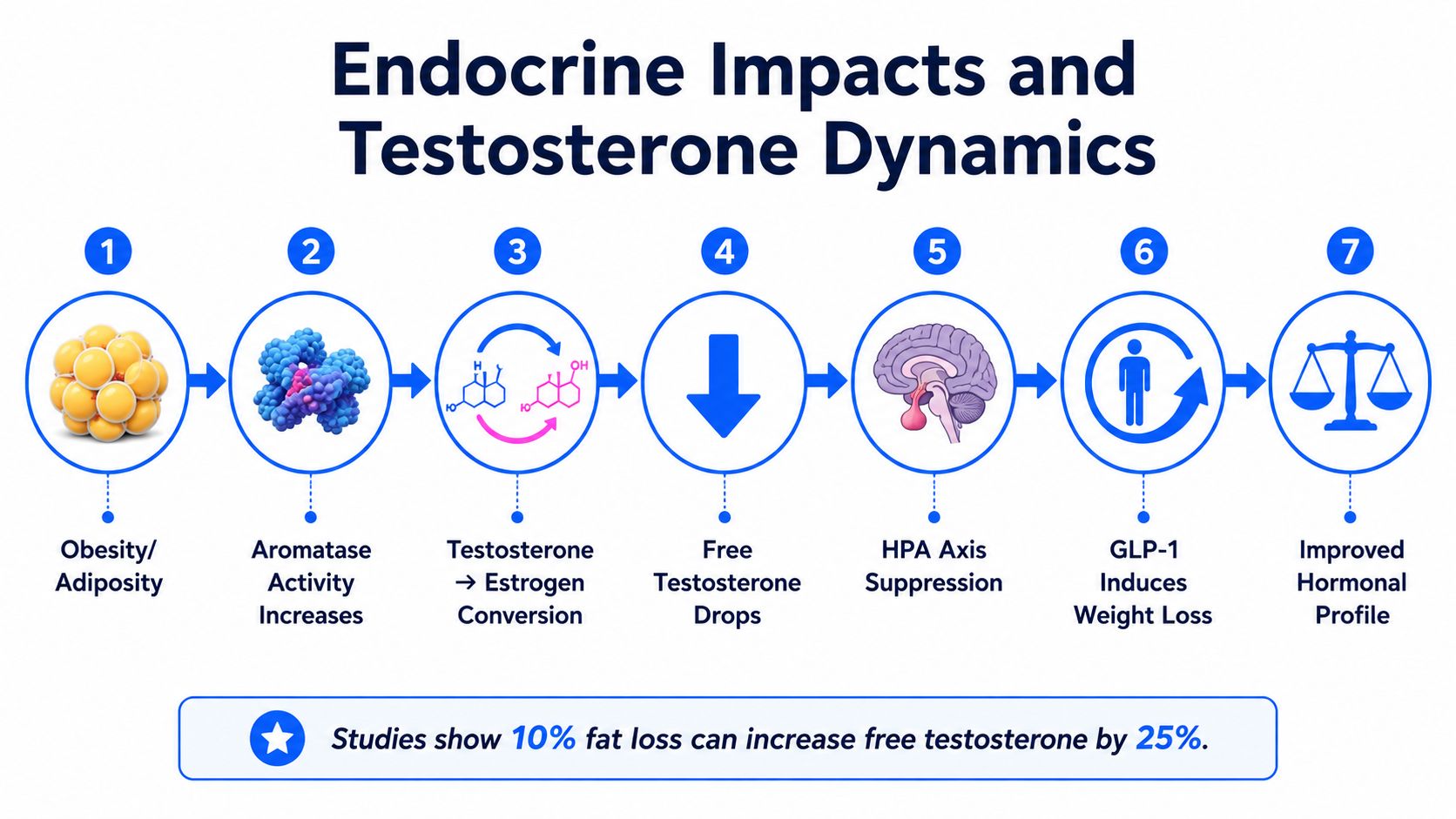
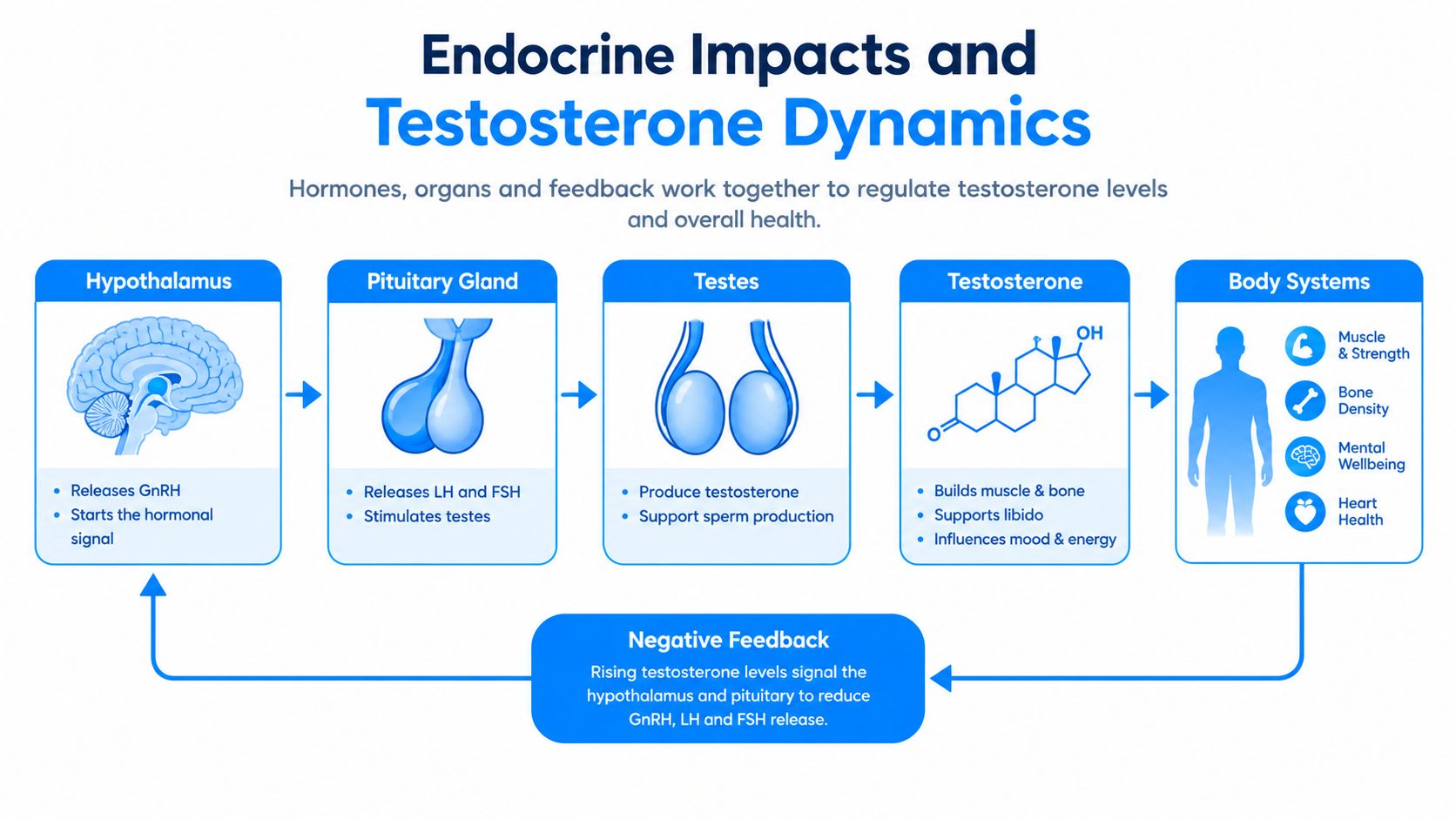
Obesity-related functional hypogonadism is often reversible in part because adipose tissue, insulin resistance, and inflammation can suppress normal hypothalamic-pituitary-gonadal signaling. GLP-1 receptor agonists don't act as direct androgens. Their potential endocrine benefit comes primarily through metabolic improvement and fat loss.
As adiposity declines, insulin sensitivity may improve and inflammatory burden may fall. Lower adipose-driven aromatization can reduce the conversion of testosterone to estrogen, while improved metabolic status may allow sex hormone-binding globulin and total testosterone to recover toward a more favorable range. That mechanism is indirect, which is why a GLP-1 shouldn't be presented as a testosterone replacement drug.
What the testosterone evidence supports
A 2026 systematic review in men with obesity or functional hypogonadism found consistent increases in total testosterone with GLP-1 receptor agonist treatment. The review also noted that these medications may preserve gonadotropin function while improving semen quality in some cohorts.
That finding is clinically meaningful, but it doesn't eliminate the need for testing. A man with low libido, erectile difficulty, infertility, low morning energy, or reduced exercise recovery needs a structured evaluation. Testosterone should be interpreted with relevant binding proteins and symptoms, not treated based on a single result obtained without appropriate timing.
GLP-1 therapy and testosterone replacement
Exogenous testosterone can improve selected symptoms and laboratory findings, but it can also suppress spermatogenesis. For a man planning conception, weight reduction and metabolic treatment may offer a fertility-sparing route to improving the hormonal environment, depending on the underlying diagnosis and response.
Fertility safeguard: A man considering testosterone therapy should disclose current or future conception plans before treatment begins. Weight management, reproductive evaluation, and endocrine care may need to proceed together.
GLP-1 treatment won't correct primary testicular failure, pituitary disease, medication-induced hypogonadism, or every cause of sexual dysfunction. It may improve the metabolic drivers of functional hypogonadism, but persistent symptoms after meaningful metabolic improvement deserve reassessment rather than automatic dose escalation or indefinite hormone treatment.
Sexual Health and Fertility Considerations
The available evidence doesn't support a simple claim that GLP-1 medications either improve or damage male sexual health. A 2025 Kinsey Institute survey found that 52% of GLP-1 users said the medication affected their sex lives. Men were twice as likely as women to report both benefits and drawbacks, including higher libido, improved body image, and improved sexual function, as well as low libido and decreased sexual function.
These mixed reports make physiological sense. An obese man with insulin resistance, endothelial dysfunction, poor sleep, and low confidence may experience improved sexual function after losing adipose tissue and improving metabolic health. Another man may experience reduced libido temporarily because of inadequate food intake, nausea, fatigue, emotional stress, or a concurrent medical problem.
Stratifying erectile and libido outcomes
A 2026 review found human data suggesting that GLP-1 receptor agonists don't worsen sexual function overall and may improve erectile outcomes in metabolically compromised men. In contrast, the only randomized trial in healthy, lean men found no change in desire, hormones, or sperm parameters. The baseline state appears to matter more than the medication label alone.
Sexual symptoms should be tracked with the same precision as glucose or weight. Useful questions include whether libido changed after titration, whether morning erections changed, whether erectile rigidity is consistent, and whether ejaculation or orgasm changed. New symptoms shouldn't be dismissed as either a guaranteed drug effect or an inevitable consequence of weight loss.
Fertility deserves separate counseling
Improved testosterone or erectile function doesn't automatically prove improved fertility. Spermatogenesis, semen quality, gonadotropin signaling, medications, heat exposure, sleep, alcohol use, and reproductive timing all matter. The current literature suggests possible benefits in men with obesity or metabolic compromise, but it also emphasizes heterogeneity and limited clinical evidence.
A pharmacovigilance analysis found that reported male sexual dysfunction events linked to GLP-1 drugs were statistically detectable but weak overall. That signal warrants monitoring, not alarm. Men actively planning conception should discuss reproductive goals before starting treatment and consider semen evaluation when clinically appropriate, particularly if infertility already exists or symptoms persist.
Hair Retention Biology and Telogen Effluvium Risks
Hair shedding during weight loss is often a response to metabolic stress rather than permanent follicle destruction. Telogen effluvium is a transient, non-scarring process in which more follicles enter the resting phase after a physiological stressor such as rapid weight reduction, inadequate nutrition, or illness.
A semaglutide weight-loss cohort study found an adjusted hazard ratio for hair loss of 1.52 overall. The sex-stratified estimate was 0.86 for men and 2.08 for women, so the observed association was substantially different by sex in that analysis.

Separating shedding from male-pattern hair loss
Telogen effluvium generally produces diffuse shedding rather than a sharply localized pattern. Male-pattern hair loss, by contrast, usually follows a recognizable distribution involving the temples, frontal hairline, or crown. The two processes can coexist, so sudden shedding shouldn't be used to dismiss progressive androgenetic alopecia.
A review of GLP-1 receptor agonists and hair loss reported weak but measurable pharmacovigilance associations. The reporting odds ratio was 1.24 to 2.46 for semaglutide, 0.83 to 1.73 for tirzepatide, and 0.61 to 1.53 for liraglutide. (Review of GLP-1 drugs and hair loss)
The same review described rapid weight loss as a possible trigger for telogen effluvium. In one randomized oral semaglutide obesity trial summarized in that review, alopecia occurred in 23 of 334 participants, or 7%, receiving semaglutide compared with 9 of 333, or 3%, receiving placebo. (Systematic review of GLP-1-associated hair loss)
Protecting follicular health
Men should report persistent or severe shedding, scalp inflammation, scarring, or focal loss to a clinician. Nutritional review should assess whether appetite suppression has led to inadequate protein or overall intake, while the treatment plan should address hydration, excessive caloric restriction, and overly rapid loss.
Hair retention also depends on identifying unrelated contributors. Thyroid disease, iron deficiency, androgenetic alopecia, illness, and medication changes can all produce shedding. Treating the presumed GLP-1 effect without checking these possibilities can delay the correct diagnosis.
Clinical Monitoring and Protocol Selection
A male patient should begin GLP-1 treatment with a baseline that makes later changes interpretable. The clinical review should cover medical history, diabetes status when relevant, current medications, gastrointestinal tolerance, reproductive goals, prior pancreatitis or gallbladder disease, and any personal or family contraindications identified by the prescribing clinician.
Establishing the baseline
Laboratory selection should be individualized, but commonly relevant measures include a metabolic panel, glucose-related testing, lipid profile, and endocrine markers such as total testosterone, free testosterone, and SHBG when symptoms or history suggest hypogonadism. A baseline body-composition assessment can be useful, but waist measurement, strength, dietary intake, and functional status should remain part of the record.
Monitoring should follow the patient's risk profile and the titration schedule. A practical review looks at:
- Tolerance: nausea, vomiting, constipation, diarrhea, hydration, and the ability to maintain food intake.
- Metabolic response: glucose control when relevant, body weight, waist measurement, and other clinician-selected markers.
- Body composition: strength performance, physical function, and fat-free mass when a reliable assessment is available.
- Endocrine and sexual health: libido, erectile function, morning energy, testosterone markers, and fertility goals when clinically indicated.
- Hair changes: onset, distribution, severity, nutritional intake, and whether the pattern suggests telogen effluvium or androgenetic loss.
Selecting the formulation and pace
Semaglutide and tirzepatide shouldn't be selected by expected weight loss alone. The choice should account for treatment indication, glucose status, gastrointestinal tolerance, contraindications, prior response, adherence barriers, and the patient's ability to maintain nutrition and exercise. Titration should be physician-directed, with slower progression or reassessment when adverse effects interfere with hydration, protein intake, or daily function.
Formulation can also affect adherence. Injectable vial formats may suit patients comfortable with self-administration, while needle-free sublingual orally disintegrating tablets may be considered for selected therapies and patients with needle aversion. Vials + Vitals offers physician-directed telehealth assessment, individualized eligibility review, semaglutide and tirzepatide protocols, and titration oversight, with formulation determined by licensed clinicians when treatment is appropriate.
Monitoring rule: A protocol is working when the patient can sustain the metabolic benefit while maintaining safety, function, nutrition, and the health priorities that led to treatment.
Men shouldn't stop, restart, combine, or escalate incretin therapies without medical direction. Persistent vomiting, severe abdominal pain, dehydration, marked weakness, significant mood changes, or concerning sexual or reproductive symptoms require prompt clinical contact. The goal isn't maximal appetite suppression. It's durable metabolic improvement with a body composition and endocrine profile that remain clinically acceptable.
Vials + Vitals provides physician-directed telehealth assessment for men considering semaglutide or tirzepatide, with individualized eligibility review, formulation selection, and titration oversight. Visit Vials + Vitals to begin a confidential clinical assessment focused on weight management, metabolic health, sexual wellness, and hair-retention priorities.
Ready to see if this protocol fits your biology?
A licensed provider reviews every request before anything is prescribed.
Calibrate your metabolic protocol →