Cold Chain Shipping Pharmaceuticals: Clinical Guide
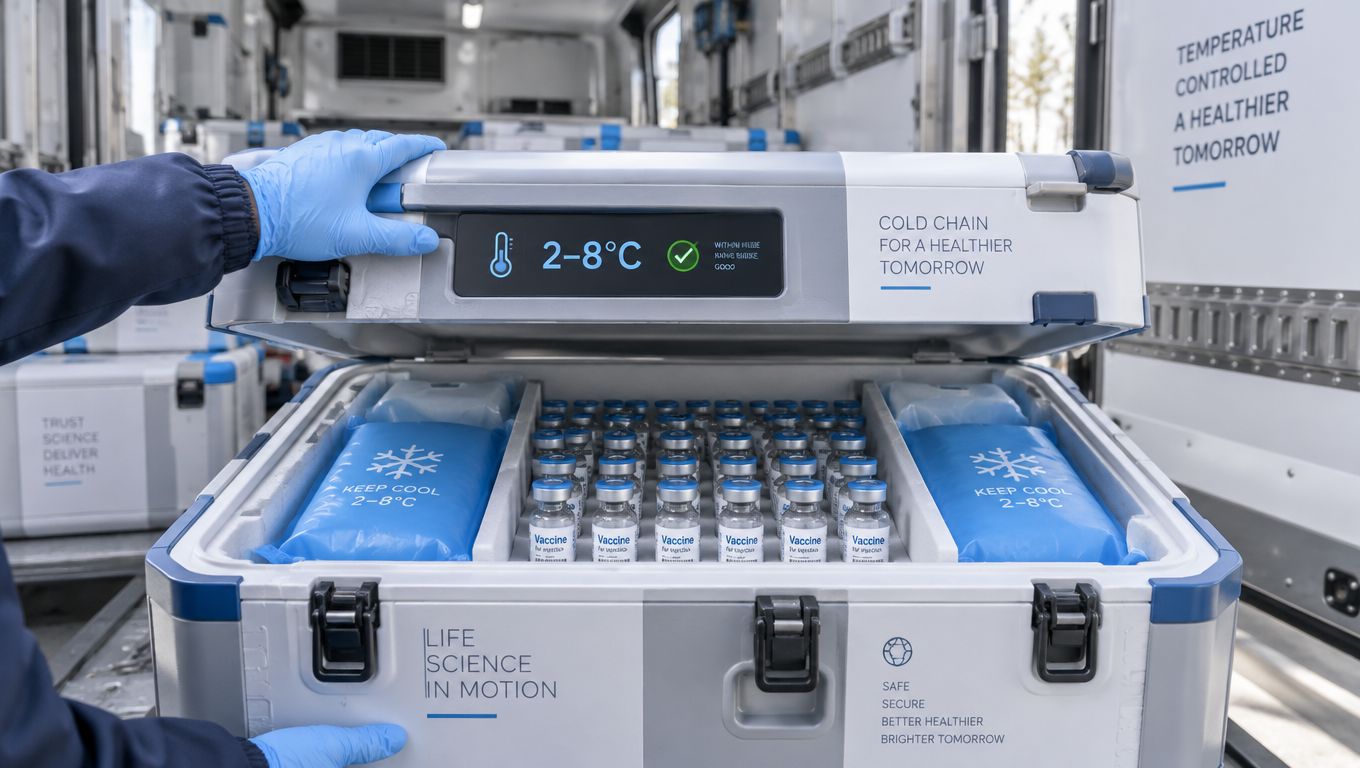
Explore the clinical standards for cold chain shipping pharmaceuticals. Learn about temperature control, GLP-1 stability, and direct-to-patient safety
Cold chain shipping pharmaceuticals is a clinical safety function, not merely a freight requirement. In 2021, cold chain medicines represented $384 billion, or 32% of a nearly $1.2 trillion pharmaceutical market excluding vaccines and COVID-19 therapeutics, according to IQVIA's analysis of cold chain medicines. That scale reflects how central temperature-controlled distribution is to modern treatment, particularly for biologics, injectable therapies, specialty medicines, and direct-to-patient telehealth prescriptions.
For patients receiving GLP-1 therapies at home, the shipment is part of the treatment pathway. A pharmacy can dispense the correct formulation and dose, but the clinical value of that prescription depends on maintaining the product's validated conditions until the patient receives it. A package left in an uncontrolled location, a delayed handoff, or an undocumented temperature excursion can create a quality question that neither the patient nor the prescriber can resolve by visual inspection alone.
Table of Contents
- The Clinical Imperative of Temperature-Controlled Logistics
- Temperature Ranges and Biologic Stability Parameters
- Monitoring Technologies and Excursion Detection
- Packaging Validation and Sustainable Transit Solutions
- Last-Mile Delivery and Direct-to-Patient Risk Mitigation
- Regulatory Compliance and Quality Assurance Standards
- Clinical Takeaways for Telehealth and Patient Safety
The Clinical Imperative of Temperature-Controlled Logistics
Cold chain logistics protects more than inventory. It protects the molecular characteristics that support potency, stability, and predictable administration. Biologic medicines can undergo structural changes when exposed to unsuitable heat or freezing, and those changes may not be visible in the vial, pen, or package. The patient may receive a product that looks normal but requires quality review before administration.
The World Health Organization defines the cold chain as the system used to store and transport temperature-sensitive products at recommended temperatures from manufacture to point of use. That definition matters in telehealth because the point of use is often a private residence rather than a clinic with monitored refrigerators, trained receiving staff, and formal quarantine procedures.
Why telehealth changes the risk profile
Traditional healthcare delivery concentrates control at hospitals, clinics, and pharmacies. Direct-to-patient care distributes responsibility across the dispensing pharmacy, packaging team, carrier, delivery route, household, and patient. Each transition introduces a potential gap in custody or documentation.
GLP-1 receptor agonists and other peptide-based therapies make this operational detail clinically relevant. The product's formulation, labeled storage condition, shipping duration, packaging configuration, and patient instructions must align. A generic “keep it cool” approach isn't sufficient because cool, refrigerated, frozen, and ultra-cold describe different validated conditions.
Clinical principle: The shipment should be designed around the medication's stability data, not around a standard box, coolant, or carrier service.
Cold chain medicines grew more than twice as fast as the overall pharmaceutical market between 2016 and 2021, with growth of 13% compared with 6%, according to the IQVIA reference data. The implication is practical. As more high-value therapies move through specialty distribution, pharmacies, and home delivery, packaging qualification, temperature monitoring, and lane management become part of the product's commercial and clinical model.
The patient-safety endpoint
A temperature-controlled shipment succeeds only when the patient receives medication that remains within its validated condition, accompanied by usable instructions and a clear escalation path. The pharmacy and logistics team must be able to identify an excursion, determine whether the product can be released, and prevent administration when the available evidence doesn't support safe use.
That process requires more than a delivery scan. It requires a documented chain of custody, calibrated monitoring where appropriate, packaging that has been tested for the intended route, and a defined decision maker for deviations. For direct-to-patient care, cold chain integrity is an extension of clinical oversight.
Temperature Ranges and Biologic Stability Parameters
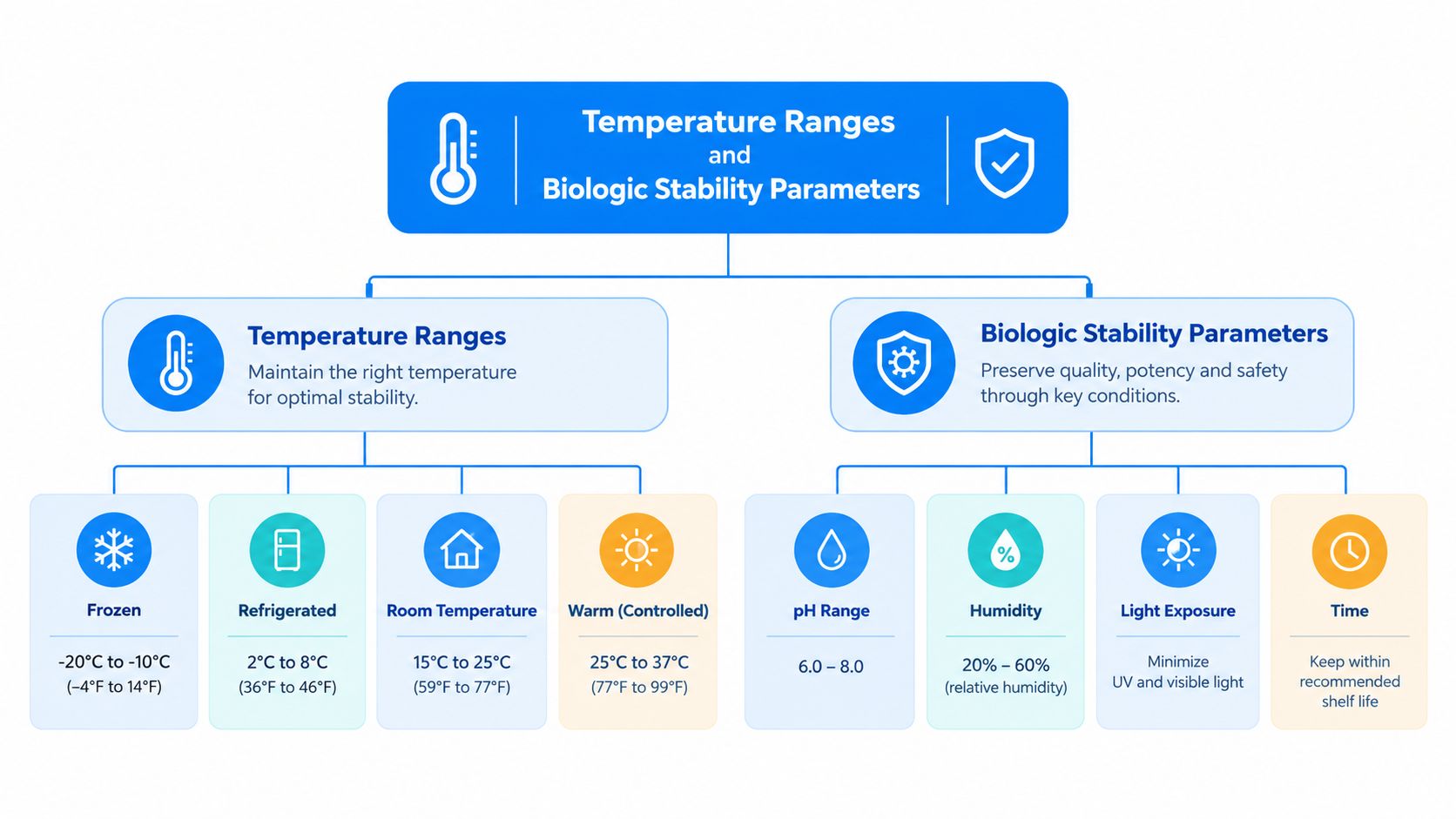
The first step in cold chain shipping pharmaceuticals is identifying the product's exact labeled and validated temperature range. Many refrigerated biologics are maintained at 2°C to 8°C, but that range isn't interchangeable with frozen or ultra-cold storage. The correct design depends on the formulation, stability data, shipping duration, and exposure limits established for that specific medicine.
Step one, classify the thermal requirement
Refrigerated products commonly travel within 2°C to 8°C. Frozen biologics are commonly shipped between -25°C and -10°C, while ultra-cold products may require temperatures below -80°C and as low as -150°C, depending on formulation and labeled stability data, as described in guidance on reducing pharmaceutical temperature excursions.
These categories create different risks:
- Refrigerated biologics: Heat exposure above the validated upper limit can initiate degradation, while freezing may damage protein structure.
- Frozen biologics: Thawing and refreezing can compromise the product even when the shipment later returns to a low temperature.
- Ultra-cold products: The packaging, sensor, storage equipment, and emergency response plan must all support a much narrower and colder operating environment.
A shipment shouldn't be qualified by asking whether the contents stayed “cold.” The relevant question is whether the product remained within its own validated stability window.
Step two, distinguish heat and freezing injury
Protein-based medicines can respond differently to heat and freezing. Heat exposure can accelerate aggregation, potency loss, and other degradation pathways. Freezing can alter protein structure and create damage that isn't reversed just by returning the medicine to a refrigerated range.
For that reason, alarm thresholds should be selected by product class. A temperature logger configured only to detect warming may miss a freezing event caused by direct contact with frozen coolant. Conversely, a package designed to prevent freezing may not provide enough thermal duration during a prolonged carrier delay.
Step three, interpret GLP-1 handling data carefully
Tirzepatide requires refrigerated storage at 2°C to 8°C in its original carton, where the carton also protects it from light. It may be kept unrefrigerated at temperatures not exceeding 30°C for up to 21 days, according to the peer-reviewed review of tirzepatide storage considerations. That allowance is a defined stability window, not permission to ship the medication without suitable controls.
Patients and dispensing teams should distinguish between a labeled temporary allowance and uncontrolled exposure. A package that remains below the permitted temperature but experiences excessive dwell time, direct sunlight, physical damage, or uncertain custody may still require review. Semaglutide and other GLP-1 formulations must likewise be handled according to their own product-specific labeling and stability information, rather than assumed to share tirzepatide's allowances.
The operational sequence is straightforward:
- Confirm the formulation and labeled storage condition.
- Identify the acceptable shipping duration and exposure limits.
- Select packaging and coolant placement that prevent both overheating and freezing.
- Set monitoring thresholds around the validated range.
- Quarantine and investigate any exposure that can't be reconciled with the product's stability data.
Monitoring Technologies and Excursion Detection
A temperature record is only useful if it represents the medication's actual thermal environment. A sensor mounted inside a refrigerator may describe the appliance, while a logger placed beside the medication can reveal what the vial or package experienced. That distinction is especially important during power interruption, loading, unloading, and delivery delays.
A 2024 exploratory study found that a refrigerator probe detected a breach above 8°C sooner than data loggers placed with medication. The refrigerator monitor reached that threshold in a mean of 12.5 minutes, while medication-location loggers did so in 23 to 26 minutes. After power restoration, the refrigerator monitor returned to an acceptable temperature in a mean of 17.5 minutes, while the medication-location loggers required 70.5 to 89 minutes, as reported in the study of monitoring location and cold-chain breach detection.
Sensor placement and breach detection timelines
| Monitor Location | Time to Exceed 8 °C | Recovery Time to Safe Range |
|---|---|---|
| Refrigerator probe | Mean 12.5 minutes | Mean 17.5 minutes |
| Medication-location logger | Mean 23 to 26 minutes | Mean 70.5 to 89 minutes |
The findings don't mean that a refrigerator probe is useless. It can identify the appliance's condition quickly. It does mean that appliance monitoring and product-location monitoring answer different clinical questions. The receiving team should know whether the medication itself remained within an acceptable condition, not only whether the refrigerator displayed a safe reading.
Passive records versus active intervention
Passive loggers record conditions for later review. That approach can support documentation, but it generally reveals a problem after delivery, when the shipment may already be in the patient's possession. A real-time monitoring program can send an alert during transit, allowing a quality team to contact the carrier, locate qualified storage, reroute the package, or instruct the receiving site to quarantine it.
The technology doesn't make the disposition decision. A pharmacist, quality professional, or other authorized decision maker must review the product's stability data, exposure duration, packaging performance, and complete temperature record. The monitoring system supplies evidence and time to act.
Practical rule: A sensor should travel with the medication whenever the clinical question is what the medication experienced, not merely what the surrounding equipment measured.
Alerts also need escalation logic. A brief reading outside the preferred range may require assessment, while a sustained breach of a validated limit may require quarantine. The response procedure should identify who receives the alert, who contacts the carrier, who can authorize a reroute, and who determines whether the product may be released.
Packaging Validation and Sustainable Transit Solutions
Packaging must create a controlled microenvironment through every foreseeable phase of delivery. An insulated shipper, phase-change material, coolant configuration, secondary containment, and temperature logger work together. None of those components can compensate for a design that hasn't been qualified for the route, season, duration, or handling pattern.
Validation comes before material reduction
Lighter or reusable packaging can reduce material use and shipping burden, but sustainability doesn't override stability. A thinner container may warm more quickly. A reusable shipper may perform differently when returned damaged, incompletely conditioned, or assembled incorrectly. A modular system may be efficient for different prescription sizes, yet every configuration still needs appropriate qualification.
The right comparison isn't “single-use versus reusable.” It is whether each option provides:
- Thermal protection: The medication remains within its validated range during expected transit conditions.
- Operational consistency: Packing staff can assemble the shipper correctly and repeatedly.
- Evidence: The design has documented performance for the intended lane and duration.
- Recovery options: The package can support investigation if a delay or excursion occurs.
- Patient usability: The recipient can identify the medication, storage instruction, and escalation contact.
Direct-to-patient packaging has a narrower margin for error
A clinic can receive a package, inspect the logger, and move the medication directly into qualified refrigeration. A home delivery may encounter a locked building, an unattended doorstep, a patient who is away, or a package placed near a heat source. Packaging qualification should therefore reflect realistic last-mile conditions rather than only controlled warehouse transfers.
The dispensing team should also consider coolant placement. Frozen packs positioned too close to a refrigerated biologic can create a local freezing hazard, even when the external package remains cool. Protective separation, an internal temperature monitor, clear unpacking instructions, and an appropriate delivery schedule reduce that risk.
Sustainable design works when it is integrated with quality management. Reusable components need return, inspection, cleaning, and requalification processes. Reduced material use should be supported by route data and packaging performance evidence, not by assuming that a shorter package or smaller coolant load will perform adequately.
Last-Mile Delivery and Direct-to-Patient Risk Mitigation
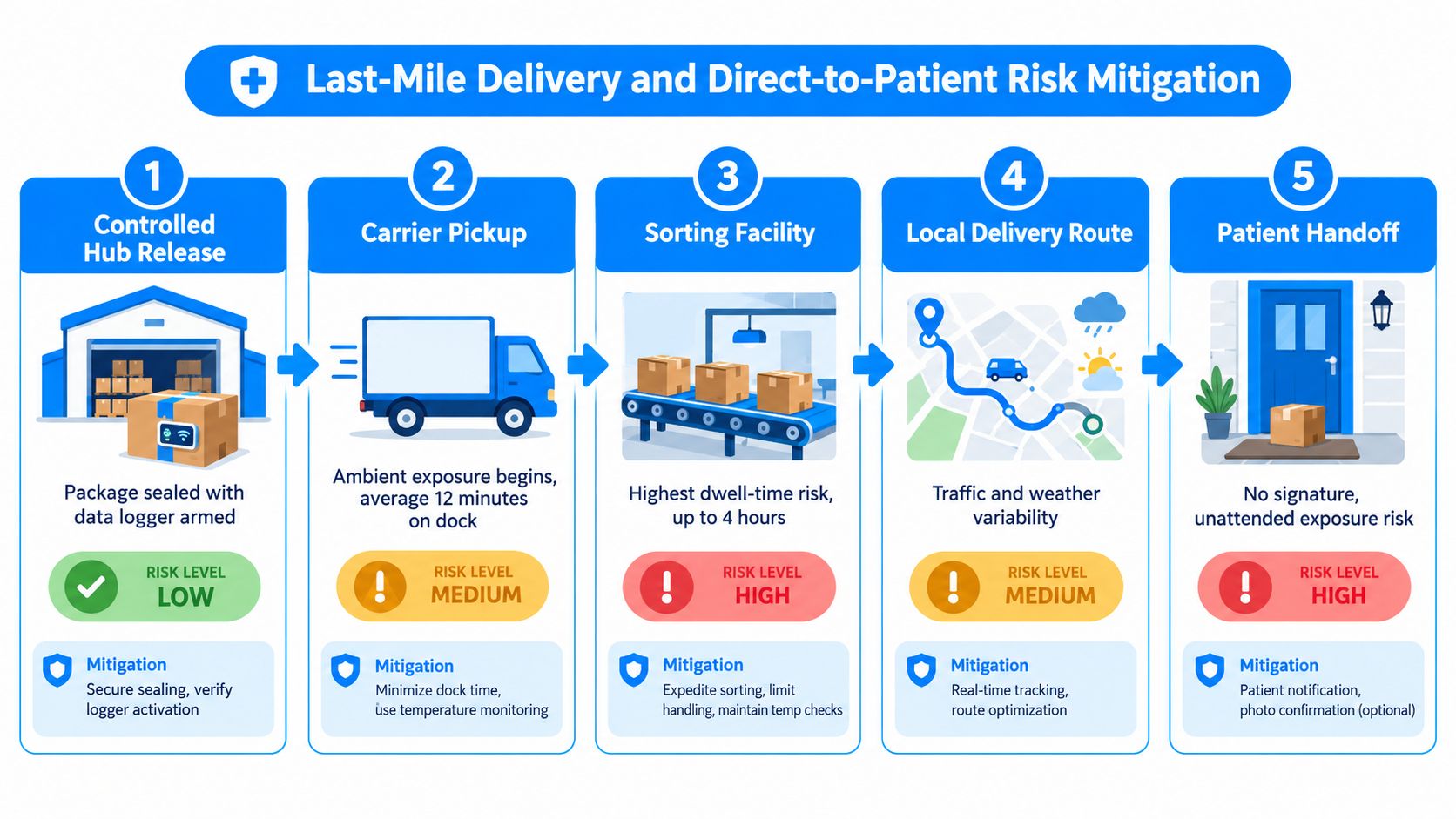
The last mile is where a qualified shipment encounters the most variable conditions. A package can leave a controlled pharmacy, pass through carrier handling, pause during a sorting transfer, travel on a delayed route, and reach a residence where no one is available to receive it. The shipment may remain technically compliant while still accumulating handling and dwell-time risk that requires active oversight.
A route disruption requires a decision, not just a notification
Consider a refrigerated GLP-1 shipment delayed after leaving the dispensing facility. A passive logger may record the entire event for review after the patient receives the package. A continuously monitored shipment can identify rising temperature during a carrier handoff and notify the responsible quality team while options remain available.
The response might include moving the shipment to qualified refrigerated storage, changing the delivery route, arranging a controlled handoff, or placing the product in quarantine. The correct action depends on the medication's stability window and the exposure record. No automated alert should independently authorize patient use.
Predictive analytics can strengthen this process by identifying excursion-prone points such as customs processing, airport tarmac dwell, and repeated handoffs. That capability shifts the operating model from post-delivery forensics toward proactive intervention. The goal isn't to generate more alerts. It is to identify meaningful risk early enough for a trained person to act.
The patient handoff is part of the cold chain
Direct-to-patient programs should define what happens when the recipient isn't present. The delivery instruction should address whether a signature is required, where the package may be left, how quickly the patient should open it, and what to do if the insulation appears damaged or the package arrives warm.
Patients should never make a final product-quality decision based only on touch or appearance. A cool box doesn't prove that the medication remained within range, and a warm outer surface doesn't establish that the medicine failed. The pharmacy or clinical team should review the condition record and provide a disposition.
The most important last-mile question is not whether delivery occurred. It is who had authority to decide what happened next when the route deviated from plan.
Regulatory Compliance and Quality Assurance Standards
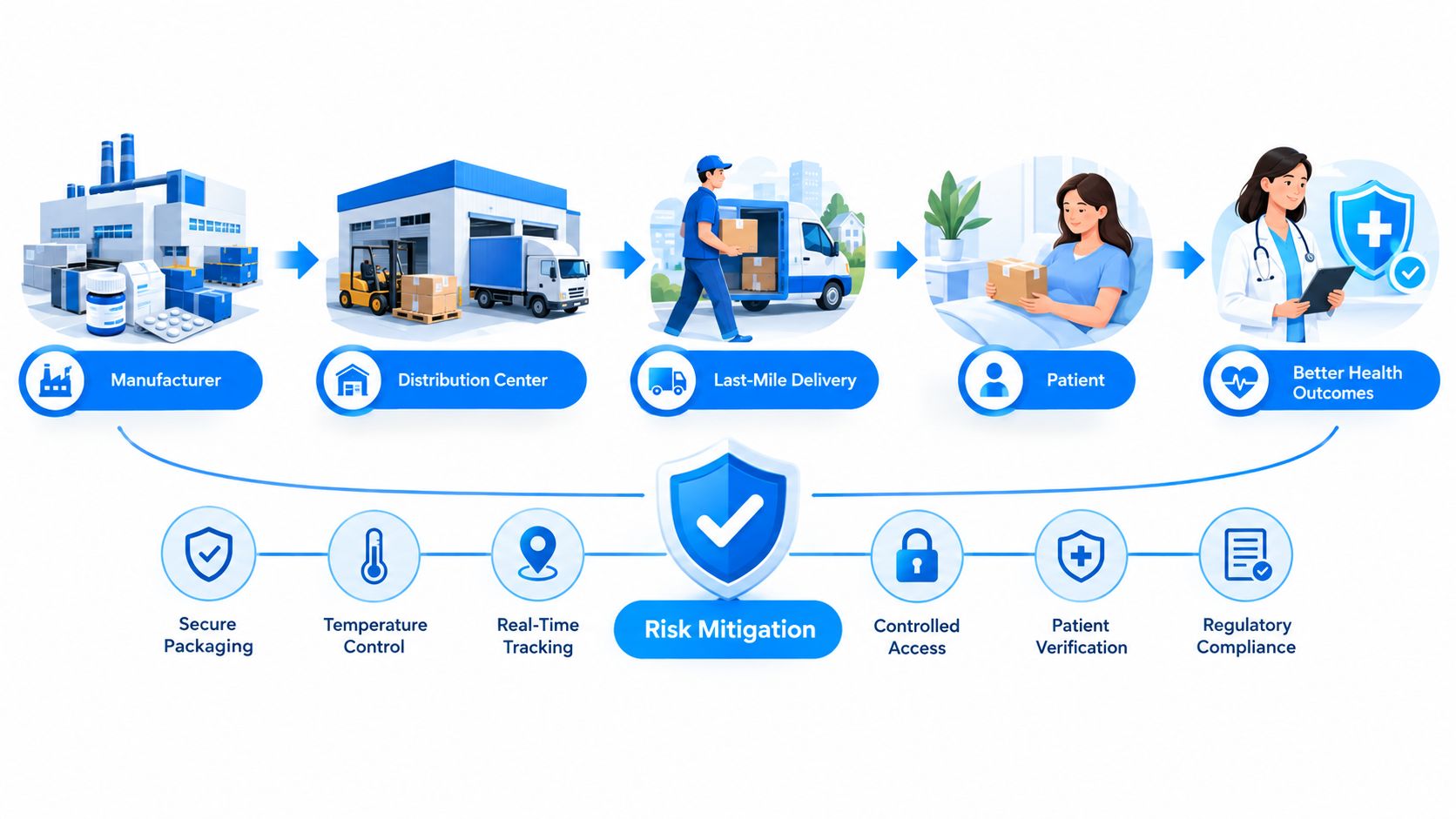
A defensible cold chain program connects product requirements, packaging qualification, monitoring, pharmacy operations, and documented corrective action. The World Health Organization guidance described in the cold chain literature review emphasizes maintaining recommended temperatures from storage through use and recording temperature conditions for cold rooms, freezers, and refrigerators, preferably continuously.
Build the chain of custody before shipping
A qualified dispensing process should identify:
- The product condition: The labeled storage range and any permitted temporary exposure.
- The packaging design: The shipper configuration, coolant arrangement, and route qualification.
- The monitoring method: Sensor location, calibration status, alarm thresholds, and data retention.
- The carrier process: Pickup timing, handoff controls, delivery exception handling, and escalation.
- The receiving procedure: Inspection, logger review, refrigeration, quarantine, and patient notification.
Good Distribution Practice principles require documented handling, traceability, deviation management, and appropriate storage conditions across the distribution chain. Good Manufacturing Practice principles govern controlled production and quality systems. Together, they support a chain of evidence rather than a collection of informal assurances.
Compounding and dispensing controls
When a pharmacy prepares a compounded peptide formulation, the clinical team should verify that the pharmacy operates under applicable standards for preparation, sterility, potency testing, labeling, and recordkeeping. Pharmacy accreditation can add an additional layer of operational review, but accreditation doesn't replace product-specific stability data or a documented excursion process.
The prescription, label, packaging insert, and patient instructions should agree. Dose changes, titration schedules, refrigeration guidance, beyond-use information, and disposal instructions must be communicated without ambiguity. A shipment shouldn't reach a patient with a storage expectation that differs from the information used to qualify the package.
Excursion management
A temperature excursion should trigger a structured assessment. The quality team should preserve the complete data record, establish when and where the event occurred, assess the duration and severity, review the applicable stability information, and document the disposition. Possible outcomes include release, continued quarantine, replacement, or disposal, but the decision must be made by the authorized quality or pharmacy function.
This documentation protects patients and improves the system. Repeated events at the same handoff may indicate a carrier or packaging problem. A pattern of freezing near coolant packs may require a packing redesign. A series of missed deliveries may call for a different delivery schedule or patient confirmation process.
Clinical Takeaways for Telehealth and Patient Safety
Cold chain shipping pharmaceuticals works only when each participant understands the handoff. The pharmacy protects the formulation, the logistics team controls the transit environment, and the patient protects the final storage step.
Instructions for the receiving patient
- Bring the package inside promptly. Do not leave a temperature-sensitive medication in direct sun, a vehicle, or an uncontrolled entryway.
- Inspect before opening. Check for damage, leakage, unusual warmth, or a missing temperature indicator if one was supplied.
- Follow the dispensing label. Refrigerate the medication only as directed, and do not freeze a refrigerated biologic.
- Do not self-release a questionable shipment. Contact the dispensing pharmacy or clinical team if the package is delayed, damaged, warm, frozen, or accompanied by an excursion alert.
- Keep the original carton and records. Packaging, labels, lot information, and delivery documentation can help the pharmacy investigate.
If a GLP-1 package arrives warm or shows an excursion alert, the patient should record the delivery time, ambient conditions, package condition, and any logger reading before contacting the dispensing pharmacy. That information gives the quality team a usable record for its release decision. The patient should not infer that an exposure is acceptable from a general understanding of GLP-1 stability.
Formulation-specific counseling must follow evidence rather than assumptions, as illustrated by this hair-retention biology review. For temperature-sensitive medicines, confirm the labeled storage condition, permitted exposure window, and escalation contact before the first dose.
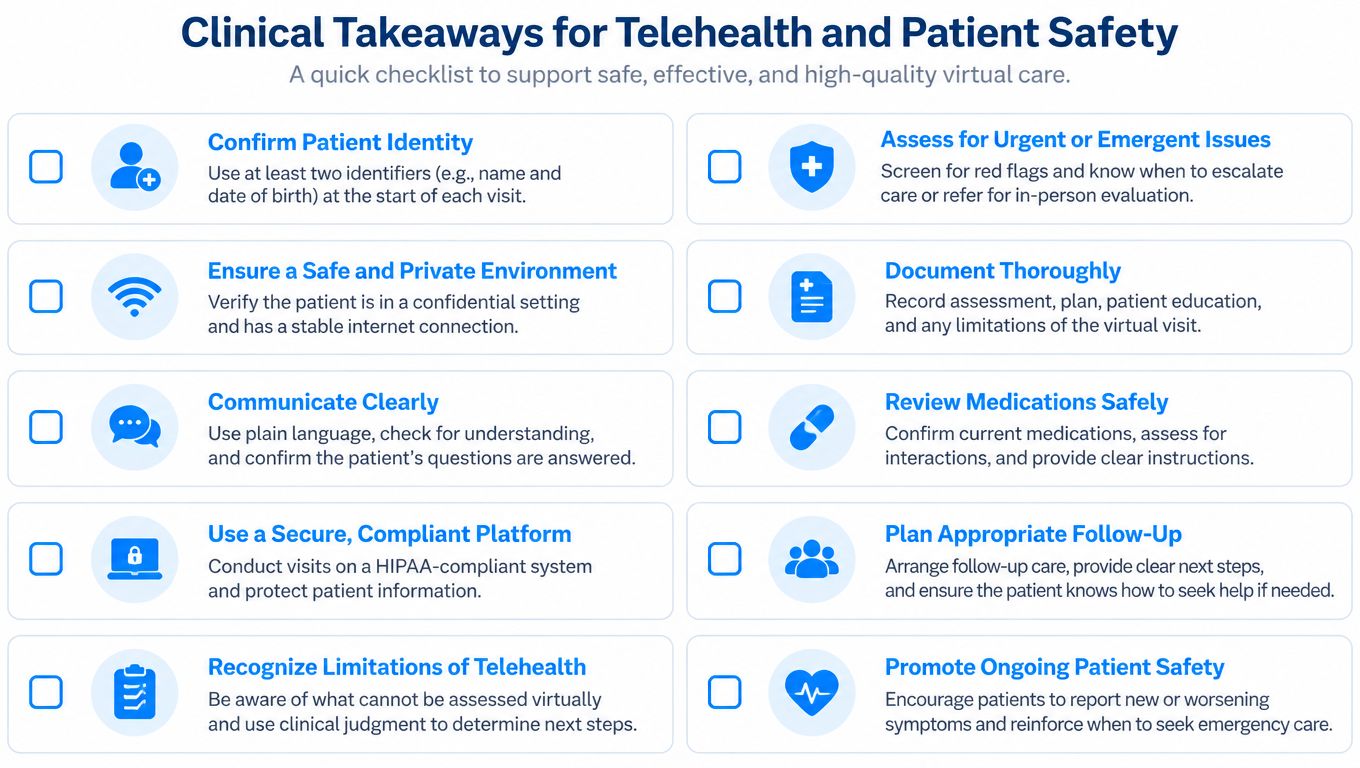
Patient safety standard: If the thermal history is uncertain, the medication should remain unused until the dispensing pharmacy or prescribing clinical team completes a quality assessment.
Telehealth providers should choose pharmacy and logistics partners that can explain storage controls, packaging qualification, monitoring, escalation procedures, and patient instructions. Delivery quality depends on an intact chain of custody and a documented response when conditions change, not delivery speed alone.
Vials + Vitals provides physician-directed telehealth evaluation and protocol-based care for GLP-1 therapies, peptide treatments, hair health, and related wellness needs, with temperature-controlled fulfillment when required. Visit Vials + Vitals to begin a clinical assessment and learn how its licensed providers and pharmacy partners support monitored home delivery.
Ready to see if this protocol fits your biology?
A licensed provider reviews every request before anything is prescribed.
Calibrate your metabolic protocol →