Best Telehealth Services for Metabolic Care
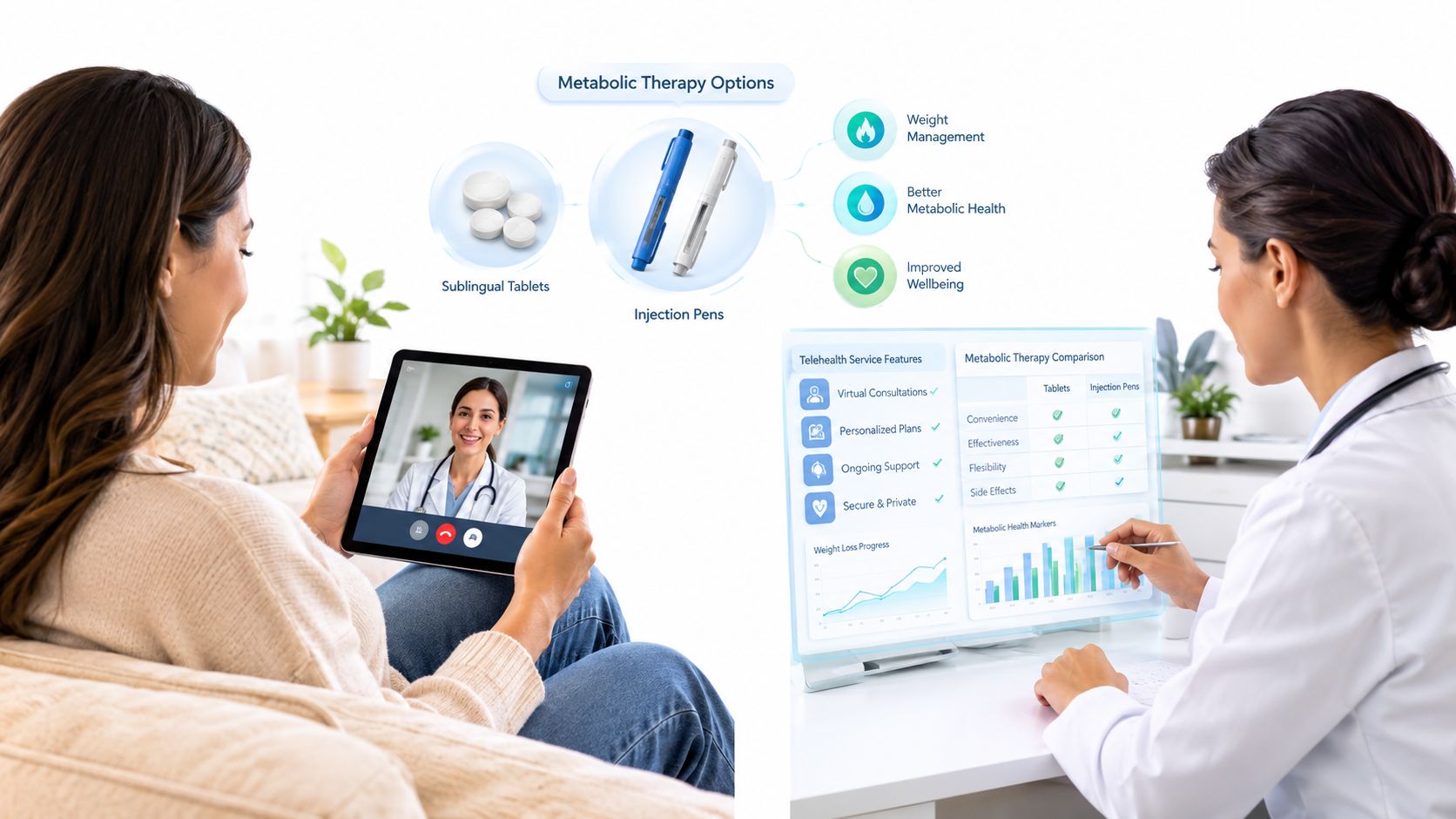
Discover the best telehealth services for metabolic and peptide therapies. Compare clinical protocols, pharmacy accreditation, and long-term care continuity.
Telehealth is no longer a temporary substitute for office visits. In 2024, 71.4% of U.S. physicians used telehealth weekly, compared with 25.1% in 2018, according to American Medical Association data on telehealth use by specialty. For metabolic care, that shift changes the question. The best telehealth services are not just the fastest way to obtain an initial prescription. They must support safe titration, pharmacy quality, adverse-event surveillance, and ongoing clinical decisions.
Patients considering semaglutide or tirzepatide should evaluate virtual care as a longitudinal medical relationship. A convenient intake has limited value if the service doesn't reassess response, manage side effects, address weight plateaus, and recognize when an in-person examination or specialist referral is necessary.
Table of Contents
- The Shift to Mainstream Virtual Care
- Clinical Criteria for Evaluating Telehealth Platforms
- Comparing Top Telehealth Services for Metabolic Therapies
- Navigating GLP-1 Protocols and Hair Retention Risks
- Assessing Pharmacy Accreditation and Cold-Chain Logistics
- Overcoming Connectivity and Access Barriers in Telehealth
- Selecting the Right Telehealth Service for Long-Term Care
The Shift to Mainstream Virtual Care
Telehealth has moved from a pandemic-era emergency tool to a routine part of clinical practice. The utilization curve has normalized, but it hasn't returned to the pre-pandemic baseline. The CDC's national telemedicine data found that 37.0% of U.S. adults used telemedicine in 2021, followed by 30.1% in 2022. That decline reflects post-pandemic normalization, not disappearance.
Physician participation shows the same pattern from a different angle. The AMA reported that weekly physician use reached 79% in 2020 and remained at 71.4% in 2024, nearly triple the 25.1% recorded in 2018. In the same report, 15.7% of physicians said telehealth represented more than 20% of their weekly visits, demonstrating that virtual care has become part of established workflows for many clinicians.
Utilization is not the same as continuity
A telehealth appointment can be easy to book and still provide poor long-term care. Metabolic treatment often requires repeated review of appetite, weight trend, tolerability, adherence, hydration, nutrition, comorbidities, and dose response. A one-time consultation doesn't create that feedback loop.
The distinction matters because telehealth use can fall even while the category remains important. A 2026 American Hospital Association analysis of telehealth utilization reported that telehealth represented just over 8% of primary care encounters in July 2022 and just under 6% in October 2025, a 30% decline. The practical implication is straightforward: a service should be judged by its ability to sustain appropriate follow-up, not by how efficiently it completes onboarding.
Clinical rule: The best telehealth service is the one that can manage the next appointment, the next dose decision, and the next adverse event, not only the first video call.
Why metabolic care needs a different standard
Metabolic therapies are protocol-driven but not identical for every patient. A patient with needle aversion may need a different formulation discussion from a patient who prefers an injectable vial. Someone experiencing appetite rebound may require adherence review and titration assessment rather than an automatic dose increase. A patient reporting hair shedding needs a structured conversation about timing, weight loss, nutrition, medication exposure, and other possible causes.
That makes hybrid capability valuable. Virtual care can handle structured intake, medication review, follow-up questions, and many titration decisions, while clear escalation rules protect patients when symptoms require physical examination, laboratory evaluation, or urgent assessment. Service design should reflect that clinical boundary instead of treating video access as a complete substitute for medical judgment.
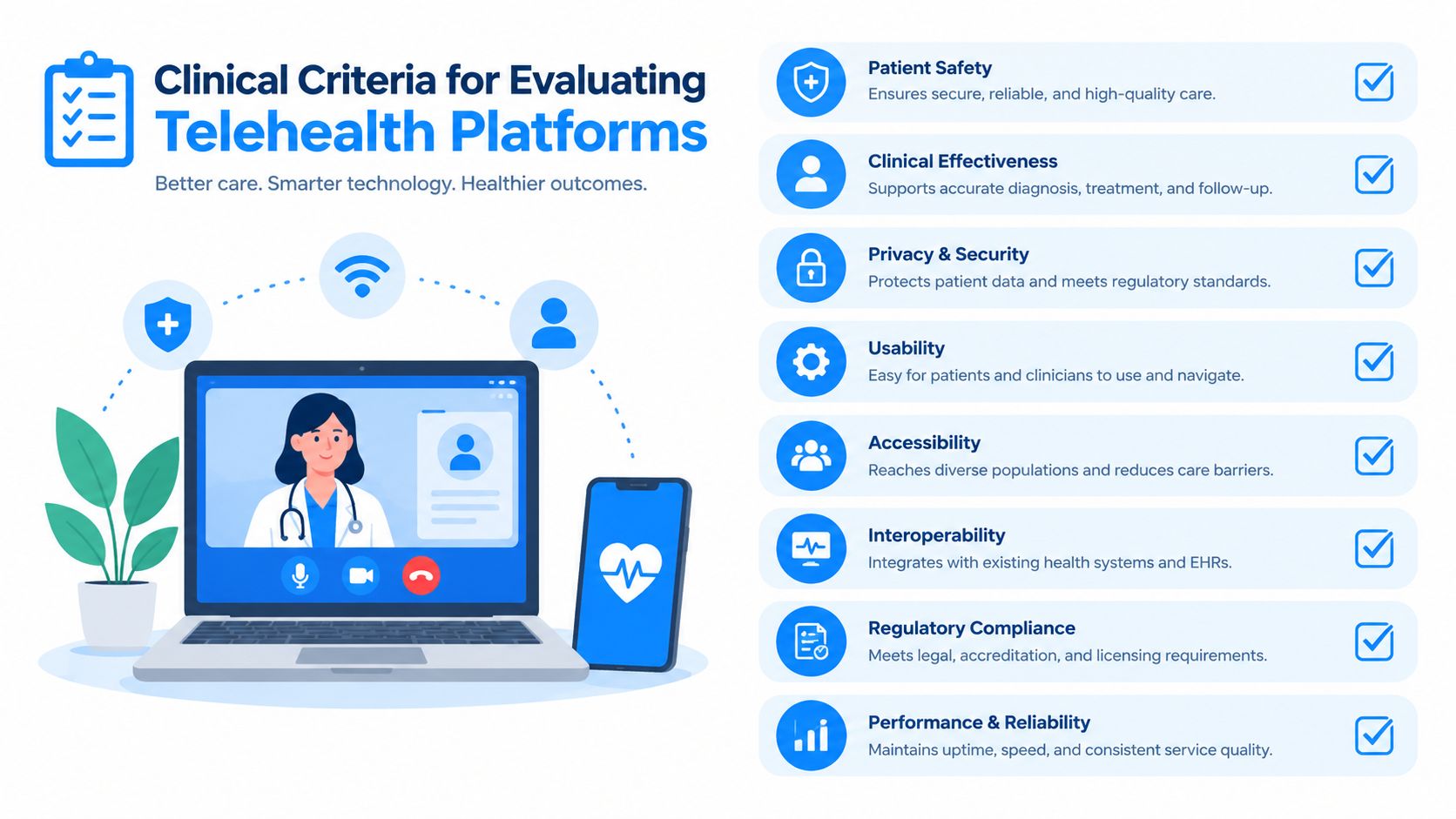
Clinical Criteria for Evaluating Telehealth Platforms
A safe evaluation starts with the clinical process, not the interface. Patients should ask who makes the treatment decision, what information that clinician reviews, how dose changes occur, and what happens when the requested therapy isn't appropriate.
Start with physician-directed assessment
The online assessment should gather more than a desired medication and a shipping address. It should give a U.S.-licensed provider enough information to consider medical history, current medications, contraindications, treatment goals, prior experiences, relevant symptoms, and the need for additional evaluation.
Automated eligibility alone isn't adequate for complex metabolic treatment. The clinician should determine whether therapy is indicated, which formulation is reasonable, whether a starting dose is appropriate, and what follow-up information will guide later decisions.
Look for protocol guardrails
A credible service should make its treatment logic visible in practical terms:
- Individualized titration: Dose changes should follow a clinician-reviewed schedule with limits, reassessment points, and instructions for responding to intolerance.
- Defined exclusion criteria: The service should identify circumstances in which treatment is deferred, modified, or referred for in-person care.
- Adverse-event monitoring: Patients should know how to report persistent gastrointestinal symptoms, dehydration concerns, allergic reactions, severe abdominal symptoms, mood changes, or new hair shedding.
- Clinical decision tools: Calculators can support dose review, metabolic calorie planning, and hair-retention counseling, but they shouldn't replace a licensed provider's judgment.
- Documented follow-up: The care pathway should explain how patients receive reassessment, prescription management, and responses between scheduled encounters.
- Privacy controls: The platform should use HIPAA-compliant processes appropriate for protected health information.
- Pharmacy transparency: Patients should be able to identify the dispensing pharmacy, its licensure, and the quality controls applied to the prescribed formulation.
- Escalation pathways: A virtual service must state when a patient needs urgent care, laboratory testing, an examination, or referral to another clinician.
Verify the provider relationship
Patients should distinguish between a clinician who reviews the complete record and a nominal prescriber attached to a questionnaire. The service should explain whether every intake receives individual physician review, whether follow-up is performed by licensed providers, and how state-specific consultation rules affect the pathway.
A refund policy also carries clinical meaning. If the provider determines that treatment isn't appropriate, the patient should understand whether the consultation fee is refundable and whether medication charges are handled separately. Clear policies reduce pressure to prescribe when the clinical assessment doesn't support treatment.
Comparing Top Telehealth Services for Metabolic Therapies
Different service models solve different problems. A video-only platform may work for an established patient with an existing medical team, but it usually leaves prescribing, dispensing, monitoring, and documentation in separate systems. A physician-directed metabolic service may integrate those steps more closely, while an in-person clinic may offer examination and laboratory access that virtual care can't reproduce.
The comparison below focuses on care architecture rather than brand names.
| Service Model | Formulation Options | Titration Oversight | Best Patient Fit |
|---|---|---|---|
| Video-only medical visit | Usually determined by the prescribing practice; may be limited to standard options | Depends on the individual clinician and external follow-up | Patients seeking a consultation who already have pharmacy and monitoring arrangements |
| Questionnaire-led prescription service | May offer a narrow set of oral or injectable options | Often depends on asynchronous messages and preset workflows | Patients with straightforward needs who still receive genuine clinician review |
| Physician-directed metabolic program | May include semaglutide or tirzepatide, injectable vial formats, and selected needle-free ODT options | Structured provider review, guardrails, and repeat titration assessment | Patients seeking integrated weight-management care |
| Hybrid virtual and in-person practice | Formulation depends on the practice and local pharmacy | Combines remote follow-up with examination or laboratory escalation | Patients with comorbidities, uncertain diagnoses, or examination needs |
| Integrated chronic-care service | Can coordinate medication, nutrition, monitoring, and follow-up tools | Ongoing oversight across multiple treatment decisions | Patients who expect a sustained metabolic-care relationship |
Formulation is a clinical decision
Injectable vials can suit patients who prefer a familiar administration method and a clearly structured dosing schedule. They also require careful handling, appropriate supplies, and temperature-controlled shipping when the formulation requires it. The service should provide instructions for storage, administration, missed doses, and disposal of supplies.
Needle-free sublingual orally disintegrating tablets, or ODTs, may be relevant for patients with needle aversion or difficulty using syringes. They aren't automatically superior. The clinician still needs to determine whether the formulation is appropriate, explain administration, and monitor whether the intended clinical response is occurring.
Plateau management requires more than increasing the dose
A weight plateau can reflect several different problems. Appetite may have returned, adherence may have changed, protein or calorie intake may be inadequate, sleep may be poor, activity may have shifted, or the current treatment may no longer be providing the expected benefit. A service that responds to every plateau with an automatic dose escalation isn't demonstrating individualized care.
A stronger protocol reviews the timeline, symptoms, administration technique, current formulation, nutritional pattern, and treatment goals. A metabolic calorie tool can organize the discussion, while a clinician decides whether to maintain, adjust, change formulation, investigate another cause, or stop treatment.
Practical test: Before enrolling, a patient should be able to learn exactly who reviews a plateau, how quickly that review occurs, and whether the response is a protocol decision or an automatic refill.
Live and asynchronous care have different strengths
Asynchronous intake can reduce scheduling friction and give patients time to provide a complete history. Live consultation can help clarify ambiguous symptoms, review concerns, and establish a stronger clinician-patient relationship. State regulations may determine which pathway is available, so the service should explain the process rather than imply that one format fits every patient.
The most useful model matches the pathway to the clinical question. Straightforward follow-up may be managed through secure messages and structured review. New or concerning symptoms may justify a live encounter, laboratory testing, or in-person evaluation.
Navigating GLP-1 Protocols and Hair Retention Risks
Hair shedding deserves explicit attention in metabolic care because patients may experience it as a visible and distressing treatment complication. The clinician must avoid two errors: dismissing the concern as unrelated, or declaring that semaglutide or tirzepatide is definitively the cause in every patient.
Rapid weight loss, reduced energy intake, physiologic stress, nutritional insufficiency, and medication exposure can overlap. Telogen effluvium is a common clinical framework for diffuse shedding after a systemic stressor, but a patient may also have androgenetic alopecia, thyroid disease, iron deficiency, inflammatory scalp disease, or another condition requiring evaluation.

What the current evidence supports
A 2026 systematic review identified 9,933 cases of hair loss among 626,894 GLP-1 receptor agonist users with reported hair outcomes, or 1.6%, while 52 patients, or 0.008%, reported hair regrowth. The review found the strongest pharmacovigilance signal with semaglutide, followed by tirzepatide, as reported in the systematic review of GLP-1 receptor agonists and hair outcomes.
A separate 2026 meta-analysis of nine interventional studies, including seven randomized controlled trials and two non-RCTs, evaluated 4,114 GLP-1 receptor agonist users. It found a higher risk of hair loss versus placebo, with a relative risk of 3.252, a 95% confidence interval of 1.437 to 7.358, and a pooled hair-loss event rate of 3.9%, according to the meta-analysis indexed by PubMed.
Those findings support monitoring, not alarm. A 2026 evidence review concluded that no prospective, controlled studies have specifically evaluated GLP-1 receptor agonists and hair loss, and causality hasn't been established, as discussed in the review of GLP-1 receptor agonists and hair loss.
How a responsible protocol responds
The intake should establish a baseline. Patients should report existing hair thinning, recent illness, major dietary restriction, rapid weight change, pregnancy or postpartum status where relevant, scalp symptoms, and medications that may affect hair cycling.
Follow-up should document:
- Timing: When shedding began relative to treatment initiation, dose changes, and weight change.
- Pattern: Whether the loss is diffuse, patchy, localized to the hairline, or associated with scalp inflammation.
- Nutrition: Whether protein and overall intake remain adequate for the patient's needs.
- Dose exposure: Whether symptoms appeared after escalation or during a period of rapid weight reduction.
- Alternative causes: Whether symptoms justify laboratory evaluation, dermatology referral, or another medical workup.
A 2026 review literature summary reported that semaglutide-associated hair loss appeared dose-related, with doses below 2 mg weekly rarely implicated and higher obesity-treatment doses more commonly associated with hair loss. The same source described tirzepatide as often associated with telogen effluvium in the review indexed by PubMed. This information should guide counseling and surveillance, not encourage unsupervised dose changes.
Patients shouldn't stop or escalate therapy solely because of online anecdotes. They should contact the prescribing clinician, who can assess whether to hold a titration step, investigate another cause, adjust the treatment plan, or add appropriate follicular support.
Assessing Pharmacy Accreditation and Cold-Chain Logistics
A prescription is only one part of medication safety. The dispensing pharmacy, preparation process, packaging, shipment, and patient instructions all influence whether a prescribed therapy arrives in usable condition.
Patients should first identify the pharmacy that will dispense the medication. A credible service should be able to state that it uses licensed U.S. pharmacies and should provide enough information for patients to verify the pharmacy's credentials. Offshore fulfillment, unclear ownership, and vague references to “partner pharmacies” create avoidable uncertainty.
Pharmacy quality should be verifiable
For compounded preparations, patients should ask how the pharmacy follows applicable USP standards and whether it performs analytical potency and sterility testing. Accreditation and regulatory approvals should be independently verifiable rather than presented as unexplained badges.
The service should also explain what happens when a prescription is clinically inappropriate, when a shipment is delayed, or when a package arrives outside the required temperature range. A patient shouldn't have to make a medication-safety decision without access to a pharmacist or clinical support channel.
Cold-chain handling is part of the treatment
Temperature-sensitive medication requires more than a label stating “refrigerate.” The fulfillment process should use appropriate insulated packaging, shipping methods, tracking, and delivery timing. Patients should receive clear instructions for storage on arrival and a procedure for reporting a warm, damaged, leaking, or delayed package.
Discreet, unbranded packaging can protect privacy, but discretion shouldn't come at the expense of traceability. The shipment should still include the medication name, prescription directions, storage instructions, pharmacy contact information, and a tracking mechanism.
A useful verification sequence includes:
- Identify the pharmacy: Confirm its name, location, license status, and contact details.
- Review preparation controls: Ask about applicable USP processes and potency or sterility testing.
- Confirm shipping requirements: Determine whether the formulation needs cold-chain transit and how that requirement is maintained.
- Inspect arrival instructions: Learn what to do if the package is delayed, damaged, or received at an uncertain temperature.
- Check support ownership: Establish whether the pharmacy, prescriber, or platform handles medication questions and replacement decisions.
Safety boundary: Patients shouldn't use a temperature-sensitive medication when the shipment's integrity is uncertain. The dispensing pharmacy should determine whether replacement is necessary.
Overcoming Connectivity and Access Barriers in Telehealth
High-definition video isn't the universal standard of good telehealth. For some patients, especially those in rural or lower-connectivity areas, a service that depends on uninterrupted video may create more clinical friction than access.
A September 2026 report summarized by Healthcare Dive on broadband barriers to telehealth adoption reported that nearly 12 million Americans in 41 states lacked broadband sufficient for telehealth, with 88% living in rural areas. The same reporting identified affordability, limited digital literacy, inadequate technology, and restricted service availability as continuing barriers.
Access features should match the patient
A resilient metabolic-care service should offer asynchronous intake, secure messaging, low-bandwidth options, and audio fallback where legally and clinically permitted. These features can help patients complete a medication history, report adverse effects, and receive follow-up instructions when live video fails.
That doesn't mean every consultation can occur asynchronously. New symptoms, uncertain diagnoses, and medication complications may require live evaluation or in-person care. The important point is that a failed connection shouldn't automatically terminate the care pathway.
Patients should test the practical workflow before enrollment. The service should explain how identity is verified, how documents are uploaded, how a missed consultation is rescheduled, and how urgent symptoms are handled when the patient can't connect.
Selecting the Right Telehealth Service for Long-Term Care
The final choice should favor continuity over novelty. A polished intake process may be useful, but it doesn't answer the questions that arise after treatment begins: Who reviews a plateau? Who evaluates hair shedding? Who manages a missed dose? Who reassesses a patient whose appetite returns or whose adverse effects persist?
A service built for longitudinal care should provide:
- Repeat clinical review: Follow-up should be part of the care model, not an optional afterthought.
- Titration oversight: Dose changes should follow documented guardrails and individual response.
- Formulation transparency: Patients should understand why an injectable or needle-free option is being considered.
- Pharmacy accountability: The dispensing pharmacy and shipping process should be identifiable.
- Escalation rules: The service should state when virtual care is insufficient.
- Financial clarity: Consultation fees, medication charges, refunds, and replacement policies should be explained before payment.
A physician-directed model is especially important for patients with complex histories, prior medication intolerance, substantial hair concerns, or uncertainty about whether metabolic therapy is appropriate. The service should treat clinical exclusion as a valid outcome, not a failed sale.

Decision principle: The right telehealth partner is the one that remains clinically useful after the prescription is written.
Patients should compare services by asking how treatment is monitored over time, how concerns are escalated, and whether the care team can support both metabolic goals and medication-related adverse events. Convenience matters, but it should serve protocol adherence, not replace it.
Vials + Vitals offers physician-directed telehealth for GLP-1 and dual incretin therapies, including individualized titration, clinical decision tools, selected needle-free ODT options, and injectable formats supported by temperature-controlled fulfillment when required. Patients seeking structured metabolic care, pharmacy transparency, and ongoing clinical oversight can review the service and begin an assessment through Vials + Vitals.
Ready to see if this protocol fits your biology?
A licensed provider reviews every request before anything is prescribed.
Calibrate your metabolic protocol →